


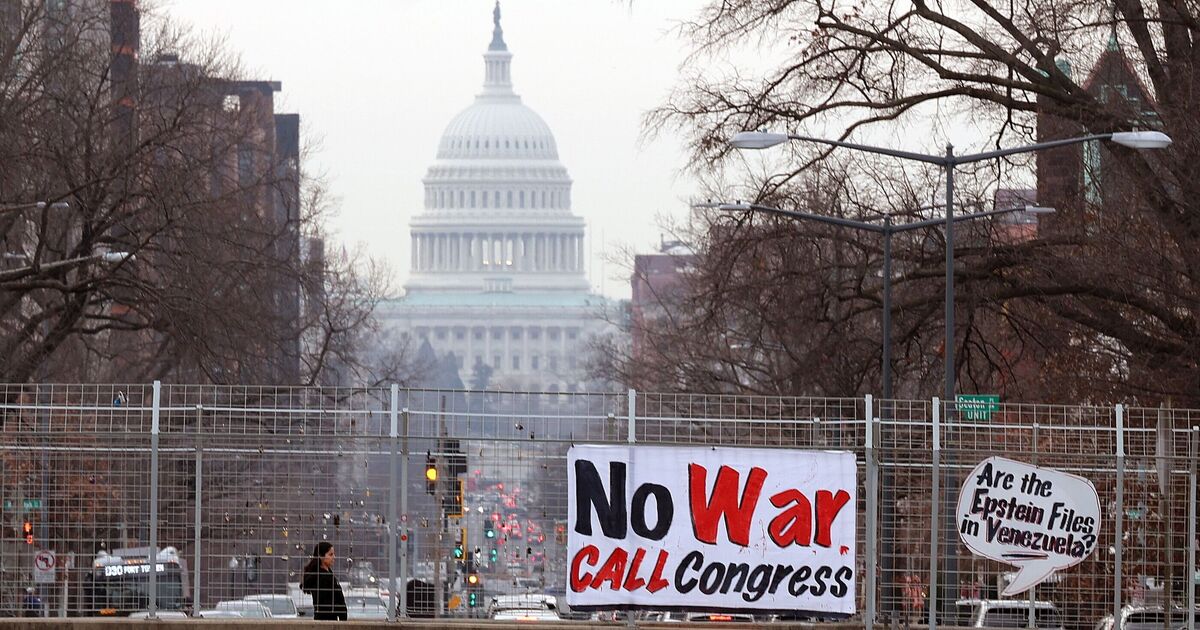
Divided Opinions on Maduro: Recent Poll Highlights Republican Voter Sentiments
In a striking new poll conducted by the Democracy Institute, the perception of Venezuelan President Nicolás Maduro as a threat to the United States varies sharply among Republican voters. Released on January 5, 2026, the survey queried a representative sample of 1,400 American voters, revealing that 49% of Republican participants answered “no” when asked whether the Maduro regime posed a threat to their country. In contrast, only 44% of Republicans identified Maduro as a potential threat, indicating a significant divide within the party.
The sentiment echoed across party lines, with 53% of Democratic voters also dismissing the idea of Maduro as a threat. Overall, a notable 50% of respondents from all parties expressed disbelief in the threat level posed by Maduro’s regime. This divergence in opinion underscores a complex landscape concerning perceptions of foreign leadership among American voters.
The Context of Capture and Charges
The poll’s findings followed a dramatic U.S. military operation that led to the capture of Maduro and his wife, Cilia Flores, on January 3. During a press conference, former President Donald Trump confirmed the operation and indicated that Maduro and Flores were facing serious drug-trafficking charges. Trump emphasized that the U.S. would “run the country until such time as we can do a safe, proper and judicious transition,” raising the specter of a potential U.S. intervention in Venezuelan governance.
Partisan Perspectives on Military Intervention
Patrick Basham, Director at the Democracy Institute, shared insights on the state of public opinion regarding military intervention in foreign nations. He noted that while such operations typically receive an initial wave of public support, that enthusiasm wanes as the financial burdens of foreign engagement become apparent. Remarkably, 48% of Republican respondents voiced their opposition to the U.S. military operation in Venezuela, revealing skepticism about the motives behind such military actions.
A significant faction of Republican voters, 41%, suggested that Venezuelan oil reserves—the largest globally—might be the true reason for the U.S. intervention. This perspective aligns with Trump’s upcoming meeting with U.S. oil industry executives, where he highlighted the potential for increased oil drilling to reduce prices. “You know what that’s about. We got a lot of oil to drill, which is going to bring down oil prices even further,” Trump remarked, indicating the economic implications tied to Venezuelan resources.
The Debate on Oil and Regime Change
Despite having approximately 17% of the world’s oil reserves, Venezuela’s actual output has been severely hampered due to a combination of mismanagement, lack of investment, and international sanctions. This dynamic raises questions about the genuine motives behind U.S. military involvement, with some analysts suggesting that economic interests may outweigh concerns for democracy and human rights.
Maduro’s Legal Troubles and Public Reaction
In the wake of his capture, Maduro and Flores pleaded not guilty to the drug trafficking charges in a Manhattan federal court. Maduro claimed that he had been “kidnapped” from Venezuela, a statement that drew attention to the complex narrative surrounding his leadership and the U.S. government’s actions. An indictment unsealed recently painted a damning picture of the Maduro regime, labeling it as “corrupt” and highlighting its alleged engagement in illegal activities. Notably, the 25-page indictment referenced cocaine numerous times but made no mention of the ongoing fentanyl crisis, a substance that has garnered significant U.S. public concern.
Public Sentiment Going Forward
The discord among Republican voters regarding Maduro’s regime reveals a broader uncertainty about U.S. foreign policy and military intervention. While Trump retains considerable popularity within Republican circles, the implications of military actions and the motivations driving them remain contentious topics. As public opinion continues to evolve, the intersection of politics, economics, and international relations will undoubtedly shape the future discourse surrounding Venezuela and its beleaguered leadership.