


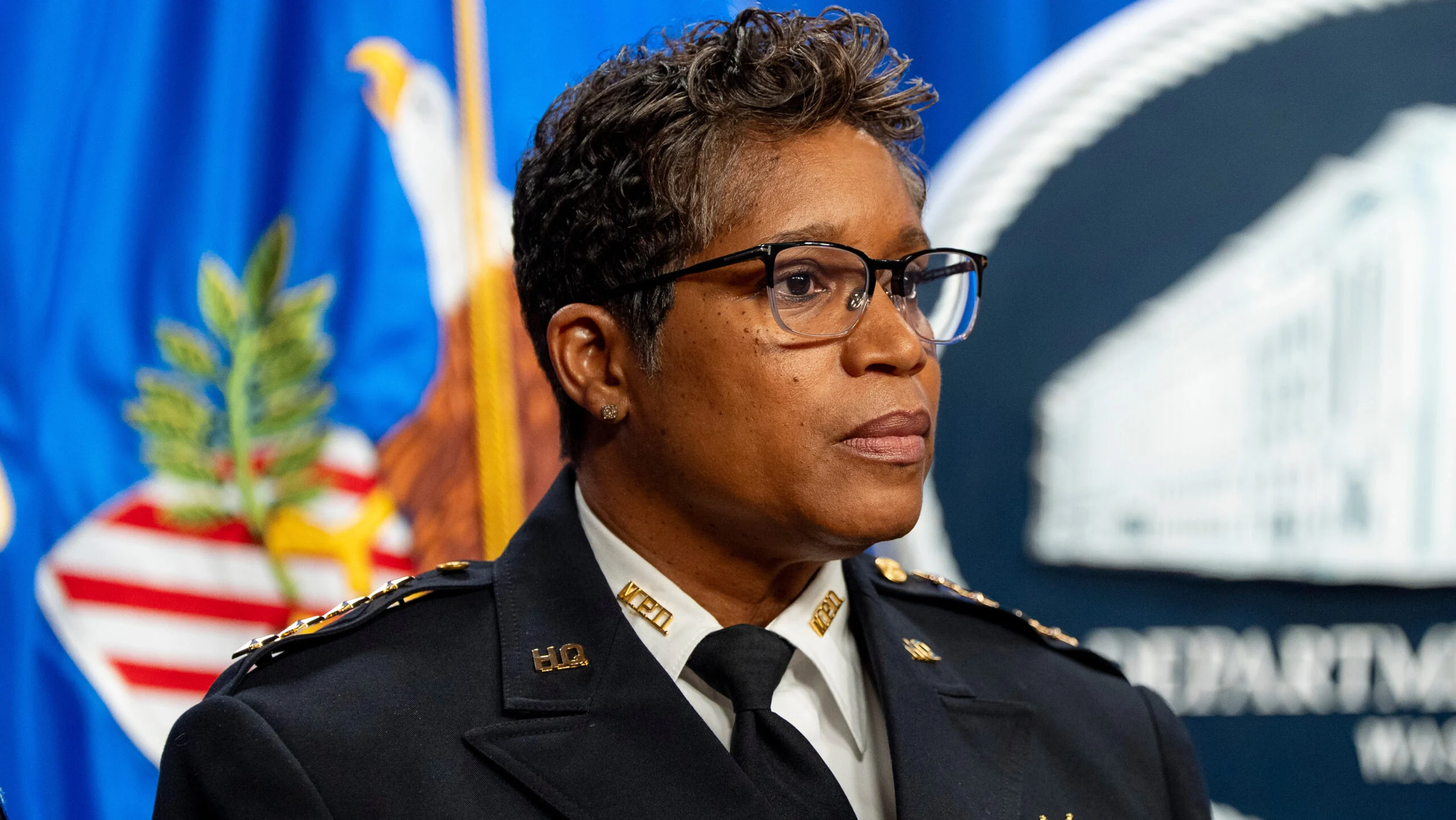
Police Chief Pamela Smith Resigns Amidst Challenges in Washington D.C.
Pamela Smith, who gained national recognition during her tenure as D.C.’s police chief, has announced her resignation, a decision unveiled by Mayor Muriel Bowser on Monday. Smith stepped into this high-profile role in 2023 during a tumultuous period marked by rising violence and the federalization of police forces, particularly following actions taken by then-President Donald Trump.
The Context of Smith’s Appointment
When Pamela Smith was appointed, Washington D.C. was grappling with a surge in crime rates that followed the upheaval of the pandemic. With staffing shortages plaguing the police department, her selection was seen as a critical move to stabilize the force. However, Smith’s tenure was far from ordinary, as it coincided with significant federal involvement in local policing. Trump’s assertion of control over the Metropolitan Police Department, alongside the deployment of National Guard troops, added layers of complexity to her leadership.
Achievements Amidst Adversity
In her announcement of Smith’s resignation, Mayor Bowser acknowledged the tremendous pressures Smith faced and commended her for “stepping up” during a period of “significant urgency.” Bowser highlighted Smith’s role in reducing violent crime; specifically, homicides were cut to an eight-year low under her command. Smith launched several key initiatives, such as the establishment of a Real-Time Crime Center, to employ new technologies aimed at enhancing police effectiveness.
“Chief Smith got all of this done while navigating unprecedented challenges and attacks on our city’s autonomy,” emphasized Bowser, underscoring how Smith’s leadership style adapted to the turbulent landscape of law enforcement.
Unspoken Reasons for Resignation
While Mayor Bowser praised Smith’s contributions, she did not elaborate on the reasons behind Smith’s departure. The absence of a successor announcement also fuels uncertainty regarding the future direction of the police department and how this change in leadership might influence broader public safety strategies in a city still recovering from record levels of violence.
In her statement accompanying the resignation, Smith reflected on her experience, expressing confidence in the police force’s capabilities. She indicated that her role had been both a challenge and a source of satisfaction. “I am proud of the accomplishments we achieved together, and I thank the residents of this city for their trust and partnership,” Smith remarked. Despite the progress made, she acknowledged the ongoing struggle toward achieving lower crime rates.
Addressing the Spike in Violence
Smith’s tenure was defined by severe increases in violent crime, which prompted congressional inquiries. Homicides reached alarming levels, and carjackings soared. This environment led local lawmakers to reconsider police powers, including introducing drug-free zones in areas plagued by persistent crime. Additionally, changes to the city’s criminal code were enacted to curtail increasing violent offenses.
In early 2024, as D.C. began to emerge from this violence-ridden phase, signs of improvement became evident. Overall crime rates fell by around 17% in the first ten weeks of the year, a shift Smith attributed to both legislative reforms and strategic deployments of police resources in neighborhoods facing repeated incidents of crime. The implementation of temporary youth curfew zones in certain districts also played a role in these improvements.
Looking Ahead
Smith’s departure leaves a significant gap in D.C.’s leadership at a critical time. Both the city and its police department face the daunting task of addressing ongoing crime challenges while maintaining public trust. The transition will require not just a new leader but a comprehensive approach to ensure that the progress made during Smith’s tenure continues in the future.
As D.C. navigates these changes, the community will be keenly watching how local law enforcement adapts to both the problems it faces and the demands of its residents.