


Landmark Ruling on Minnesota Child Welfare Law
Introduction
A recent ruling from a Minnesota district court has opened up a significant dialogue about child welfare, disproportionality, and the protection of Black families in a system often criticized for its racial disparities. The court found the early rollout of the Minnesota African American Family Preservation and Child Welfare Disproportionality Act unconstitutional, raising critical questions about equal protection under the law and the treatment of marginalized communities within state systems.
Background of the Act
The Minnesota African American Family Preservation and Child Welfare Disproportionality Act, enacted in May 2024, aims to address severe disparities in child welfare. Historically, children from communities of color have faced disproportionately high rates of removal from their homes. For instance, in 2023, Black and Hispanic youth were about twice as likely to enter foster care compared to their white counterparts, while Native American youth faced an alarming rate of removals—16 times higher.
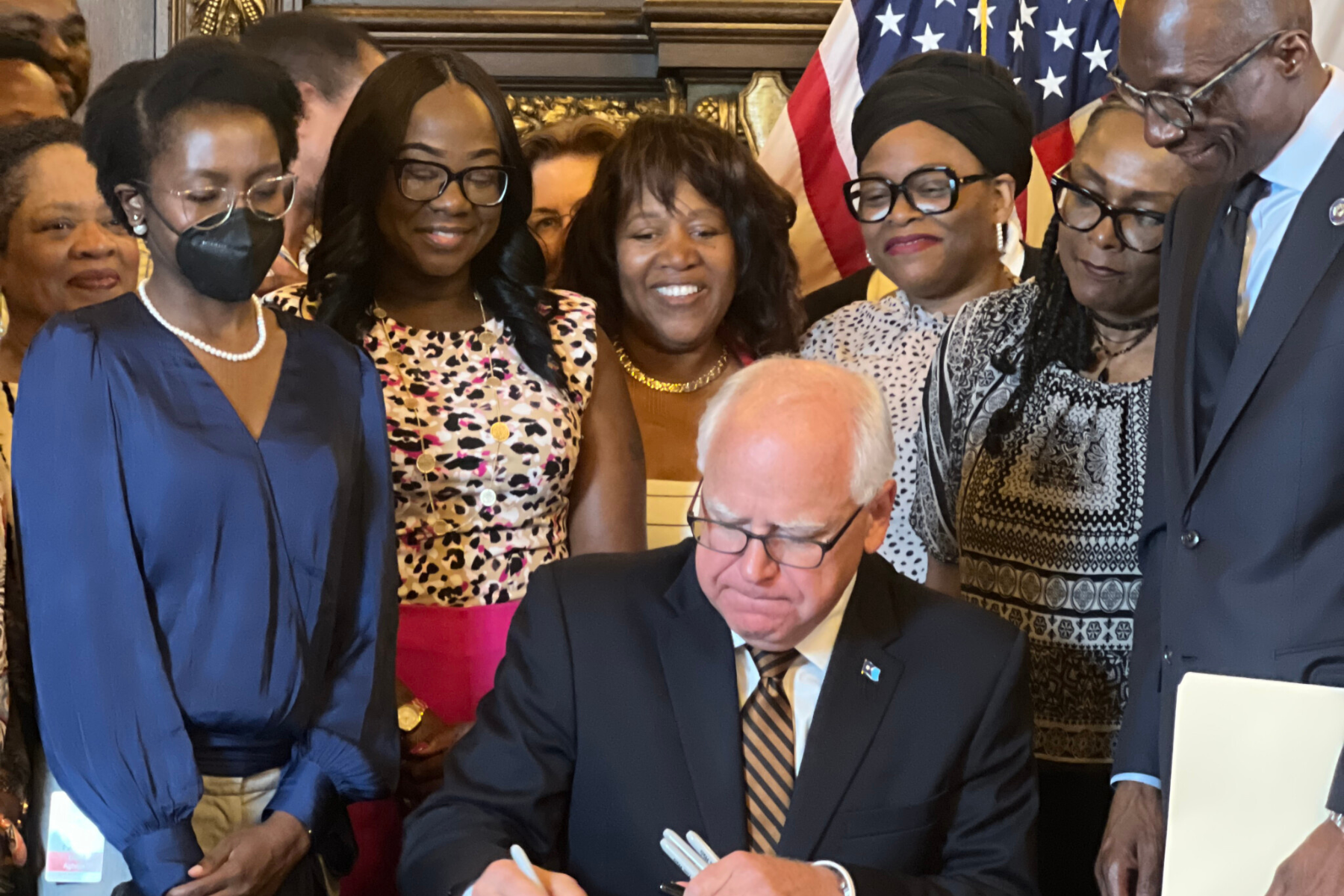
This legislation mandates that social workers must actively seek to avoid family separation for children from overrepresented groups, based on factors including race and socioeconomic status. Scheduled for a statewide rollout in January 2027, parts of the act were initially deployed in Hennepin and Ramsey counties starting January 2025, gradually increasing the number of eligible families as part of a phase-in strategy.
Court Ruling Implications
The ruling, issued by Judge Matthew Frank of the U.S. District Court in Hennepin County, criticized this phased implementation, declaring it a violation of the 14th Amendment’s equal protection clause. Frank stated that the approach effectively treated some families as “test cases” while excluding others from the necessary protections that the act was intended to afford.
“The Phase-In is decidedly underinclusive,” Judge Frank articulated, asserting that this exclusion violates the principle of equal protection by discriminating based on race and geography. He maintained that for the law to achieve its purpose, it must be applied uniformly rather than selectively.
As a direct consequence, the implementation of the act is now on hold unless the Minnesota Legislature devises a new approach that aligns with constitutional standards. The court ruling has sparked immediate reactions from various stakeholders, including legislators and child welfare advocates.
Legislative Responses
State Representative Esther Agbaje, who authored the act, expressed her intention to amend the legislation in the upcoming 2026 session. She emphasized the importance of the act in protecting Black children who continue to face systemic barriers in Minnesota’s welfare system.
The Minnesota Department of Children, Youth, and Families is now under pressure to collaborate with localities in re-evaluating their rollouts. Officials from both Ramsey and Hennepin counties expressed their commitment to the act but acknowledged that the implications of the ruling necessitate further assessment.
The Broader Context of Disparities
Family advocates had long pressed for reforms to reduce the disproportionate treatment of Black families in child welfare, advocating for laws that would significantly enhance protections against wrongful removals. In light of the recent court ruling, critics like Kelis Houston, founder of the nonprofit Village Arms, have pointed out the risks of a phased implementation that creates a “discriminatory subclass” among eligible families.
Moreover, the act initially faced skepticism and legal challenges from different community factions, notably against extending protections based on race—a strategy that raised questions about its constitutionality. As the ruling reveals, laws designed to provide extra care must navigate complex legal landscapes regarding race, class, and the overarching goals of child welfare.
Case Study: Mariah Banks
The personal story of Mariah Banks, who brought the lawsuit prompting the ruling, underscores the challenges at play. Banks had her children removed during the early phase of the act, despite her eligibility for the protections it purportedly offered. Her case became emblematic of the larger systemic failings, reflecting issues many families face, including arbitrary selection processes that determine who receives protection under the law.
In her filings, Banks argued that the selective application of protections creates an unequal treatment framework, demanding greater transparency and accountability from child welfare agencies.
Moving Forward
As various stakeholders assess the implications of the ruling and its broader impact on Minnesota’s child welfare system, the conversation will likely focus on crafting solutions that respect the rights of all families. Legislators, advocates, and community members are united in wanting to see a system that provides the necessary protections equitably.
The conversation about equity in child welfare continues to evolve, highlighting the urgency for reforms that will ensure all families receive fair treatment in these critical systems. With changes on the horizon, Minnesota stands at a crossroads, challenging assumptions about race, justice, and the integrity of child welfare processes.