


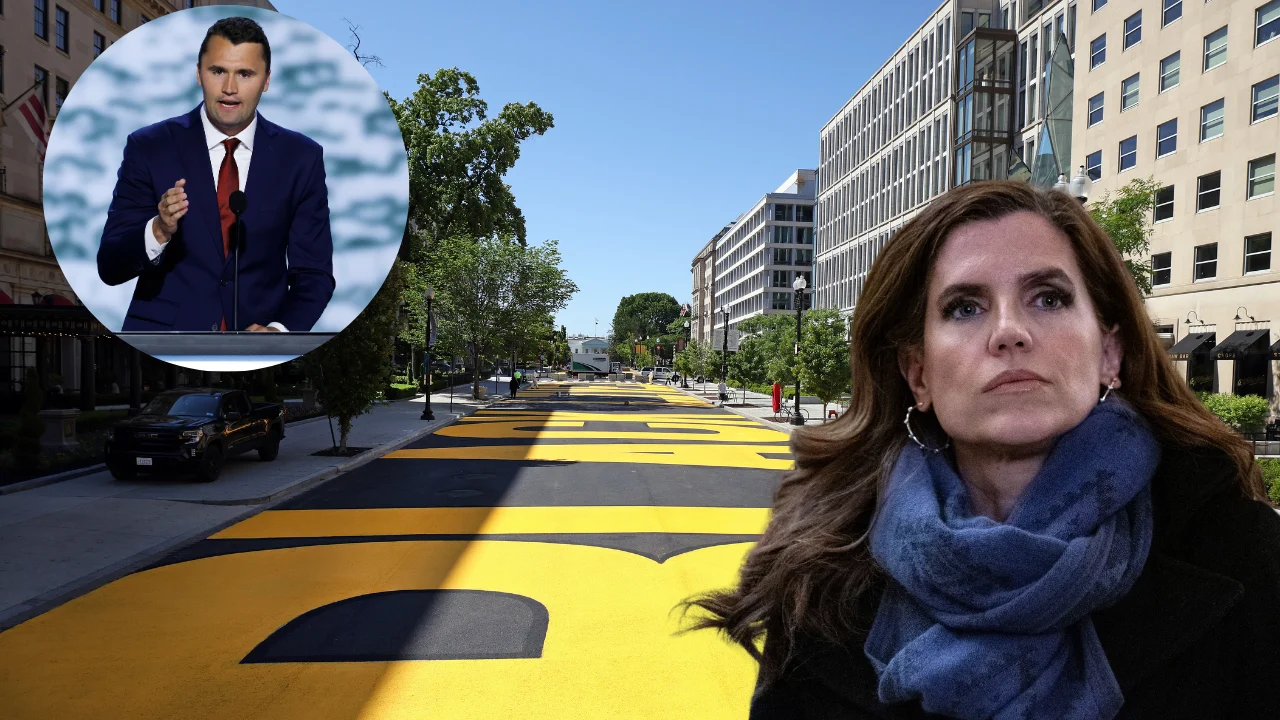
The Proposal to Rename Black Lives Matter Plaza
Amid recent developments in Washington, D.C., discussions around the Black Lives Matter mural have gained momentum following an announcement from city officials that the mural would soon be removed. This has opened the floodgates for proposals about what the plaza—a significant landmark associated with the BLM movement—should be renamed. One of the most notable suggestions has come from South Carolina Congresswoman Nancy Mace.
Introducing the Proposal: The Charlie Kirk Freedom of Speech Plaza Act
In a bold move, Congresswoman Mace introduced a bill on the House floor calling for the plaza—currently known as Black Lives Matter Plaza—to be renamed the “Charlie Kirk Freedom of Speech Plaza.” This measure, if passed, would honor Charlie Kirk, a controversial right-wing pundit who was tragically killed earlier this year during an event in Utah. Mace’s bill aims to rename the corridor that stretches between 16th Street Northwest and H and K streets.
Mace’s Public Statement
In her statement, Mace referred to the tragic event as a pivotal moment, marking three months since Kirk’s assassination. She characterized him as a “peaceful leader who stood for free speech, open conversation, faith, and family values.” This narrative positions Kirk as a figure deserving of recognition, contrasting starkly with her stark criticism of the BLM movement, which she described as a “terrorist organization” that has violently targeted law enforcement and caused chaos in urban areas.
The Historical Context of BLM Plaza
The transformation of the area into Black Lives Matter Plaza came on the heels of the protests triggered by George Floyd’s death in 2020. The mural painted in front of the White House became an emblem of activism and a rallying point for those advocating for racial equality. However, this status has now been challenged, particularly after a Republican congressman threatened to withhold funding for D.C. unless the mural and the name of the plaza were altered. In response, outgoing mayor Muriel Bowser confirmed plans to remove the mural, indicating it would be part of a broader initiative to celebrate America 250.
Bowser’s Response to Congressional Interference
Mayor Bowser outlined her perspective on the issue, stating that BLM Plaza’s evolution should not distract from pressing local issues, such as economic growth and public safety in light of impending federal job cuts. Her commitment is to integrate the plaza into a larger art project while prioritizing interests that directly affect D.C. residents.
Kirk’s Wishes and Public Sentiments
Mace mentioned that one of Kirk’s last wishes was to see Black Lives Matter Plaza renamed. This idea resonates with Kirk’s expressed sentiments in previous appearances where he decried what he viewed as an overreach of “mass race hysteria” in the nation. Such rhetoric is emblematic of a broader conservative strategy to counter what they perceive as an excessive focus on racial issues in public discourse.
Similar Initiatives in Congress
Interestingly, Mace’s proposal isn’t entirely isolated. It echoes the actions of other lawmakers, such as Senator Rick Scott from Florida, who has also shown support for recognizing Kirk through legislation. Scott earlier filed a resolution aimed at designating a different street in D.C. as “Charlie Kirk Patriot Way,” highlighting that the push for Kirk’s legacy is part of a larger ideological movement within the GOP.
Public Reaction and Divisive Responses
The proposal has stirred mixed reactions. Supporters may view the renaming as an affirmation of free speech and a repudiation of movements they see as divisive, while opponents argue that it trivializes a significant social justice movement. The implications of such a name change reach beyond mere semantics; they encapsulate broader ideological battles over narratives surrounding freedom, justice, and recognition in contemporary American society.
The Intersection of Politics and Symbolism
Ultimately, the call to rename Black Lives Matter Plaza is not just about what it is called. It is wrapped in layers of political implications that reflect a nation grappling with its history, values, and the paths forward. By positioning a controversial figure like Charlie Kirk against a major social movement, the dialogue raises essential questions about whose voices and legacies are honored in public spaces juxtaposed against the evolving narrative of collective memory and societal values.