


The Little Rock Nine: Pioneers of Desegregation
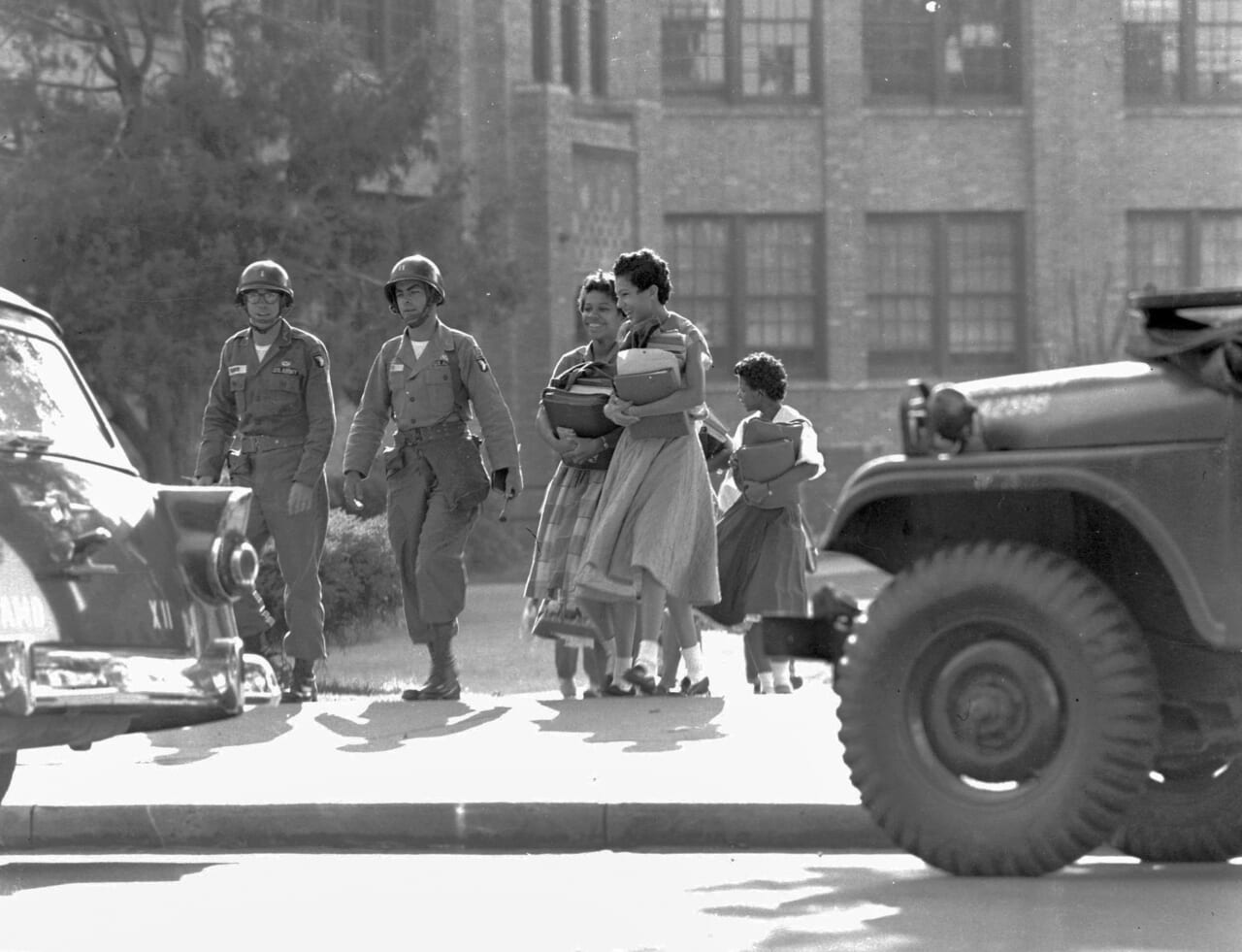
On September 25, 1957, a pivotal moment in American history unfolded in Little Rock, Arkansas, as nine brave Black teenagers walked into Central High School, escorted by federal troops. This act of courage marked the beginning of a significant chapter in the fight for civil rights and education equality.
The Backdrop of Segregation
The struggle for desegregation did not emerge overnight. It traces back to the landmark Supreme Court case, Brown v. Board of Education, in 1954, which declared school segregation unconstitutional. Despite this ruling, many Southern states, including Arkansas, resisted integration, creating a tense and often hostile environment for those advocating for change.
The Little Rock School Board’s plan for gradual desegregation in 1957 ignited hope among civil rights activists. The NAACP played a crucial role by selecting nine students who exemplified resilience and academic strength. These students underwent rigorous preparation, including counseling sessions to arm them against the anticipated hostility.
The Call to Action
For Melba Pattillo Beals, one of the chosen students, the motivation to integrate Central High was simple: “I wanted to go because they had more privileges.” Reflecting on her initial feelings, she admitted that her desire wasn’t driven by a wish to change history but rather a naïve understanding of the challenges that lay ahead. Little did she know, her journey would become a symbol of resistance and strength.
The Day of Reckoning
The date that would forever be etched in history arrived on September 25, 1957. The group, now known as the Little Rock Nine, included Ernest Green, Elizabeth Eckford, Jefferson Thomas, Terrence Roberts, Minnijean Brown Trickey, Thelma Mothershed Wair, Gloria Ray Karlmark, Beals, and Carlotta Walls LaNier—the youngest member. They arrived at Central High under the protection of the 101st Airborne Division, dispatched by President Dwight D. Eisenhower.
However, their attempts to enter the school had not been without prior conflict. Just weeks earlier, on September 4, the Arkansas National Guard, ordered by Governor Orval Faubus, blocked their entrance. One of the most haunting images from that day remains Elizabeth Eckford’s solitary arrival, captured in an iconic photograph that displayed the mob’s fury and racial hostility.
The Harrowing Experience Within
The Little Rock Nine’s first days inside Central High were riddled with challenges. They managed only three hours of classes before violence erupted, leading to their removal. Following Eisenhower’s intervention, they resumed classes on September 25, but that did not mark the end of their struggles. Each day was marked by verbal assaults, physical intimidation, and emotional isolation, yet they persevered, each step an act of defiance.
Life After Desegregation
Despite the relentless challenges, the Little Rock Nine went on to lead impactful lives beyond high school. Ernest Green became the first Black graduate of Central High in 1958 and served as an Assistant Secretary of Labor under President Jimmy Carter. Carlotta Walls LaNier pursued a successful career in real estate and became a powerful speaker advocating for education and equality. Terrence Roberts became a psychologist and professor, while Minnijean Brown Trickey dedicated her life to social work and activism.
Melba Pattillo Beals emerged as an author and journalist, famously penning the memoir “Warriors Don’t Cry,” capturing the essence of their experiences. Elizabeth Eckford served in the U.S. Army and later worked as a probation officer. Gloria Ray Karlmark found a path in technology and education, and Thelma Mothershed Wair devoted her life to teaching and counseling.
A Legacy of Resilience
The legacy of the Little Rock Nine is an enduring testament to the power of youth and its ability to challenge the status quo. In recognition of their bravery, the group received the Congressional Gold Medal from President Bill Clinton in 1999. Their significance was further acknowledged when they were honored guests at President Barack Obama’s inauguration in 2009, symbolizing the long journey toward equality that they helped pave.
Ernest Green poignantly reflected on this legacy, stating, “There had to be people willing to challenge… If I could open the door, then other people would be able to walk through.” Through their courage, the Little Rock Nine not only reshaped their futures but also played a crucial role in the broader fight for civil rights in America. Their story remains a profound reminder of the strides made towards justice and the ongoing pursuit of equality in education and beyond.