


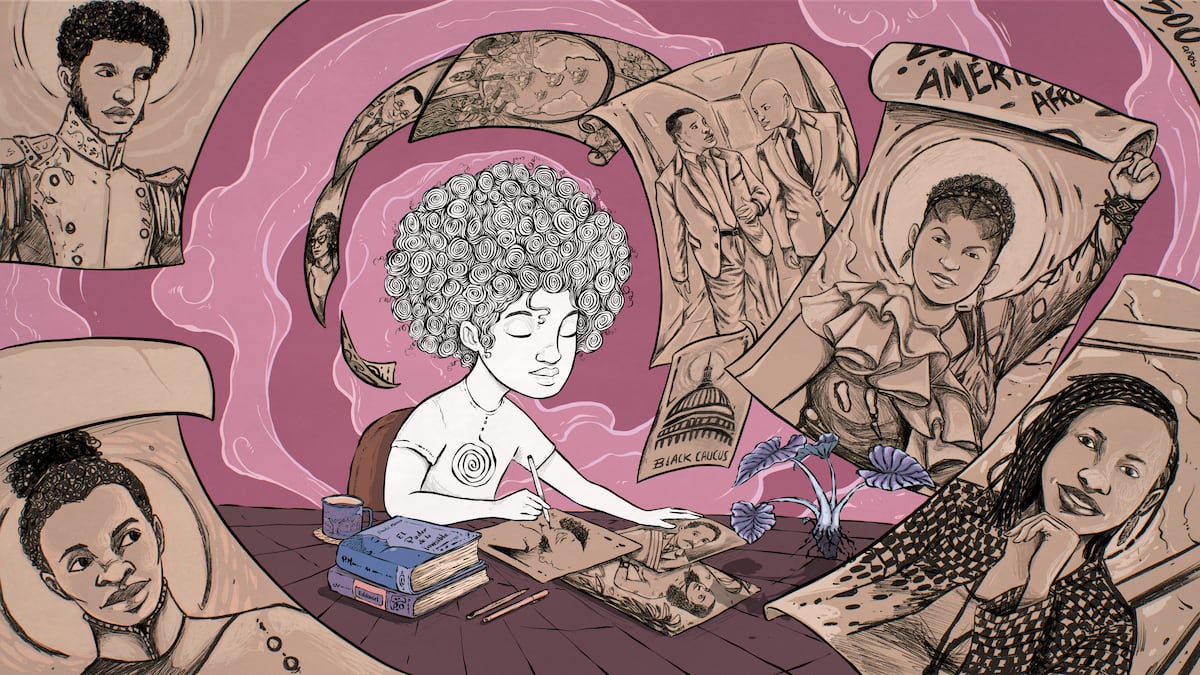
The Decisive Rise of Afro-Colombian Leadership: Representational Changes in Latin America
More than three years have passed—sometimes feeling like centuries—since Francia Márquez was sworn in as Colombia’s vice president on August 7, 2022, in Bogotá’s Plaza Bolívar. This event marked a crucial moment in the historical struggle for inclusion, symbolizing the ascension of an Afro-Colombian leader to a position of prominence in a country where over 20% of the population identifies as Afro-Colombian.
A Historic Inauguration
Dressed in a vibrant blue-and-orange wax print dress designed by a local artisan and adorned with gold earrings shaped like the Colombian map, Márquez stood before God, her ancestors, and the people, proclaiming, “Until dignity becomes the norm.” As the audience erupted in a standing ovation, her inauguration transformed from a routine political event into a moment loaded with the weight of historical significance. Just 15 years earlier, in 2007, Paula Moreno had become Colombia’s first Minister of Culture, also of African descent. Her tenure had concluded with a haunting uncertainty—she could not predict when or if another Afro-Colombian would rise to such heights again. On that memorable day in 2022, Moreno reflected on how the landscape of political consciousness seemed to be shifting, filled with hope for a more inclusive future.
Erasing the Past: Historical Marginalization
Throughout Latin America, the legacy of African descendants has often been systematically ignored. Juan José Nieto Gil, the first president of the Granadine Confederation in 1861, made waves shortly after the abolition of slavery, yet his contributions remained obscure for over a century. Skeletal recognition of Afro-descendants’ roles can also be observed in Mexico, with historical figures like Vicente Guerrero, whose contributions were traditionally whitewashed, and in Argentina, where there exists a resurgence in acknowledging figures such as María Remedios del Valle.
Moreover, in educational curricula across the region, the significance of Afro-descendants is largely minimized or sidelined, creating a significant knowledge gap in the mainstream narrative. Scholar Luz Martínez Montiel posits that Maroons, or escapees from slavery, significantly weakened colonial power, laying the groundwork for independence.
Data Deficient: Underrepresentation in Governance
Despite Afro-descendants making up nearly 25% of the continent’s population, there is substantial underrepresentation in high governmental posts throughout Latin America and the Caribbean. Without thorough regional data collection, it is challenging to ascertain exactly how many Afro-descendants hold powerful positions. However, Colombia, particularly after Márquez’s vice presidency, offers a hopeful glimpse into the future of political inclusion for Afro-descendants. A network of leaders, including Costa Rica’s former vice president Epsy Campbell and Brazil’s Minister of Equality Anielle Franco, is emerging, with a collective understanding of leadership aimed at transformative systemic change.
Afro-Colombians in Concert with Global Allies
The historical and ongoing struggle for political inclusion resonates beyond Colombia’s borders. Much like the African American civil rights movement paved the way for Barack Obama, the push for Afro-Colombian representation has found support from international alliances. Afro-Colombians have traveled to Washington to ally with the U.S. Congressional Black Caucus, advocating for the inclusion of Black leaders in Colombia’s political framework.
Óscar Gamboa, having experienced firsthand the limitations imposed by discrimination, describes a pivotal moment in their activism. Alongside Luis Gilberto Murillo, they actively sought to increase visibility for Afro-Colombians during negotiations for a free trade agreement with the United States—a effort that arguably laid the groundwork for the inclusivity seen in modern governance.
The Journey to Inclusion: Stories of Advocacy
Gamboa recalls their early lobbying efforts in Washington, marked by a blend of determination and naivety. Through persistence, they established relationships with U.S. legislators, such as Congresswoman Cynthia McKinney, catalyzing conversations that highlighted the existence and struggles of Afro-Colombians. These efforts were amplified as they garnered support from influential figures in Congress, transforming their ambition into tangible policy discussions.
One significant turning point came in December 2006 with the appointment of Luis Alberto Moore as the first Black police general, followed shortly by Paula Moreno’s groundbreaking ministerial appointment. Moreno, a product of her Afro-Colombian roots and dedicated to challenging systemic inequalities, embraced her position as a historic mission, reflecting the collective hope for inclusion and representation among Afro-descendants.
Building a Future Together: A Commitment to Change
Moreno’s tenure at the Ministry of Culture was not just about her presence in leadership; it symbolized a collective victory, inspiring similar movements throughout Latin America. In her upcoming memoir, The Power of the Invisible, Moreno emphasizes the importance of collective empowerment among the African diaspora, stating that they have maintained a connection to their roots, irrespective of geographical boundaries.
Post-tenure, Moreno founded an organization dedicated to empowering Black and Indigenous leaders, committed to fostering change from within the communities that have historically been marginalized. Her philosophy of Ubuntu underscores a belief in collective well-being over individual success, illuminating a path for future leaders.
A Collective Movement Across Borders
The wave of change is echoed in the sentiments of other Afro-descendant leaders across the continent. Anielle Franco, striving for racial equality in Brazil, acknowledges the enduring legacy of Marielle Franco, her slain sister, asserting that the fight for representation is powerful and ongoing.
Campbell reflects on the resonance of Márquez’s election across Latin American communities, encapsulating a shared history of struggle and resilience among those of African descent. Both Franco and Campbell emphasize that representation is not merely a personal victory but a collective triumph, rippling through communities historically denied a voice.
An Ongoing Narrative of Resilience
The journey toward inclusion for Afro-descendants in Latin America is fraught with challenges, yet marked with the resolute spirit of those determined to rewrite history. Figures like Francia Márquez and Paula Moreno not only amplify the voices of those overlooked but also inspire a new generation of leaders to rise and remain steadfast against the forces of oppression through solidarity and action. From the halls of Washington to the streets of Bogotá and beyond, the resulting collective energy is crafting a narrative that acknowledges the complexity of history while resolutely pushing towards a more inclusive future.