


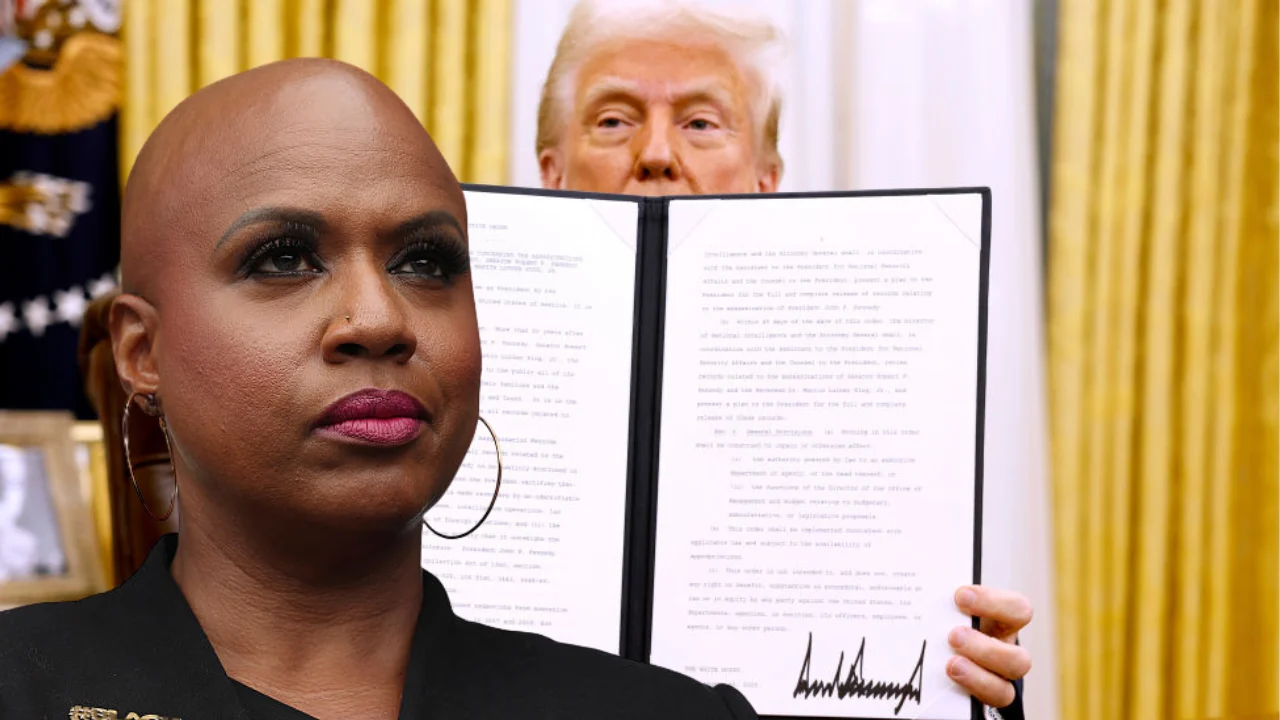
Ayanna Pressley’s Analysis on Presidential Clemency: A Closer Look at Trump’s Actions
In a landmark analysis, U.S. Representative Ayanna Pressley, who represents Massachusetts, unveiled a report that critically assesses President Donald Trump’s clemency actions throughout his time in office. This groundbreaking examination reveals a stark reality: the majority of pardons and clemency actions have predominantly benefited white and wealthy individuals, raising serious questions about equity and justice in the clemency process.
Unearthing the Data
Pressley’s report, titled Trump’s Clemency Gap, compiles comprehensive data from over 1,700 pardons granted by Trump in 2025 alone. The findings indicate a troubling trend where the president has focused his clemency powers not on those subjected to the harsh realities of the criminal justice system but rather on his strongest supporters and wealthy political allies. “Presidential clemency should be used to address injustices—not to reward political allies, corporations, and insurrectionists,” Pressley stated.
By relying on various authoritative sources, including federal clemency actions and records from the Department of Justice, the report paints a picture of a clemency process skewed towards privilege rather than compassion.
The Demographics of Pardons
One of the most striking results from Pressley’s analysis is that a staggering 85% of the individuals pardoned were white. The report also highlights that a mere 5% of those pardoned were convicted for drug offenses, despite significant evidence showing that minority communities—particularly Black and Latino populations—are disproportionately impacted by drug-related charges. This glaring discrepancy suggests a systemic bias in how clemency is applied and raises concerns about the administration’s commitment to addressing racial injustices.
Economic Implications
The financial ramifications of Trump’s clemency decisions are equally alarming. Pressley reveals that the pardons resulted in the forfeiture of $1.4 billion in restitution and fines that could have been allocated towards funding public services, restorative justice initiatives, and more. Notably, the report mentions the first-ever pardon of a corporation, multi-million-dollar crypto company BitMEX, which had violated money-laundering laws. This action underscores a troubling relationship between clemency and corporate interests.
Erosion of Reproductive Rights
In a particularly striking revelation, Pressley’s report takes aim at Trump’s administration’s impact on women’s reproductive healthcare. It notes that 10 out of 17 women pardoned during his term had been convicted of obstructing access to essential healthcare services for women. This highlights an ironic twist in the clemency landscape, as those who were charged for reinforcing women’s healthcare barriers are now receiving presidential mercy, despite the fact that women in prison often face inadequate reproductive healthcare resources.
Insurrection and Its Aftermath
Perhaps the most controversial subset of pardoned individuals includes over 1,500 participants in the January 6 insurrection at the U.S. Capitol. This segment of pardoned criminals, predominantly white and male, raises substantial ethical questions about the message being sent regarding violence against democratic institutions. The report emphasizes that many of these pardoned rioters were charged with severe offenses, creating a stark contrast to the treatment of ordinary citizens caught in the web of the criminal justice system.
A Broken System
Pressley’s exploration reveals a crucial point: the clemency process itself is in dire need of reform. Despite more than 18,000 clemency petitions pending with the Department of Justice, the overwhelming majority of clemency actions granted by Trump circumvented the official review process. Only 17 individuals—0.08%—received clemency through the Department of Justice application process, which raises questions about the transparency and fairness of the system.
Call for Justice
Pressley’s commitment to fostering a more equitable clemency process extends beyond mere criticism; she actively calls for reform. In a letter addressed to Trump’s pardon czar, Alice Johnson—a former convict herself—Pressley urges her to leverage her position to advocate for systemic change that promotes justice for marginal communities.
The report encapsulates the necessity for a renewed focus on those disproportionately affected by systemic injustices, particularly individuals who are serving lengthy sentences that could be considerably shorter under current laws.
A Path Forward
Pressley’s report eloquently argues for a future where clemency is administered with the principles of justice and equity at its core. “The United States needs a clemency process that is rooted in justice for people disproportionately harmed,” she states. It’s a powerful declaration advocating for transformative change in a system that has long favored wealth and influence over equity and compassion.
As the debate around clemency continues, the insights revealed in Pressley’s report urge us to contemplate not just who receives mercy, but also the broader implications of these clemency actions on a nation grappling with complex social injustices.