


Ilhan Omar’s Experience with ICE and the Impact on Somali Communities
U.S. Congresswoman Ilhan Omar has recently shared a disturbing encounter involving her son and ICE agents, within the context of heightened federal activity targeting the Somali community in Minnesota. The incident sheds light on the current state of immigration enforcement and its disproportionate effects on specific communities.
A Personal Encounter with ICE
During a recent segment on WCCO Sunday Morning, Omar recounted how her son was pulled over by U.S. Immigration and Customs Enforcement (ICE) agents after leaving a Target store. Fortunately, he was able to produce his passport ID, which he carries at all times, and was subsequently released. This incident highlights the pervasive anxiety felt by many in the Somali community in Minnesota during this season of heightened federal scrutiny.
Escalating Tensions and Community Reactions
Omar also relayed another alarming encounter where ICE agents entered a restaurant while she and her son were praying with friends. This, she noted, illustrates the agents’ target on young men who appear Somali and are assumed to be undocumented. Such incidents have created a climate of fear within the community, affecting everyday activities and communal spaces.
Broader Context of Operation Metro Surge
Omar’s experiences come amid the Trump Administration’s intensified enforcement strategy known as Operation Metro Surge, aimed at increasing federal presence in areas with significant immigrant populations. Minnesota is home to over 80,000 Somali immigrants, many of whom are U.S. citizens. President Trump has made headlines for his inflammatory remarks targeting Somali immigrants, suggesting that they pose a problem for the state. In December, he characterized Somalis in Minnesota as “garbage” during a Cabinet meeting, further fueling tensions.
Accusations of Racial Profiling
The Trump administration has faced accusations of racial profiling as they conduct these operations under the guise of targeting the “worst of the worst.” Omar has publicly criticized the government’s actions as a blatant act of racial profiling, pointing out that ICE is stopping Black and Brown individuals on the streets, often without probable cause. In a direct letter to Homeland Security, she condemned these practices, labeling them as unnecessary and egregious.
Omar’s Perspective on Political Attacks
Omar has vocalized her dismay at Trump’s consistent personal attacks, deeming them “creepy” and deeply unsettling. She suggests that such targeted criticism is not just a personal vendetta but a calculated strategy to deflect from the administration’s failures. “He’d rather scapegoat us than answer for why people can’t afford their lives,” Omar remarked, emphasizing the need for substantive policy discussions rather than divisive rhetoric.
Implications for the Somali Community
These encounters and the broader implications of ICE’s increased presence highlight a critical moment for the Somali community in Minnesota. As fears escalate, community members are left grappling with the dual impacts of immigration enforcement and political antagonism. Omar’s calls for attention to these issues echo the sentiments of many advocates who challenge the narrative surrounding immigrants and question the ethics of such federal operations.
Community Resilience
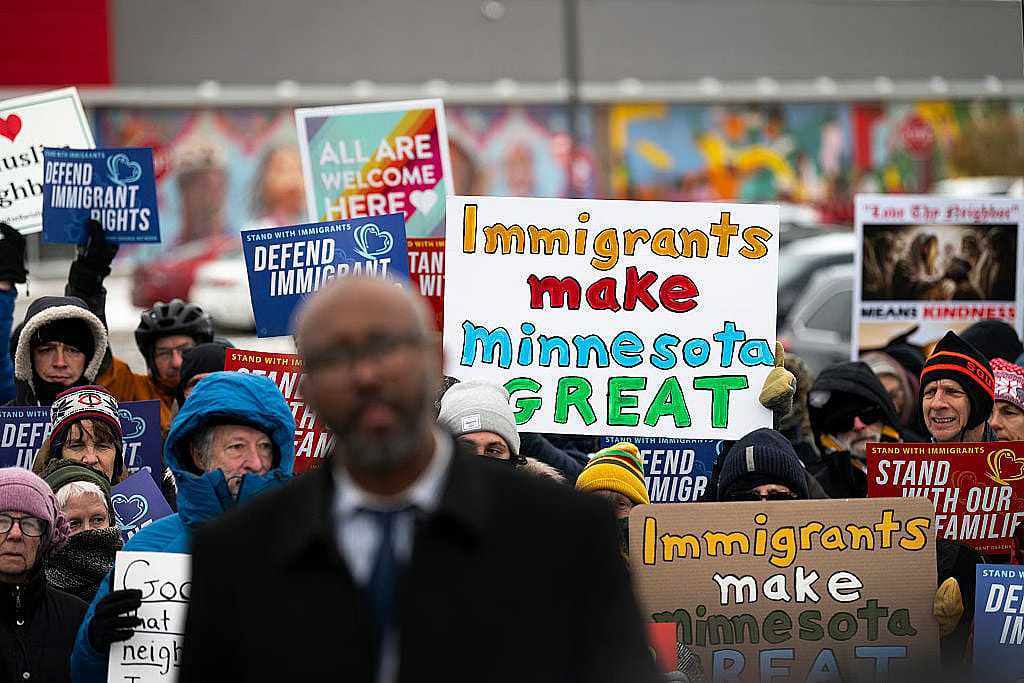
Despite the challenges posed by these federal actions, the Somali community in Minnesota has shown remarkable resilience. Many residents continue to advocate for their rights and push back against the injustices faced in light of heightened surveillance and profiling. Organizations and community leaders are working tirelessly to provide support, legal assistance, and a voice for those who feel marginalized.

As the situation evolves, the experiences of individuals like Ilhan Omar and her son serve as a reminder of the broader implications of immigration policy and its human consequences. The dialogue surrounding these challenges continues to grow, urging society to consider the humanity behind immigration statistics and policies.