


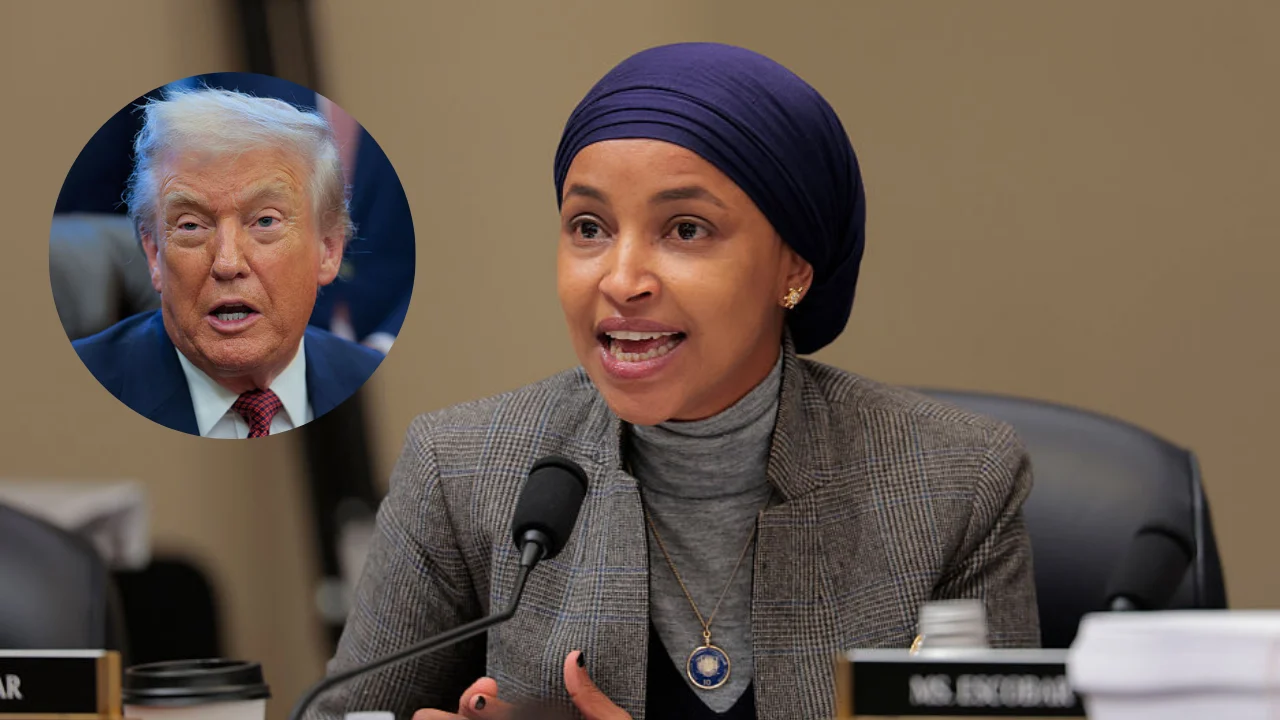
In a recent display of heated rhetoric, U.S. Representative Ilhan Omar strongly condemned President Donald Trump during an interview on CBS’s “Face the Nation.” This confrontation unfolds against a backdrop of inflammatory remarks made by Trump about Omar and the Somali community residing in her home state of Minnesota.
Omar did not hold back, branding the president’s comments as “disgusting.” In her words, “These are Americans that he is calling garbage,” reflecting a profound disappointment in the president’s rhetoric. She pointedly remarked on what she perceives as Trump’s “unhealthy obsession” with both her and the Somali community, criticizing his tendency to target vulnerable populations.
Her concerns extend beyond mere rhetoric; Omar cautioned that Trump’s words have real-world implications. “This kind of hateful rhetoric and this level of dehumanizing can lead to dangerous actions by people who listen to the President,” she articulated, emphasizing the potential for hostility to escalate against the Somali community in the U.S.
The timing of Omar’s statements coincided with a troubling incident in Wisconsin, where a Somali couple faced a racist and Islamophobic attack from a Cinnabon employee. This incident serves as a stark reminder of the dangers that can arise when hateful language proliferates. The employee’s immediate termination demonstrates a corporate response to intolerance, but the underlying social tensions remain alarming.
Omar’s remarks also position Trump’s statements in a broader context. The Somali community, particularly in Minnesota, has often found itself under scrutiny from the highest levels of government. The administration has previously highlighted issues related to a few dozen Somali immigrants falsely accused of misappropriating COVID-19 relief funds, further fueling negative stereotypes. In stark contrast, Trump’s Thanksgiving message labeled Somalian immigrants as part of a chaotic narrative, claiming, “Somalian gangs are roving the streets looking for ‘prey.’” Such characterizations serve to paint an entire community with a brush of criminality and danger.
In a Cabinet meeting held shortly after, Trump escalated his rhetoric, employing harsh language to describe the more than 80,000 Somalis living in Minnesota and the broader Somali diaspora in the U.S. He stated, “Their country is no good for a reason,” framing immigration from Somalia as a burdensome issue rather than a complex social and humanitarian concern.
Rep. Omar found further cause for alarm in the remarks of Trump’s deputy chief of staff, Stephen Miller, who has been instrumental in shaping the administration’s immigration policies. Omar likened Miller’s rhetoric to that of dangerous historical precedents, stating it evokes the dehumanizing language used against Jewish people in Nazi Germany. This comparison underscores her belief that rhetoric can plant the seeds for societal division and even violence.
“We are, yes, of course, ethnically Somali; we are in this country as Americans,” Omar asserted, proclaiming pride in her identity and the contributions of the Somali community to American society. This sentiment of resilience is crucial as communities across the nation continue to navigate the challenges posed by divisive political discourse.