


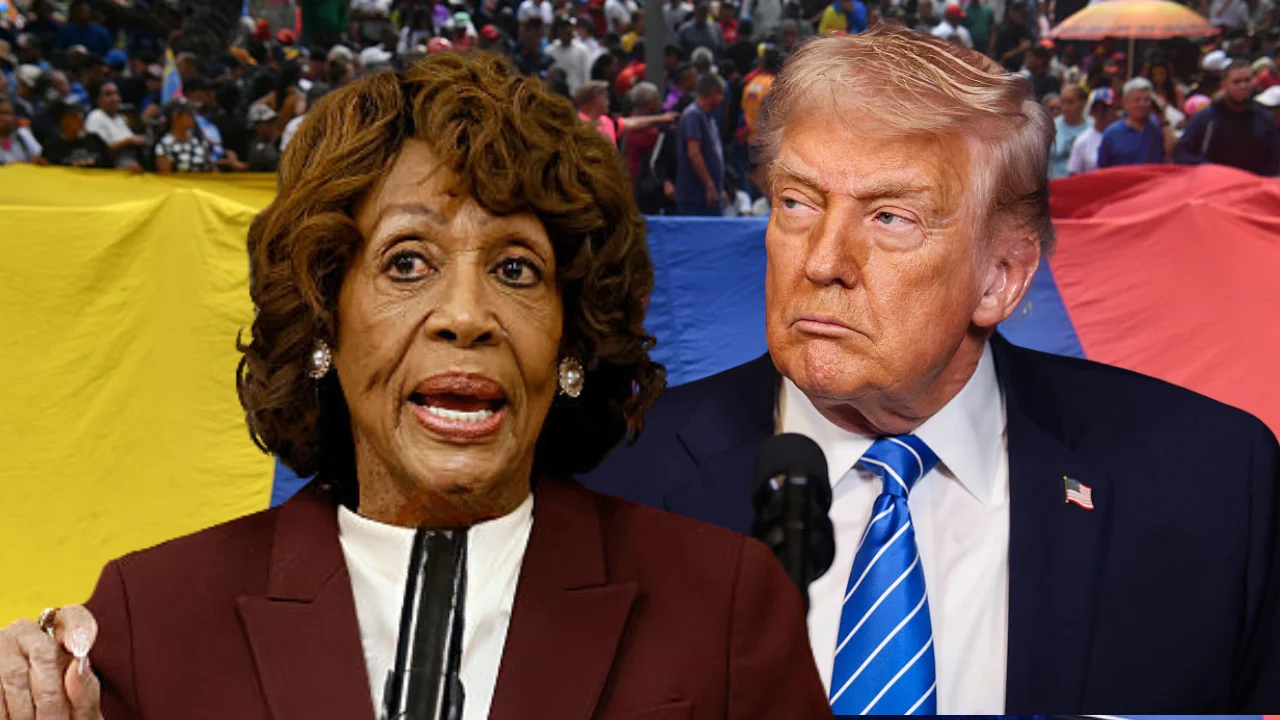
U.S. Representative Maxine Waters, a prominent Democrat from California, has voiced a significant shift in her stance regarding President Donald Trump and the potential for impeachment following his controversial military actions in Venezuela. Waters, who serves as the ranking member of the U.S. House Committee on Financial Services, expressed grave concerns over the legality of Trump’s unilateral decision to engage militarily in Venezuela, capture President Nicolás Maduro, and seize control of the country’s oil infrastructure.
In a statement released on a recent Sunday, Waters characterized these actions as “an unprecedented escalation of an unlawful invasion.” Her declaration underscores not only her disapproval of Trump’s maneuvers but also highlights what she perceives as a staggering overreach of presidential power that flouts constitutional limitations. “We cannot normalize it. We cannot excuse it. And we cannot allow any president to place himself above the Constitution, Congress, or the rule of law,” she insisted.
Waters’ scrutiny isn’t without precedent; she has previously called for Trump’s impeachment early in his first term and remained vocally critical throughout his two impeachment trials. Her renewed focus on impeachment comes in response to what she sees as extreme executive actions that compromise Congressional authority, especially in light of the previous Republican-controlled legislature’s reluctance to hold Trump accountable.
Reflecting on the current political landscape, Waters noted that although many Democrats have questioned the feasibility of impeachment given the prevailing Republican influence, she is reconsidering her previous belief that impeachment is off the table. “Even if Republicans refuse to act, Democrats cannot remain silent or passive in the face of actions this extreme from this Administration,” she emphasized. This contemplation indicates a potential shift in strategy among Democrats as they grapple with how to respond to Trump’s increasingly assertive presidency.
Waters elaborated that Trump’s actions in Venezuela represent a blatant “abuse of power” that demands urgent action from Congress. Her statement reveals her deep concerns about presidential authority in matters of international conflict, especially when it comes to military interventions that can lead to long-term consequences. She condemned Trump’s boastful remarks regarding the detention of Maduro, asserting that it represents a dangerous precedent in U.S. foreign policy.
On the legislative front, members of the Trump administration are set to brief congressional leaders about the military strikes. Representative Hakeem Jeffries, a New York Democrat and the House Democratic leader, criticized Trump’s decision to proceed without prior congressional notification. He dismissed claims that notifying Congress could have jeopardized operational security, arguing that such actions represent a constitutional violation by circumventing Congress’s war powers.
Jeffries further stressed that the ramifications of Trump’s military actions are far graver than a simple counter-narcotics operation. “This was an act of war,” he declared, reinforcing the need for congressional oversight and adherence to legal protocols in matters of military engagement.
In her assessment of the situation, Waters acknowledged the humanitarian crisis instigated by Maduro’s leadership in Venezuela, yet she firmly stated that no president, particularly Trump, has the authority to unilaterally initiate military strikes against a sovereign nation. Waters drew parallels to the U.S. involvement in Iraq, expressing her reluctance to see the country dragged into another prolonged conflict with dubious motivations rooted in resource acquisition.
“We have been down this road before, and it led to a disastrous, decades-long war in Iraq driven by oil and lies,” Waters reflected, suggesting a deeply rooted skepticism about the motivations behind U.S. military interventions under the Trump administration. Her vehement stance indicates a pivotal moment for Democrats and may reshape how they approach issues of executive power and military authority moving forward.