


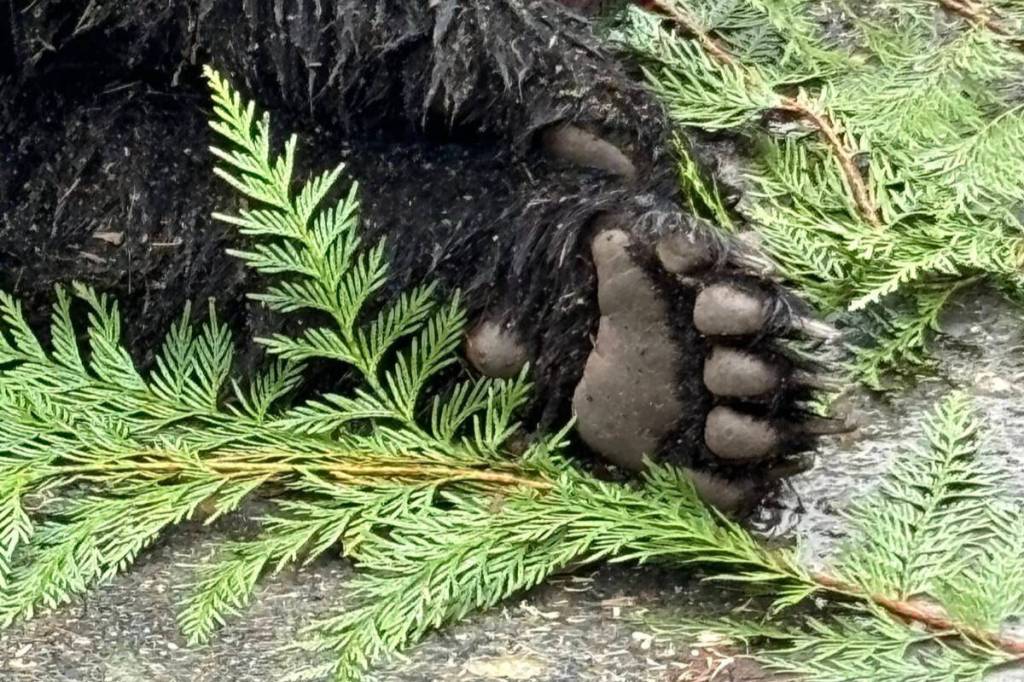
A Heartfelt Encounter with a Black Bear
On a tranquil morning near Shirley Delicious in Sooke, a community member, Lani Ranger, had an unexpected encounter that would ignite a deep reflection on life, death, and the bond between humans and wildlife. As she drove towards Living the Dream Farm, an image became imprinted on her memory: a black bear lying motionless on a patch of gravel just off the main road.
The Unfortunate Scene
The bear, a young female, was clearly deceased, possibly struck by a vehicle as it crossed from the busy road. Ranger shared, “There were no cars, just this stunning bear,” highlighting the stark contrast between the vibrant life of the wilderness and the abruptness of its end. The sight was both haunting and heartbreaking. Ranger couldn’t contain her tears, contemplating the life of the bear that never had the chance to mother cubs.
Understanding Black Bears
The American black bear is Canada’s most common bear species—especially prevalent in British Columbia, where an estimated 120,000 to 150,000 inhabit various environments. These bears, ranging in color from Kermode cream to deep black, are primarily omnivorous; an impressive 80% of their diet consists of vegetation. Their lifecycle typically sees them active from April to November. However, due to the mild climate of Vancouver Island, these remarkable creatures often forage well into winter before retreating to their dens.
Local Response and Community Awareness
The discovery of the bear prompted Ranger’s immediate concern about what should be done. She first reached out to friends within the T’Sou-ke Nation in hopes they could provide guidance. Unfortunately, logistical complexities meant neither they nor the nearby Pacheedaht Nation could assist. Ranger noted that black bear incidents generate between 14,000 to 25,000 calls annually to the Conservation Officer Service. In these cases, maintenance crews typically manage the removal unless signs of poaching are evident.
Feeling a moral obligation, Ranger refused to let the bear remain a roadside spectacle. “Whatever is happening in our backwoods can be kind of nefarious sometimes. I thought, ‘This girl is not going to be taken and harvested, and I’m not leaving until she’s picked up,'” she expressed.
Honoring the Bear
In an inspiring act of respect and remembrance, Ranger invited her friend from the T’Sou-ke community to perform a small ceremony. Together, they burned sage and laid cedar boughs around the bear. “It’s always magic when she and I are together,” Ranger reflected, noting the beauty of community and tradition in this moment.
Ranger’s husband, Pete, an Ojibwe/Cree man, joined with a drum. He sang a traditional song, and the ceremony filled the air with a powerful energy that echoed the significance of respecting life—even in death. The bear, with minimal visible trauma, appeared to have walked a distance before lying down, adding a layer of poignancy to her final resting place.
Community Reflection
Throughout the day, onlookers visited, each person contributing their thoughts and stories, creating an atmosphere of communal reflection. When Ranger returned home, she shared her experience online, resonating with many. Her post sparked discussions about the responsibilities humans have towards wildlife, emphasizing the need for a more conscious relationship with the natural world.
“Whatever happened that day didn’t just happen there,” she articulated. “It was supposed to continue on to help others see what we need to be doing with our bears, what we need to be doing with our wildlife.”
Fascinating Facts About Black Bears
Black bears evoke interest not only for their majestic appearance but also for their intriguing biology. Coastal British Columbia’s black bear dens are typically found under large trees, logs, and stumps. Notably, bears have a unique reproductive strategy known as delayed embryo implantation, wherein fertilized eggs only attach if the mother has sufficient fat reserves to support her young through winter.
Females typically give birth to one to five cubs, usually twins, in late January. These tiny cubs emerge in spring weighing just 250 to 500 grams, growing rapidly as they nurse and learn to navigate their world. While black bears can live over 30 years, their lifespan typically hovers between 15 to 20, with cub mortality rates around 50% due to predation.
Ranger’s encounter with the young bear not only brought awareness to local wildlife issues but also allowed for a healing ceremony that honored the interconnectedness of life in the wilderness. This heartfelt experience serves as a reminder of the fragility of nature—and our role in protecting it.