


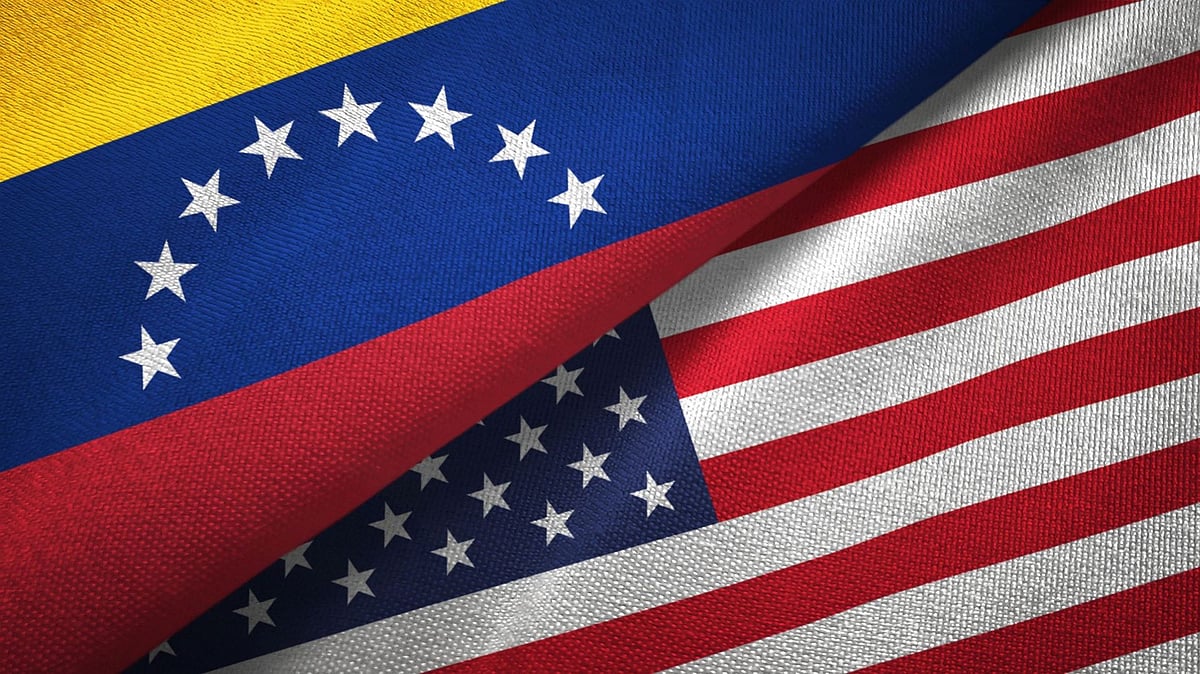
Redefining Peace: The Curious Case of U.S. Intervention in Venezuela
Introduction: Peace through Force?
In a world where the language of diplomacy is often overshadowed by military might, the actions surrounding Venezuela raise alarming questions about the evolving definition of peace. As Donald Trump expressed his aspiration for a Nobel Peace Prize, events in Venezuela illustrate a troubling trend: acts of aggression are increasingly framed as moral imperatives. The forcible capture of a leader and military interventions are no longer seen as violations of sovereignty but as justified measures for the ‘greater good.’ This perspective challenges the very foundation of international law and raises critical concerns about global power dynamics.
The Venezuelan Dilemma
The situation in Venezuela transcends regional concern; it poses a broader question: can a powerful nation violate another’s sovereignty without repercussions? The unilateral military approach taken by the U.S. not only undermines established norms of international relations but also threatens to erode the principles that protect sovereign states, particularly those that are weaker and vulnerable.
Historical Context: A Pattern of U.S. Intervention
Venezuela is not an isolated case; rather, it fits within a long-standing tradition of U.S. military interventionism. Historical precedents like Iraq, Afghanistan, Libya, and Syria demonstrate a consistent pattern where military force is often justified under the guise of democracy, security, or humanitarian efforts. However, the outcomes tell another story.
Iraq: A Cautionary Tale
In 2003, the invasion of Iraq was predicated on the false narrative of weapons of mass destruction. The aftermath was catastrophic, leading to state collapse, widespread violence, and the emergence of extremist groups. America’s exit strategy was marred by chaos, while the country remains deeply fractured years later.
Afghanistan: A Long, Painful Engagement
For two decades, Afghanistan faced continuous conflict, marked by an abrupt and disorganized withdrawal of U.S. forces. The return of the Taliban illustrated the futility of the intervention, leaving behind a nation grappling with significant humanitarian crises and unanswered questions about its future.
Libya: Democracy or Disintegration?
Similarly, NATO’s intervention in Libya was framed as a protective measure for civilians, yet the aftermath was a descent into civil war and fragmentation. Instead of fostering democracy, the intervention led to chaos and instability, highlighting the dangers of military action without careful planning for post-conflict recovery.
A Global Response: Alarm from the South
The events in Venezuela have solicited strong responses from leaders in the Global South. Brazilian President Lula da Silva condemned the U.S. actions as a direct violation of sovereignty, a sentiment echoed by numerous Latin American and Asian leaders. Major global powers like Russia and China have also criticized the unilateral military action, emphasizing the need for respect towards international law.
The Janus Face of American Morality
Despite the U.S.’s claims that its actions are motivated by human rights concerns, its selective moral stance raises uncomfortable questions. Take for example the political turmoil in neighboring Bangladesh, where serious human rights violations have garnered little more than diplomatic notes from Washington. Here, the lack of economic or strategic interests leads to a muted response, exposing the inconsistencies in America’s advocacy for justice.
Economic Underpinnings: Why Venezuela?
Underneath the surface of military intervention lies a more profound economic motivation. With the U.S. economy facing mounting challenges, including a staggering public debt and reliance on the dollar, maintaining geopolitical control becomes a matter of economic necessity. Venezuela, with its vast oil reserves, emerges as a crucial player in this equation. The strategic importance of controlling resources cannot be overstated—especially in an era when alternative, non-dollar energy transactions are on the rise.
Militarism as Economic Policy
U.S. military dominance serves as an unspoken guarantor of economic interests. Sanctions and military interventions stem not just from foreign policy objectives but also from a need to preserve economic advantages. While this strategy can provide temporary relief for the U.S., it inflicts long-term damage on global order and the nations caught in conflict.
Normalizing Force
The normalization of military action as a routine policy instrument is particularly concerning. Recent years have seen an increase in airstrikes, drone operations, and targeted missions justified as self-defense or counter-terrorism. Collectively, they signal a systemic shift toward viewing force as an acceptable means of governance instead of a last resort.
The Erosion of International Law
International law clearly delineates the parameters for the use of force, strictly prohibiting unilateral military actions outside of self-defense or without explicit Security Council authorization. The lack of accountability for major powers who flout these laws undermines global order and challenges the very fabric of international relations.
Implications for Global Stability
Opposing unilateral interventions does not equate to advocating for authoritarianism; rather, it underscores the necessity of upholding principles that govern global interactions. For countries like India, which value sovereignty and strategic autonomy, the implications are profound. The ongoing violations in Venezuela and elsewhere weaken collective protections and heighten the risks for nations worldwide.
A Choice for the International Community
The current global landscape presents a stark choice: to accept unilateral force as the new norm or to advocate for a system founded on law, balance, and multilateral engagement. The urgency of this decision cannot be overstated, as the consequences of inaction will reverberate far beyond the immediate conflicts, impacting global stability for generations to come.