


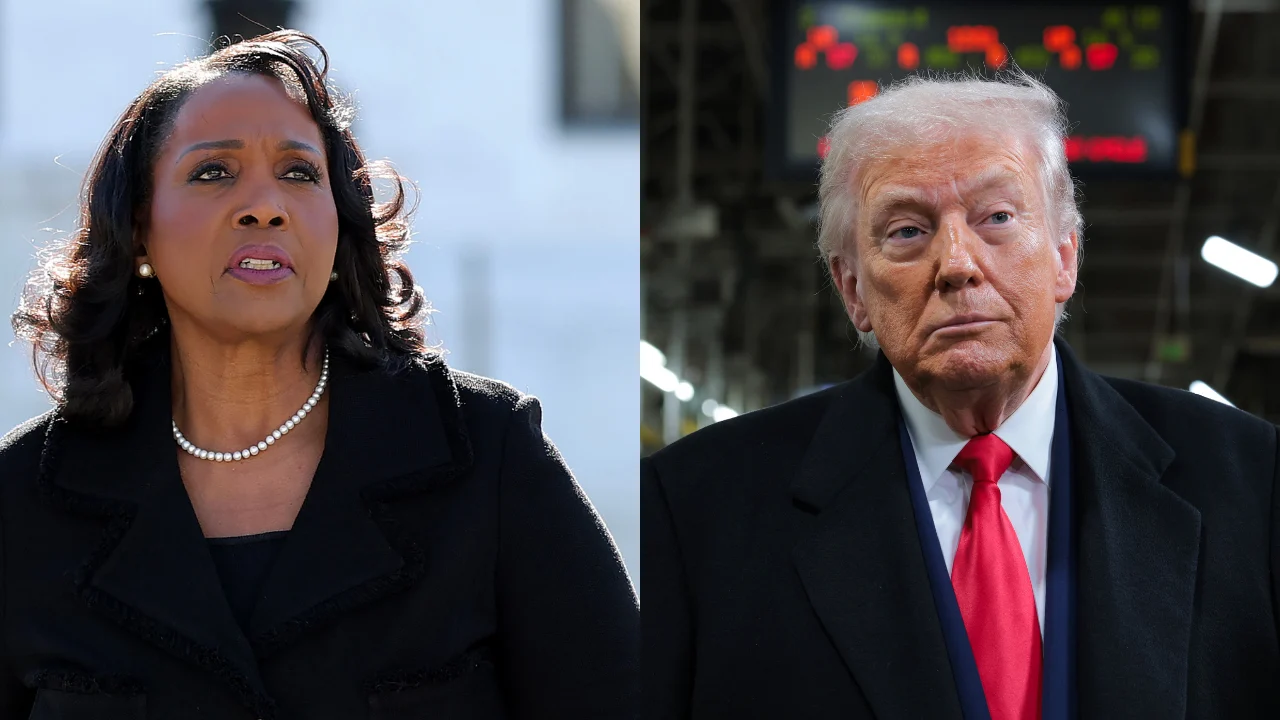
Amidst significant political drama, the implication of Supreme Court decisions on federal appointments has taken center stage, particularly concerning the recent case involving Lisa Cook and her controversial dismissal from the Federal Reserve. Despite efforts by the Trump Administration to leverage the Supreme Court to validate Cook’s firing, early indications suggest that the Court may side with her, reinforcing her position amid a complex battle over the independence of the central bank.
During the oral arguments held on January 21, a notable dynamic emerged: several conservative justices appeared to align with their liberal counterparts, supporting Cook’s legal team. Her lawyers articulated a compelling argument, emphasizing that her dismissal would set a dangerous precedent, jeopardizing the Federal Reserve’s critical autonomy from political influence. With markets and economic stability hanging in the balance, the justices seemed to recognize the potential chaos that could ensue from politicizing such a significant federal position.
The context surrounding Cook’s removal is vital to understanding the current legal proceedings. Trump, even after appointing Jerome Powell as Fed Chair during his presidency, has publicly criticized him and others in the Fed. This dismissal of Cook, appointed under President Biden’s administration in 2022, raises questions about the motivations behind such decisions. During the arguments, Justice Brett Kavanaugh notably pointed out the perils of establishing a precedent where a sitting Democratic president could easily fire Trump-appointed officials. He cautioned that the cascading effects of such a decision could lead to a tit-for-tat dynamic that undermines the stability of the Federal Reserve.
Cook remains firm in her stance against the claims made regarding her conduct at the Fed, specifically allegations tied to supposed mortgage fraud. She has consistently denied these accusations, and her legal team has painted the dismissal as an unfounded and politically charged move rather than a legitimate cause for termination. Kavanaugh echoed this sentiment during the proceedings, challenging the notion that the executive branch should have unchecked power to dismiss members of the Federal Reserve without due process.
“What goes around comes around,” Kavanaugh remarked to U.S. Solicitor General D. John Sauer, reflecting a growing concern about the ramifications of allowing presidential whims to dictate the fates of key financial officials. His comments underscored a broader anxiety shared by many justices regarding the balance of power between the executive branch and the operational independence of the Federal Reserve, an entity designed to function free from political pressures.
Furthermore, if the justices opt for a narrowly focused ruling, legal experts anticipate that the case might resurface in a year, depending on the scope of their decision. This prospect adds another layer of complexity to the ongoing discussions surrounding the Federal Reserve’s role in economic policy and governance. In recent history, no president has successfully removed a Federal Reserve governor, marking Cook’s situation as unprecedented in the institution’s 112-year history.
Trump’s legal representatives continued to advocate for the notion that such executive decisions were insulated from judicial scrutiny. However, this argument seemed to falter in the Court, as it became apparent that the justices were disinclined to accept the idea that the executive branch holds absolute authority over such significant federal appointments without the possibility of legal review.
As discussions surrounding Cook evolve, the Court’s eventual ruling will inevitably shape the relationship between the White House and central bank, with potential ramifications spilling into the market. Additionally, the Court has other pressing cases on its docket, including one concerning Trump’s controversial order regarding emergency tariffs, suggesting that the implications of these rulings may have far-reaching consequences for governance in the United States.