


The Culinary Legacy of James Hemings: A Chef Who Shaped American Cuisine
The Unsung Hero of American Cooking
James Hemings, the brother of Sally Hemings and an enslaved chef at Monticello, played a pivotal role in transforming American cuisine. As he served French-inspired dishes to notable figures of the time—including dignitaries and socialites—his cooking methods made waves and influenced a generation of home cooks. Many American households began adopting the sophisticated techniques introduced by Hemings, shaping the culinary landscape of the newly formed nation.
Innovations in Cooking Techniques
During Hemings’ era, most American meals were cooked over a simple hearth or in open fireplaces. In contrast, Hemings utilized advanced cooking methods that required a stewing stove, an innovative precursor to the modern stove. This kitchen innovation provided greater control over heat, allowing Hemings to master complex French recipes that were previously unimaginable in American kitchens. As diners experienced the sumptuous dishes prepared by Hemings, they became eager to emulate his culinary style in their own homes, effectively elevating the standards of American cooking.
The Celebrity Chef of His Time
Chef Omar Tate aptly notes that Hemings could be considered a “celebrity chef” of his time, thanks to the prominence of Thomas Jefferson, who brought him to Paris. The ability to showcase Hemings’ talents to a wider audience helped solidify his influence on American culinary culture. According to Tate, the way Americans cook and celebrate certain foods today is a testament to that unique moment in history when Hemings’ talents became accessible to the elite.
The Emergence of Macaroni Pie
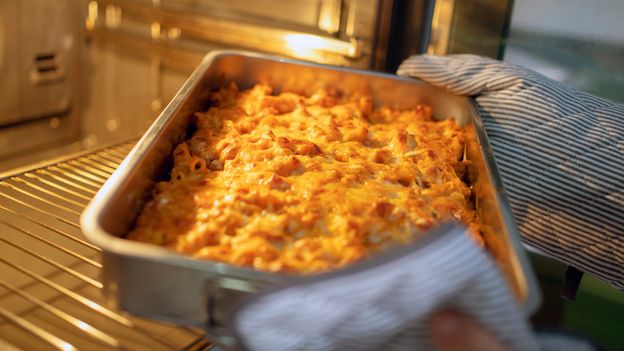
Among Hemings’ most famous contributions to Jefferson’s table was a dish referred to as “macaroni pie,” an early version of the mac and cheese we love today. Hemings crafted this signature dish by cooking macaroni in a mixture of milk and water, layering it with cheese and butter before baking to perfection. It is arguably one of the earliest documented introductions of macaroni to American cuisine, making it a beloved staple that would resonate through generations.
Adaptation and Influence
While it’s uncertain whether Hemings’ macaroni pie closely resembled dishes served in Paris during the late 18th century, it is evident that he adapted various ingredients and methods to fit both his and Jefferson’s palates. Over the following century, dishes similar to Hemings’ macaroni pie gained immense popularity across the United States, aided by shifting societal trends.
Broader Culinary Trends
The culinary evolution Hemings sparked can also be attributed to the influx of Italian immigrants in the late 19th century. Their arrival expanded access to pasta, allowing for broader experimentation in American kitchens. Additionally, industrialization revolutionized food production, making cheese and pasta more accessible than they had ever been. The factors converged to heighten the dish’s popularity.
In 1937, Kraft introduced a boxed version of macaroni and cheese during the Great Depression, promoting it as an affordable meal option. With its catchy slogan—”Make a meal for four in nine minutes”—it quickly became a household favorite. By World War II, mac and cheese solidified its position in American cooking by being available as a cheap purchase, often requiring only a single ration point for two boxes.
Macaroni and Cheese Today
Today, mac and cheese is a $2.9 billion industry that holds a special place in American hearts and stomachs. Reports suggest the average American consumes it about 22 times a year, making it one of the most favored comfort foods, second only to pizza. Despite its widespread appeal, the contributions of the chef who first popularized this dish have remained largely overlooked—until recently.
Recognition at Monticello
In current times, efforts are being made to recognize James Hemings more thoroughly. Monticello, where he spent much of his life, now celebrates his legacy and contributions as a chef. His story serves as a reminder of the rich, yet often unacknowledged, layers of American culinary history that are deeply entwined with the experiences of enslaved individuals. Hemings’ influence remains a significant chapter in the story of American food, a narrative that deserves to be told and appreciated.