


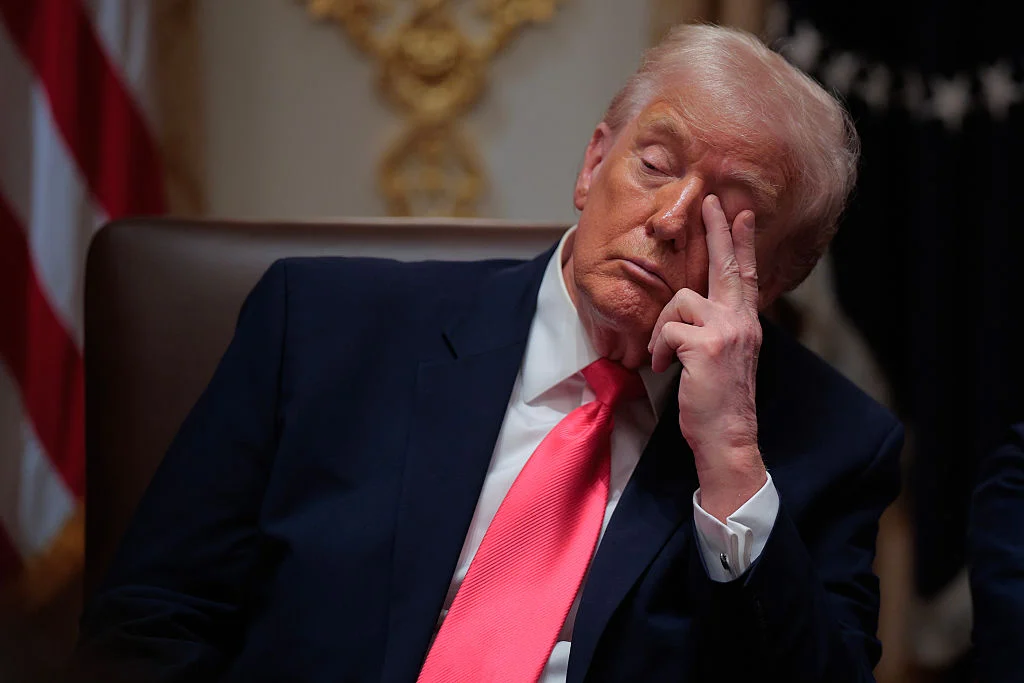
The Viral Moment: President Trump’s Cabinet Meeting Nap
Recently, President Donald Trump made headlines for an unexpected reason: he appeared to doze off during a televised Cabinet meeting at the White House. This incident quickly caught fire on social media, with clips showing Trump resting his eyes and leaning to one side while Secretary of State Marco Rubio praised him as the “only leader in the world” capable of helping to resolve the ongoing war in Ukraine.
The Cabinet Meeting: A Sleepy Affair
During this lengthy meeting, Trump’s apparent struggle to stay awake didn’t go unnoticed. As Defense Secretary Pete Hegseth discussed the administration’s controversial military strikes against what are termed “narcoterrorists” in the Caribbean, Trump was visibly having difficulty keeping his eyes open. Video footage of this moment sparked a flurry of memes and commentary online, with many users echoing surprise and amusement.
The Ironic Twist
What adds a layer of irony to the situation is the longstanding narrative surrounding Trump and his political opponents. For years, Trump and many Republicans have criticized former President Joe Biden, suggesting he lacks the stamina and mental acuity required for the presidency. Trump even branded Biden as “Sleepy Joe,” highlighting his public perception of Biden’s age-related issues. In light of Trump’s recent nap, critics have pointed out this apparent double standard, questioning how the narrative has flipped.
Reactions from Social Media and Beyond
Public reactions to the clips of Trump’s Cabinet meeting have been swift and often humorous. Journalist Don Lemon even tweeted, “Is it nap time in D.C?!?” leading to a wave of engagement from followers who expressed their amusement. The hashtag “Trump asleep” quickly gained traction on platforms like Google and Threads, sparking discussions about the president’s fitness for office.
Historical Context of Trump’s Sleepy Moments
This wasn’t the first time Trump’s alertness during official duties has come under scrutiny. In a past incident on November 8, Trump seemed to struggle to keep his eyes open at an Oval Office news conference regarding price cuts for weight-loss medications. Observers noted that he appeared to fight off sleep for an extended period as officials spoke. As with the latest Cabinet meeting, that moment also went viral, adding to the cumulative narrative regarding Trump’s alertness and stamina.
Health Scrutiny Intensified
In recent months, concerns surrounding Trump’s age and health have intensified. Earlier this week, the White House confirmed that Trump had undergone an MRI, although there was considerable ambiguity regarding the purpose of the procedure. While Trump himself stated he had “no idea” what the MRI was for, the White House emphasized that it was a standard preventive measure for males of his age to monitor cardiovascular and abdominal health.
In addition, there have been observations of visible health issues, such as bruising on his hand and swelling on his feet. The White House has attempted to downplay these concerns while noting that Trump is receiving treatment, yet Democrats and critics have seized upon these visuals as signs of deteriorating health.
Political Responses to Trump’s Health
Democratic opponents have openly questioned Trump’s mental acuity, suggesting that he may be dealing with cognitive issues. Illinois Governor JB Pritzker made headlines with his candid assessment, stating, “This is a man who has something stuck in his head. He can’t get it out of his head.” Such comments contribute to a growing narrative among critics that President Trump may not be fit for office, especially considering his age.
Congresswoman Jasmine Crockett also weighed in, expressing disbelief that no one in authority is questioning Trump’s mental fitness to serve. Her remarks encapsulate a rising tide of skepticism about Trump’s capacity to effectively lead.
Understanding the Public Sentiment
The combination of Trump’s own past critiques of Biden and the current viral moment of him appearing to sleep during an official meeting has stirred public sentiment. It highlights a broader dialogue about the health and vitality of older leaders in American politics. As political discourse continues to evolve, the implications of these events on Trump’s image—and the future of his political ambitions—remain to be seen.
In the world of social media and memes, moments like these are often amplified, sparking conversations far beyond the original context. The humor and irony woven through these interactions reveal not just the public’s perceptions of individual politicians, but also the complex layers of political culture in the United States today.