


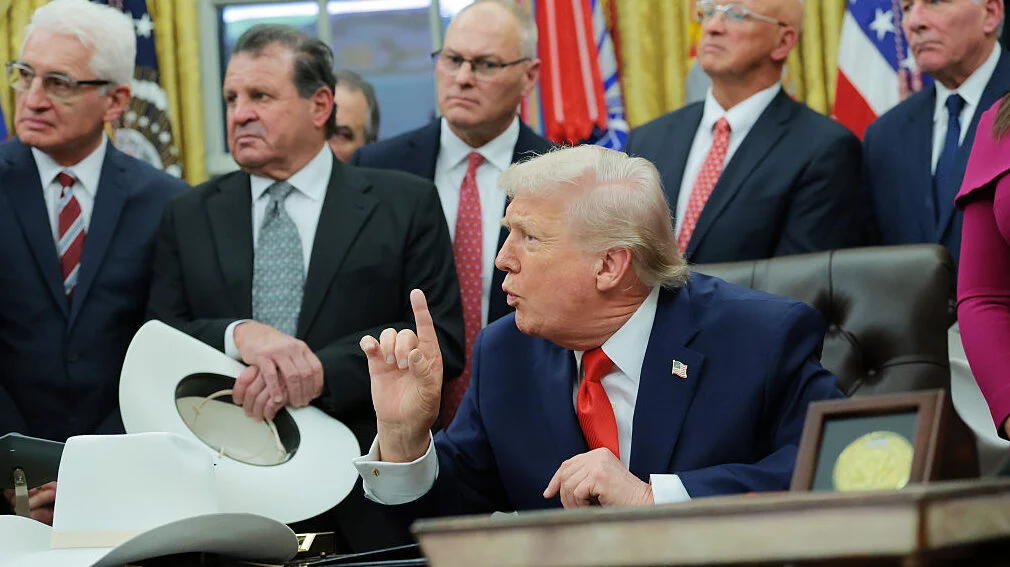
Trump’s Press Conference Encounter with Yamiche Alcindor: A Tense Exchange
On a recent Friday, President Donald Trump found himself amidst a familiar scene—the bustling and often chaotic environment of a White House press conference. This event was particularly notable as it followed the signing of a bill honoring the players of the 1980 Winter Olympic Games with Congressional Gold Medals. However, it was Trump’s remarks directed towards Yamiche Alcindor, a seasoned White House reporter at NBC News, that quickly stole the spotlight.
The Setup: A Press Conference Tradition
As is the custom in White House press events, reporters flock to ask questions following significant announcements. Trump, engaged in his usual banter with the press, called on Alcindor early in the session. This acknowledgment was telling, as Alcindor has developed a reputation for her persistence and insightful inquiries. Her question about potential U.S. actions regarding Venezuela’s oil assets probed into a sensitive area of foreign policy, highlighting Alcindor’s commitment to holding powerful figures accountable.
Trump’s Initial Compliment
In a surprising twist, Trump first complimented Alcindor, referring to her as a “big-time reporter.” This was a marked departure from previous broadsides he had aimed at her, particularly a September incident where he dismissed her as “second-rate.” This seemingly positive recognition raised eyebrows given their history. Alcindor, who is currently expecting her second child, likely did not anticipate the exchange would take a turn.
The Shift: Aggressive Accusations
As Alcindor attempted to follow up with further questions, Trump’s demeanor shifted. He instructed her to be “nice and easy,” which he punctuated with the remark, “She’s very aggressive.” This comment drew immediate criticism due to its implications. Many interpreted it as a subtle nod to a historical stereotype often directed at Black individuals, particularly women, suggesting that their assertiveness is somehow inappropriate or excessive.
A Pattern of Behavior
This encounter feeds into a larger narrative regarding Trump’s interactions with female journalists, especially women of color. Earlier in the week, he had a heated exchange with Rachel Scott from ABC News, who confronted him about releasing controversial video footage. Trump’s retort was laced with hostility, branding her as “the most obnoxious reporter in the whole place.” Such incidents illustrate a troubling trend where female reporters, notably those from marginalized backgrounds, are subjected to verbal assaults.
Historic Tensions
Alcindor’s history with Trump has been fraught with tension. Back in 2020, during the early days of the COVID-19 pandemic, she pressed Trump about his responsibility in the national response, given the dismantling of the pandemic office. His response was dismissive, describing her question as “nasty.” This pattern of derogatory comments serves to highlight the ongoing challenges faced by journalists, particularly women of color, in the current political climate.
Contextual Backdrop
The exchange with Alcindor wasn’t an isolated incident. Trump’s penchant for targeting female journalists has sparked outrage and concern among various advocacy groups. The implications of his comments not only affect the individuals targeted but also contribute to a broader cultural narrative about the treatment of women in journalism. In recent months, other female reporters have similarly faced his wrath, underscoring a contentious relationship that continues to unfold.
Conclusion
While Trump’s press conference this week was ostensibly about commemorating Olympic athletes, it underscored the ongoing struggles surrounding media interaction and the delicate balance of power in the realm of political reporting. Alcindor’s direct approach, coupled with Trump’s fluctuating tone, reflects a larger discourse on race, gender, and the press, bringing attention to the dynamics often overlooked in such exchanges.
Throughout the unpredictability of Trump’s interactions, one thing remains clear: the resilience of journalists like Alcindor, who continue to challenge authority and demand accountability in the face of adversity.