


President Trump’s Tribute to Scott Adams: A Controversial Legacy
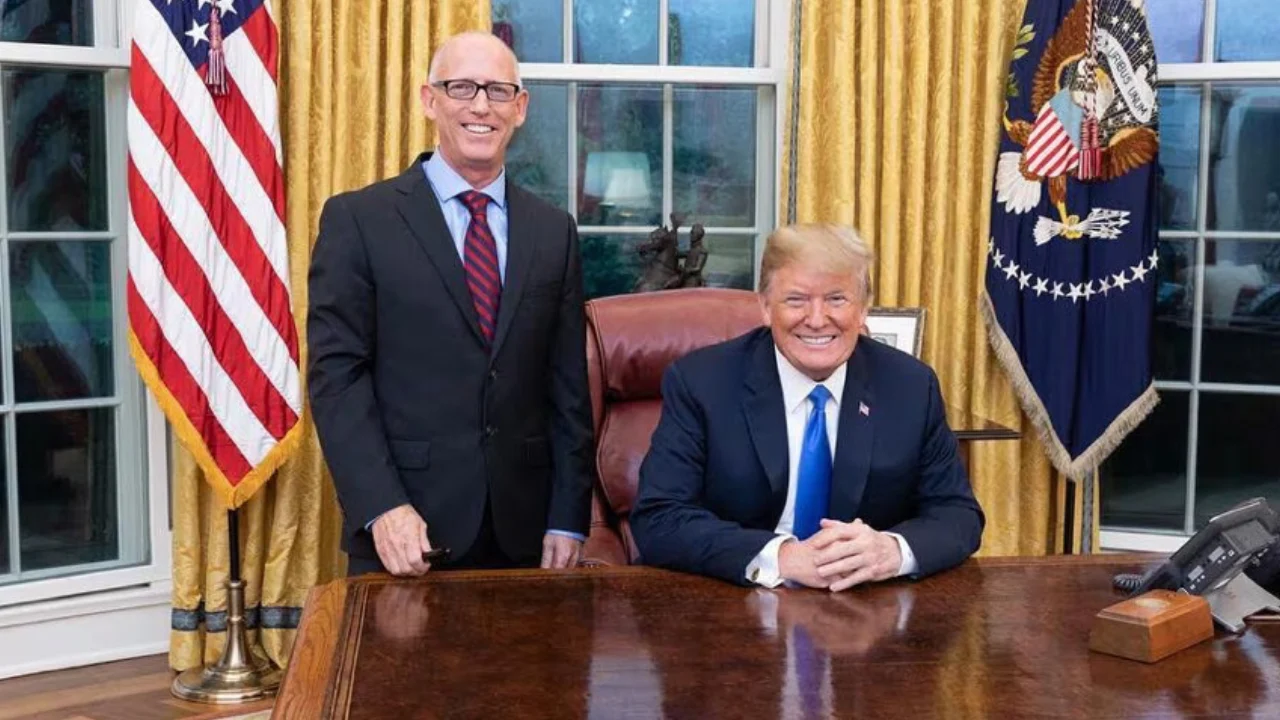
On a recent Tuesday, President Donald Trump paid tribute to the late Scott Adams, the controversial creator of the comic strip “Dilbert,” who passed away at the age of 68 due to prostate cancer. This heartfelt tribute came as a surprise to many, given Adams’s fraught history with race issues in America. In a post on Truth Social, Trump referred to Adams as a “fantastic guy” who knew and respected him “when it wasn’t fashionable to do so.” The post, which included a picture of the two inside the White House Oval Office, conveyed Trump’s condolences to Adams’s family and friends, stating he “will be truly missed.”
The Fallout from Adams’s Controversial Views
Despite Trump’s warm sentiments, Adams’s legacy is marred by a significant backlash following remarks he made in 2023 that many deemed racist. During a YouTube broadcast, Adams ignited outrage after referring to Black Americans as a “hate group.” This comment was in reaction to a poll from a conservative firm that suggested a large percentage of Black respondents agreed with the statement, “It’s OK to be White.” Adams’s inflammatory statements led to a widespread cancellation of his comic strip across hundreds of newspapers nationwide, illustrating the swift consequences of his controversial views.
The Context of Adams’s Rhetoric
Adams’s assertion that nearly half of all Black Americans were not okay with white people was not just a rogue comment; it reflected a deeper mindset that has caused significant turbulence in contemporary discourse about race. He further stated that white individuals should “get the hell away from Black people,” claiming that “there is no fixing this.” Such remarks went against the grain of increasing efforts to promote understanding and cohesion among races in America.
The Historical Interpretation of Adams’s Language
Adams’s choice of language and his framing of racial issues is starkly critiqued by organizations like the Anti-Defamation League, which identifies the phrase “it’s OK to be white” as one emerging from a 4chan trolling campaign linked to white supremacist ideologies. This troubling backdrop raises critical questions about how language is used to perpetuate division rather than dialogue.
Adams’s Defense of His Remarks
In his defense, Adams argued that he was merely advising people to “avoid hate,” framing his cancellation as indicative of a broader assault on free speech in America. He often portrayed his racial identity as a hindrance, claiming that his being white negatively impacted his opportunities in various professional settings, including the cancellation of his “Dilbert” primetime series on UPN.
Reflections of Grievance Culture
Traditionally, “Dilbert” provided satirical commentary on white-collar office culture. However, after the controversies, his racial perspectives began to seep into his creative work. Various strips depicted themes around performance reviews being replaced with “wokeness” scores, and narratives suggesting Black employees were given unearned positions, implicitly criticizing affirmative action.
Trump’s Views on Racial Issues
President Trump’s own commentary on race often mirrors the sentiments expressed by Adams. Recently, Trump has voiced concerns that the Civil Rights Act of 1964, established to combat racial discrimination, has resulted in what he describes as “reverse discrimination” against white Americans. This framing aligns closely with the grievance culture that has proliferated during his tenure, suggesting that racial progress has come at the expense of white individuals.
The Cultural Impact of Adams’s Death
Scott Adams’s passing and the subsequent reactions reveal the complex intersections of race, politics, and media in America. Trump’s tribute juxtaposed with the broader societal fallout from Adams’s views serves to underline a cultural moment rife with tension and division. While Adams was able to garner a loyal following through his comic strip, his legacy now prompts a reevaluation of how humor and satire intersect with race—and who bears the burden of that discourse in a polarized society.
As the conversation continues to evolve, it remains clear that both Trump and Adams have left indelible marks on the cultural landscape, intertwined with issues of power, identity, and the persistent struggles for equality and understanding in America.