


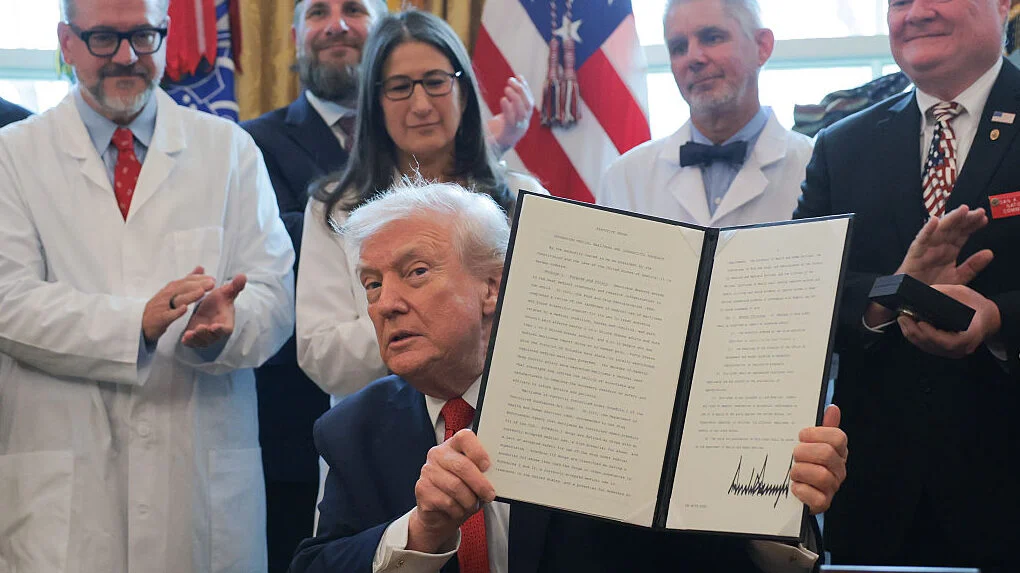
President Trump Signs Executive Order to Reschedule Marijuana
On a notable Thursday, President Donald Trump made headlines by signing an executive order that orders the federal government to reschedule marijuana from a Schedule I to a Schedule III controlled substance. Initially anticipated by many, this significant move is seen as a response to the ongoing conversation around cannabis’s medical benefits.
The Announcement from the Oval Office
Speaking from the Oval Office, President Trump expressed his satisfaction in announcing this decision. He mentioned that he had received numerous calls urging him to take action on this long-debated topic. “I’m pleased to announce that I will be signing an executive order to reschedule marijuana,” he stated, indicating a willingness to address the concerns of American patients suffering from a variety of ailments.
Focus on Medical Benefits
During his announcement, Trump highlighted the therapeutic potential of cannabis. He pointed out that the rescheduling aims to aid those living with severe health issues, including extreme pain, incurable diseases, aggressive cancers, and neurological disorders. Particularly poignant was his mention of veterans dealing with service-related injuries and older Americans facing chronic medical problems. By emphasizing the medical and research benefits, the president aimed to validate the concerns of patients seeking alternative treatments.
Disparaging Recreational Use
Despite the acknowledgment of marijuana’s medical usefulness, Trump was quick to clarify that the executive order does not legalize the drug for recreational use. He made it clear that this action should not be misconstrued as a sanction for casual consumption. “It has nothing to do with that,” he said, equating cannabis with prescription painkillers, which can be beneficial yet also dangerous when misused.
The president reiterated his personal stance against drugs, stating, “I’ve always told my children, ‘Don’t take drugs, no drinking, no smoking, and just stay away from drugs.'” By conveying this message, Trump aimed to draw a distinction between legitimate medical usage and recreational consumption, reinforcing a cautious perspective on controlled substances.
Racial Justice Concerns
While the executive order marked a pivotal moment in the conversation surrounding cannabis, it left many advocates and policy experts unsatisfied. Racial justice advocates have long pushed for the legalization or decriminalization of marijuana, highlighting that its criminalization has disproportionately impacted Black Americans. The ACLU has pointed out the staggering racial biases and financial wastage involved in the country’s ongoing “war on drugs,” which they argue is counterproductive and outdated.
Trump’s order did not address these significant social issues, leaving such advocates calling for a more comprehensive approach to cannabis reform that considers both racial equity and justice.
Expert Opinions on the Rescheduling
The implications of Trump’s decision are varied, with some perspectives highlighting potential benefits while others caution that it may not change much on the ground. Dr. Jeffrey Singer, a senior fellow at the Cato Institute, described the move as a “positive step in the right direction.” However, he warned that it might not significantly alter the landscape for medical or recreational users in states where cannabis has already been legalized.
Singer noted that while this change could facilitate medical research and help state-licensed cannabis retailers manage their business costs, it merely rearranges the elements of cannabis prohibition without fundamentally addressing ongoing issues.
In Summation
President Trump’s executive order to reschedule marijuana from a Schedule I to a Schedule III substance marks a crucial moment in the national conversation surrounding cannabis. While it addresses some medical concerns, it raises further questions about the implications for racial justice, existing laws, and the distinction between medical and recreational use. As this story unfolds, the ramifications of this order will likely continue to spark discussions across various sectors of society.