



Recent events in Minneapolis have spotlighted a tense interplay between federal law enforcement and local communities, particularly regarding immigration enforcement. President Donald Trump issued a provocative threat to invoke the Insurrection Act, which would enable him to deploy military troops to the city following a protest that escalated into violence. The catalyst for his remarks was the shooting of a Venezuelan protester by federal agents, an incident that has ignited outrage and raised questions about the credibility of official accounts.
On Truth Social, Trump stated, “If the corrupt politicians of Minnesota don’t obey the law and stop the professional agitators and insurrectionists from attacking the Patriots of I.C.E…I will institute the INSURRECTION ACT.” This stark warning underscores the administration’s zero-tolerance stance towards protests against immigration enforcement. It paints a picture of increasing polarization in a state already grappling with complex social issues and a history of racial tensions exacerbated by federal interventions.
The incident that triggered Trump’s threat involved a male protester who was shot in the leg during a confrontation with federal agents. While the Department of Homeland Security claimed that they were provoked by an attack from the protester, no independent verification of this account has surfaced. This lack of clarity has led to heightened anxiety and mistrust among community members and local officials, who are alarmed by the federal response and its implications for civil rights.
Further complicating the narrative is the recent fatal shooting of Renee Good, a 37-year-old mother and poet, also involving an ICE agent. The initial defense of the agent by the Trump administration—alleging that Good “weaponized” her vehicle—has been met with skepticism. Community leaders have pointed out inconsistencies in the official accounts, coupled with the refusal of Trump officials to cooperate in a standard joint investigation with state authorities. Such actions have raised additional concerns about transparency and accountability among federal agents.
In the wake of these violent encounters, Minnesota Governor Tim Walz expressed his condemnation of the Trump administration, emphasizing the detrimental impact of federal actions on local communities. He highlighted a significant increase in federal personnel, claiming that the occupation has created chaos and trauma that far surpasses any legitimate concerns about immigration enforcement.
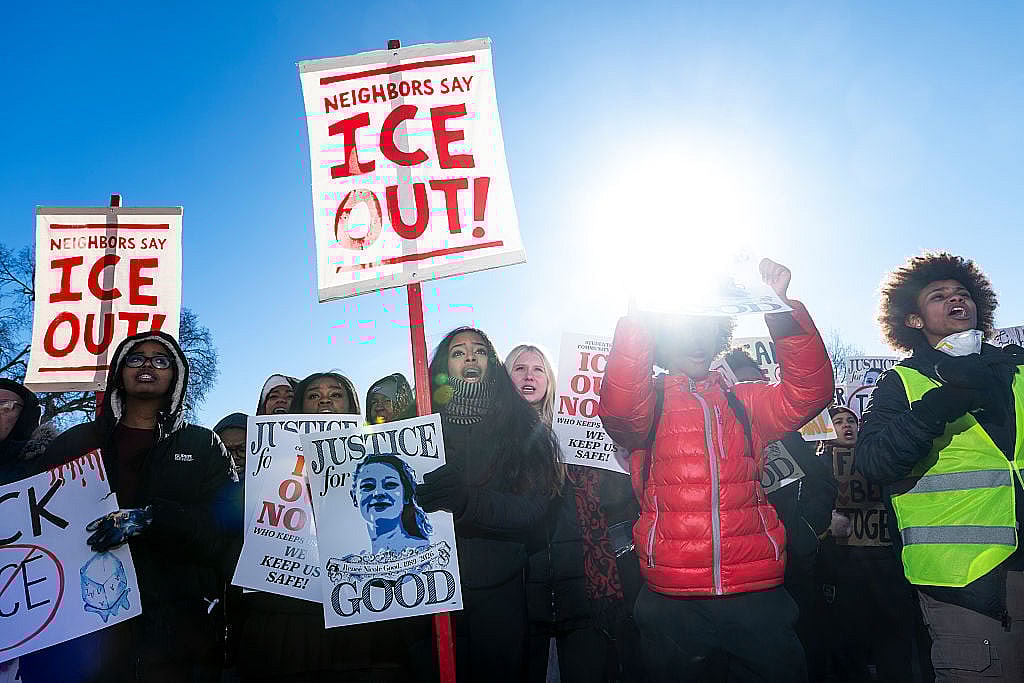
Videos and firsthand accounts from the scene depict an environment fraught with tension. Residents have reported that federal agents are employing chemical agents against peaceful protesters and making arbitrary detentions, raising severe concerns about civil liberties. Reports of agents breaking windows and detaining citizens at grocery stores, bus stops, and even schools paint a striking picture of a law enforcement strategy that intersects alarmingly with everyday life.
Donald Trump’s threat to invoke the Insurrection Act of 1807 represents a dangerous escalation in the federal government’s approach to domestic unrest. This rarely used constitutional provision allows the president to mobilize military forces against U.S. citizens for law enforcement purposes. Its consideration brings forth significant implications for civil rights and the boundaries of governmental authority.
Historically, Trump has hinted at invoking this law in prior incidents of civil unrest, notably during the Black Lives Matter movement after George Floyd’s murder, and more recently in response to protests against ICE operations in Los Angeles. These instances highlight an ongoing pattern of escalating rhetoric and action against protests challenging the administration’s policies.
Ed Anderson, a U.S. veteran and organizer at Common Defense, cautioned against the potential ramifications of such an invocation. He suggested that the actions of the Trump administration might create a pretext for military deployment, presenting a troubling vision of governance that disregards the nuanced realities of public dissent and civil discourse.