


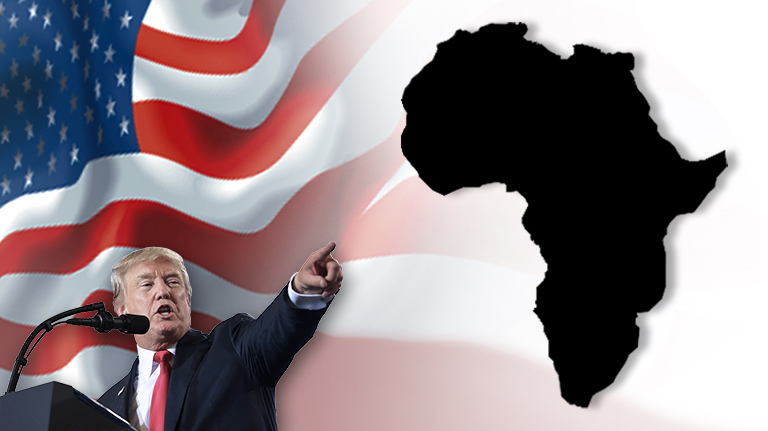
Strengthening American Presence in Africa’s Rare Minerals Sector under Trump
President Donald Trump’s administration has made significant strides in seeking to bolster the United States’ foothold in Africa’s rare minerals sector. This initiative aligns with a broader U.S. policy trend that has evolved over the past two decades, focusing on the strategic importance of these minerals in modern technology and clean energy transitions.
The Importance of Rare Minerals
Africa is rich in vital minerals such as lithium, cobalt, copper, nickel, and manganese. These minerals are crucial for the development of batteries used in electric vehicles and renewable energy technologies. Additionally, they play an essential role in various communication systems, which makes Africa a focal point in U.S. national security strategies. The U.S. is pushing forward through multiple institutional avenues, aiming to counterbalance China’s expanding influence in African mineral extraction and supply chains, while limiting the encroachment of other powers like Russia and India.
Trump’s Administration and Mining Investments
The groundwork for this renewed focus began during Trump’s first term. The administration’s strategy emphasizes increasing mining investments and solidifying economic partnerships in Africa. However, there are covert restrictions surrounding technology transfer and manufacturing that ensure U.S. companies can capitalize on African resources without genuinely empowering local industries. This approach raises critical questions about the balance between American corporate interests and authentic local economic development.
Aid and Strategic Interests
While there is no concrete evidence connecting foreign aid directly to mineral exploitation, President Trump has made statements that suggest a clear link between U.S. aid and its strategic economic interests in Africa. Analysts propose that this rhetoric serves as a pressure tool, often casting accusations of corruption and mismanagement at certain African nations. This strategy aims to redefine spheres of influence on the continent amidst the intensifying competition with China.
The Zambian Context
Zambia serves as a telling case in this geopolitical landscape, possessing one of the world’s largest copper reserves. The country also relies heavily on U.S. aid, particularly in the health sector, granting Washington substantial leverage amid extensive Chinese investments, part of the Belt and Road Initiative. This Chinese strategy seeks to re-establish the ancient Silk Road and foster trade and investment through vast infrastructure networks connecting over 150 countries.
Trade, Not Aid Philosophy
Under the “trade not aid” philosophy, the Trump administration aimed to reshape U.S.-African relations by enhancing trade and investment partnerships. Although there was a push to renew the African Growth Opportunity Act (AGOA), its temporary extension has limited its practical impact. Moreover, tariffs imposed on certain African exports have further curtailed the potential benefits of this approach.
Connecting Resources to Global Supply Chains
Washington’s strategy also emphasizes linking African resources to global supply chains and supporting strategic infrastructure projects. A significant initiative is the Lobito Railway corridor, designed to connect mineral-rich areas in the Democratic Republic of Congo and Zambia to Angola’s ports on the Atlantic. Such projects aim to create a stable environment conducive to attracting investment in crucial minerals.
A Pattern of Resource Exploitation
However, these U.S. policies risk replicating a destructive historical pattern established during the colonial era, where European powers treated Africa primarily as a source of raw materials without fostering genuine technology transfer or support for local manufacturing. This cycle hinders job creation and exacerbates poverty and unemployment, particularly among the continent’s youth.
Youth Migration Crisis
The bleak economic landscape drives many African youths to seek opportunities abroad, often leading them to embark on perilous migration routes across the Sahara and Mediterranean. These treks can end tragically, revealing a troubling connection between international economic policies and humanitarian crises in migration. Countries like Libya are particularly affected by these challenges, serving as critical points in these migration networks.
Libya’s Strategic Dilemma
Since 2011, Libya has lost much of its regional influence and strategic investments in Africa, despite the continent’s growing geopolitical and economic significance. The vital minerals in Africa are essential for the digital and clean energy transitions of the 21st century, yet ongoing internal political divisions threaten Libya’s ability to safeguard its economic interests. This instability opens doors for competing global and regional powers to exploit Africa’s resources, placing Libya at a pivotal crossroads where it must decide whether to reclaim its influence or risk relegation to the geopolitical periphery.
The complexity of these dynamics reflects not only on U.S.-African relations but also on the broader implications for African nations navigating their place in a rapidly changing global landscape.