


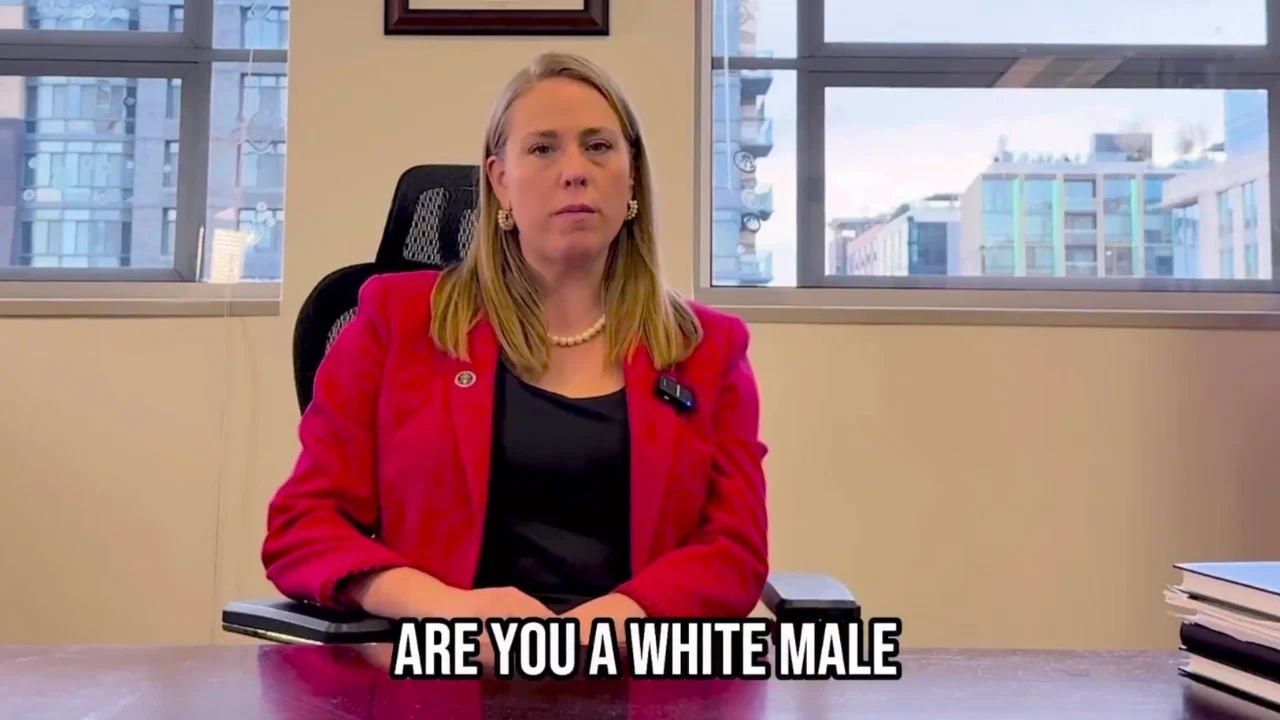
The EEOC’s New PSA: A Call to White Men
The chair of the U.S. Equal Employment Opportunity Commission (EEOC), Andrea Lucas, has made headlines with a surprising public service announcement (PSA) directed specifically at white men. In this video message, she encourages those who believe they have faced discrimination at work due to their race or gender to file a claim with the EEOC.
“Are you a white male who’s experienced discrimination at work based on your race or sex? You may have a claim to recover money under federal civil rights laws,” Lucas stated in the video, further expanding the conversation surrounding discrimination in the workplace.
Advocacy for All
Lucas’s appeal comes at a time when the discussion around workplace discrimination is becoming increasingly complex. Appointed by President Donald Trump, Lucas has long maintained that civil rights laws should be “colorblind,” advocating for the protection of all individuals against discrimination, regardless of their race or gender. In her role at the EEOC, she emphasizes the agency’s commitment to addressing all forms of discrimination, insisting that this includes white male applicants and employees.
Such a call for inclusivity aims to highlight that discrimination can affect anyone, and it’s crucial for individuals—regardless of their background—to understand their rights under federal civil rights laws. This message, however, has garnered mixed reactions.
Criticism and Controversy
Lucas’s PSA has not gone unnoticed, drawing criticism from various quarters who argue that it shifts focus away from historically marginalized groups, especially given the disparities they face in hiring and employment. For instance, recent statistics reveal that the Black unemployment rate has risen to 8.3%, significantly higher than the national average of 4.6%. In comparison, the unemployment rate for white men stands at a lower 3.6%, stirring debates about the perception of discrimination in today’s work environment.
Critics like Markus Batchelor, National Political Director at People For the American Way, have labeled such appeals as “stunts” that ultimately serve to reinforce structures of privilege in society. They argue that the rhetoric coming from Lucas and the Trump administration prioritizes the experiences of white men over the systemic challenges faced by minority groups. This realignment of focus raises important questions about what equity means in practice.
The Bigger Picture of Workplace Discrimination
The backdrop to Lucas’s PSA includes the administration’s broader strategies concerning diversity, equity, and inclusion (DEI) initiatives. In January, President Trump signed executive orders aimed at eliminating DEI programs within federal agencies. These changes have sparked concern among advocates who warn that such measures may diminish job opportunities for marginalized communities, including Black, Brown, LGBTQ, and disabled individuals.
Lucas’s role at the EEOC involves not just addressing complaints of workplace discrimination but also actively rooting out DEI-focused strategies from both public and private sectors. She has urged potential victims of discrimination—specifically targeting white males in her recent message—to explore resources available through the EEOC.
Socioeconomic Implications
An analysis by The Leadership Conference on Civil and Human Rights indicates that while the number of Black Americans with college degrees has surged over the past two decades, they still tend to occupy lower-wage positions compared to their white counterparts with similar qualifications. Furthermore, Black women experience substantial pay gaps, showcasing the multifaceted challenges in achieving true workplace equity.
Experts predict that the continuation of Trump’s policies, if fully implemented, could create additional obstacles for federal programs aimed at supporting disadvantaged groups. The critiques emphasize that these approaches may threaten not just individual opportunities but the broader fabric of the American workforce, which is increasingly reliant on diversity for innovation and growth.
The EEOC’s Mission and Future Directions
As chair of the EEOC, Lucas aims to ensure that the agency fulfills its mission: to enforce federal anti-discrimination laws by protecting all workers. Her recent PSA highlights the need for an inclusive approach to discrimination concerns, but it also underscores the tensions inherent in advocating for workplace equity in a politically charged environment.
Potential claimants, particularly white men who may feel overlooked in conversations about discrimination, are encouraged to visit the EEOC’s website to learn more about their rights. However, Lucas’s focus raises critical questions: How do we balance individual experiences of discrimination with the systemic inequities that continue to impact marginalized groups?
In an increasingly divided landscape, discussions about workplace discrimination are more vital than ever, and the routes towards understanding and resolution remain complex and nuanced.