


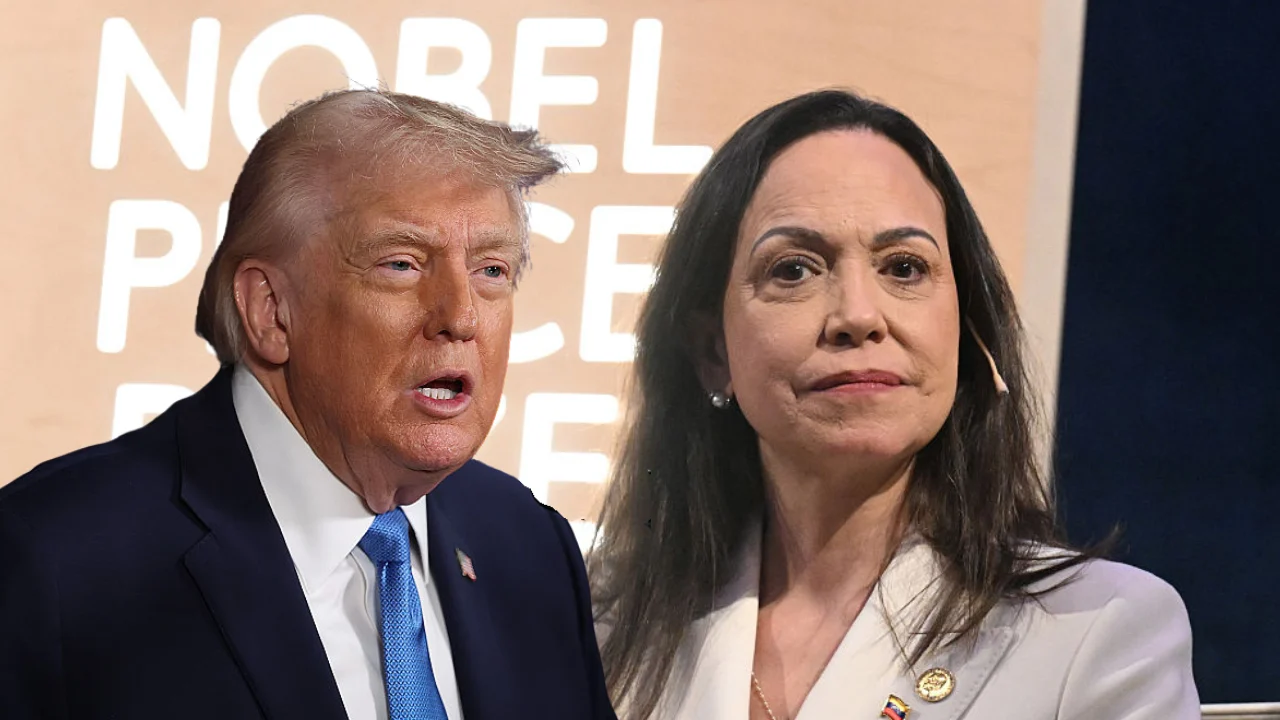
Trump’s Unexpected Stance on Venezuelan Politics
In a surprising turn of events, President Donald Trump recently chose not to lend his support to María Corina Machado, the Venezuelan opposition leader, in her bid to lead the South American nation following the removal of the authoritarian President Nicolás Maduro. This decision has raised eyebrows within both the political sphere and Venezuelan communities—especially considering the historical relationship between the U.S. and Venezuela and the profound challenges facing the Latin American country.
The Context of Opposition Leadership
María Corina Machado, a fierce advocate for democracy, emerged as a leading figure in the resistance against Maduro’s regime. Her efforts to promote democratic governance in Venezuela earned her the prestigious Nobel Peace Prize on October 10, 2025. This recognition not only reinforced her position as a key player in the opposition but also highlighted her commitment to peaceful political change in a country plagued by turmoil. The Nobel Committee praised her as a “brave and committed champion of peace,” acknowledging her role amid a deteriorating political landscape.
Tensions Between Trump and Machado
Despite Machado’s accolades, Trump’s refusal to support her has been speculated to be rooted in personal grievances. According to reports, the Trump administration regards Machado’s acceptance of the Nobel Prize—especially in light of Trump’s known aspiration for the award—as a significant betrayal. A source close to the White House suggested that had Machado declined the prize in favor of Trump, she might have garnered greater support from the U.S. president.
This perceived “ultimate sin” has complicated diplomatic relations and raised questions about U.S. foreign policy towards Venezuela. The rejection of Machado as a potential interim leader suggests that personal animosities are influencing critical political decisions, overshadowing the humanitarian and democratic crises at play.
Machado’s Political Position
In the wake of Trump’s comments regarding her leadership capabilities, Machado’s associates expressed surprise and disappointment. Many believed that her recognition and advocacy would lead to a harmonious relationship with the U.S. administration. In an open letter following Trump’s military actions in Venezuela, Machado praised the president’s efforts in capturing Maduro, suggesting a complex relationship that balances respect with critique.
Machado urged her supporters to remain steadfast and ready to claim the power that the will of the Venezuelan people has entrusted her with. She emphasized the necessity for unity and organization among supporters to achieve a democratic transition, recognizing the uphill battle that lies ahead for Venezuela.
Trump’s Ambitions and Foreign Policy
Trump’s long-standing desire to receive the Nobel Peace Prize has been well-documented, often leading to accusations from critics who view him as a figure of chaos rather than peace. Despite this, his administration has accomplished notable strides in brokering peace in various international conflicts, including tensions in Gaza and between Pakistan and India.
This nuanced approach raises questions about the effectiveness of U.S. foreign policy—should the administration prioritize personalities over democratic ideals? Machado’s dedication of her Nobel to Trump, which she stated was a sign of gratitude for his support, may not have been enough to bridge the evident emotional chasm between the two leaders.
The Future of Venezuela
As the situation in Venezuela unfolds, the dynamics between the U.S. and its potential allies in the region remain fluid. Machado’s leadership continues to attract attention, and the political landscape is rife with uncertainty. While Trump may view Machado’s respect and reliability as lacking, her steadfastness in fighting for democracy has solidified her role as a central figure in Venezuela’s struggle for peace and stability.
This ongoing saga illustrates the complexities that arise in international relations, where personal vendettas can eclipse critical humanitarian concerns. As Venezuela stands at a crossroads, the judgment and decisions made in Washington will inevitably impact the future of democracy and governance in the country.