


The US Military Attack Against Venezuela: A Global Response
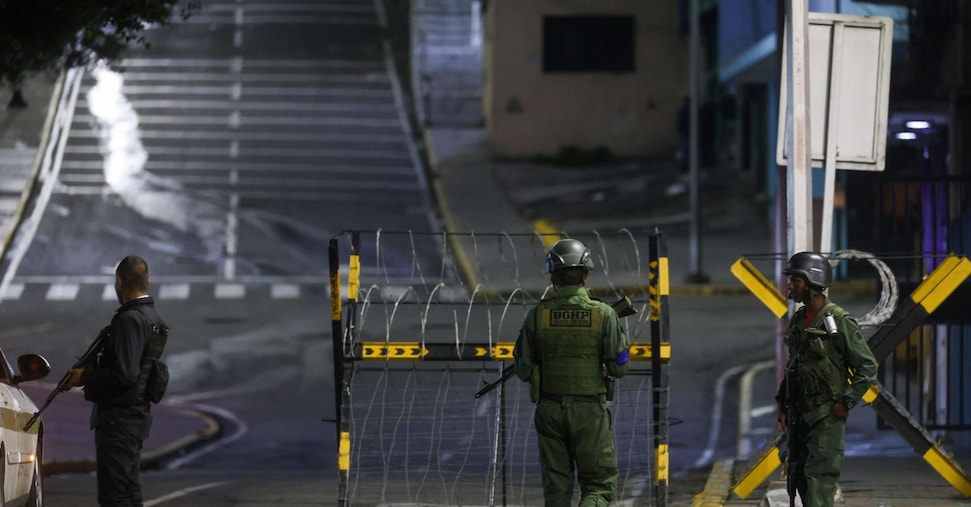
On the night of January 2 to 3, a dramatic turn of events unfolded as the US military launched an attack against Venezuela. This operation, ordered by President Donald Trump, triggered an immediate and vehement international backlash. The Venezuelan government responded by declaring a state of emergency, denouncing what it termed a “very serious aggression.” Around the world, capitals echoed with denunciations, prompting calls for intervention from multilateral organizations.
Moscow: “Attack on Caracas Violates International Law”
The reaction from Moscow was swift and fierce. Konstantin Kosachev, Deputy Chairman of the Russian Federal Council, asserted that “Venezuela posed no threat to the United States—neither military, humanitarian, criminal, nor drug-related.” He stressed that the military operation, along with actions taken against Venezuela in the preceding days, lacked substantial justification. “International law has been clearly violated,” Kosachev stated, critiquing what he described as Washington’s military unilateralism. The Russian Foreign Ministry joined in, labeling the attack as ‘armed aggression against Venezuela,’ underscoring a broader condemnation of US foreign policy.
Iran: “Firm Condemnation of US Military Attack”
Across the globe, Tehran issued a strong condemnation as well. The Iranian Ministry of Foreign Affairs termed the US military action a “flagrant violation” of Venezuela’s national sovereignty and territorial integrity. This statement not only condemned the aggression but also highlighted the historical political and economic ties between Iran and Venezuela—two nations currently facing US sanctions. This alliance, bolstered by shared grievances against American policies, underscored a united front against perceived imperialism.
Cuba: Supporting Maduro After the US Attack
In the Caribbean, Cuba quickly rallied behind Venezuelan President Nicolás Maduro. Foreign Minister Bruno Rodríguez described the US action as a “criminal attack,” calling for an immediate response from the international community. Taking to social media, he expressed that Cuba stands in solidarity with Venezuela, emphasizing the violation of the so-called “Peace Zone” in Latin America and the Caribbean. Rodríguez’s strong language characterized the US actions as state terrorism against the “brave Venezuelan people,” ending with the revolutionary slogan, “Homeland or Death, we will win!”
Colombia’s Alert: “Venezuela is Under Attack”
From neighboring Colombia, concern was palpable. President Gustavo Petro took to social media to alarm the world: “Caracas is under bombardment right now. Alert the world: Venezuela is being attacked!” He detailed that missiles were targeting institutional and military sites in the capital, including the Palacio Federal Legislativo, the seat of parliament, and the Cuartel de la Montaña, the resting place of Hugo Chávez. Petro urged the Organization of American States (OAS) and the United Nations (UN) to convene for an urgent meeting, asserting the need for decisive international action in light of the aggression enveloping Venezuela.
Broader Implications
The attack’s repercussions extend beyond immediate military concerns. Countries allied with Venezuela are standing firmly against what they see as a battle for sovereignty and respect within international laws. The landmark response of nations like Russia, Iran, and Cuba highlights the growing divide in global politics, particularly between the US and nations advocating for a multipolar world order.
The incident adds another layer of complexity to an already tumultuous geopolitical landscape, emphasizing the broad alliances that can emerge when countries perceive a common threat to their sovereignty and rights.
In this evolving scenario, the world watches closely, as calls for international dialogue intensify amidst escalating tensions. The repercussions hinge not only on military actions but also on diplomatic engagements that could shape the future of Venezuela and its relations with the rest of the world.