


Minneapolis on Edge: The Aftermath of Tragedy and Unrest
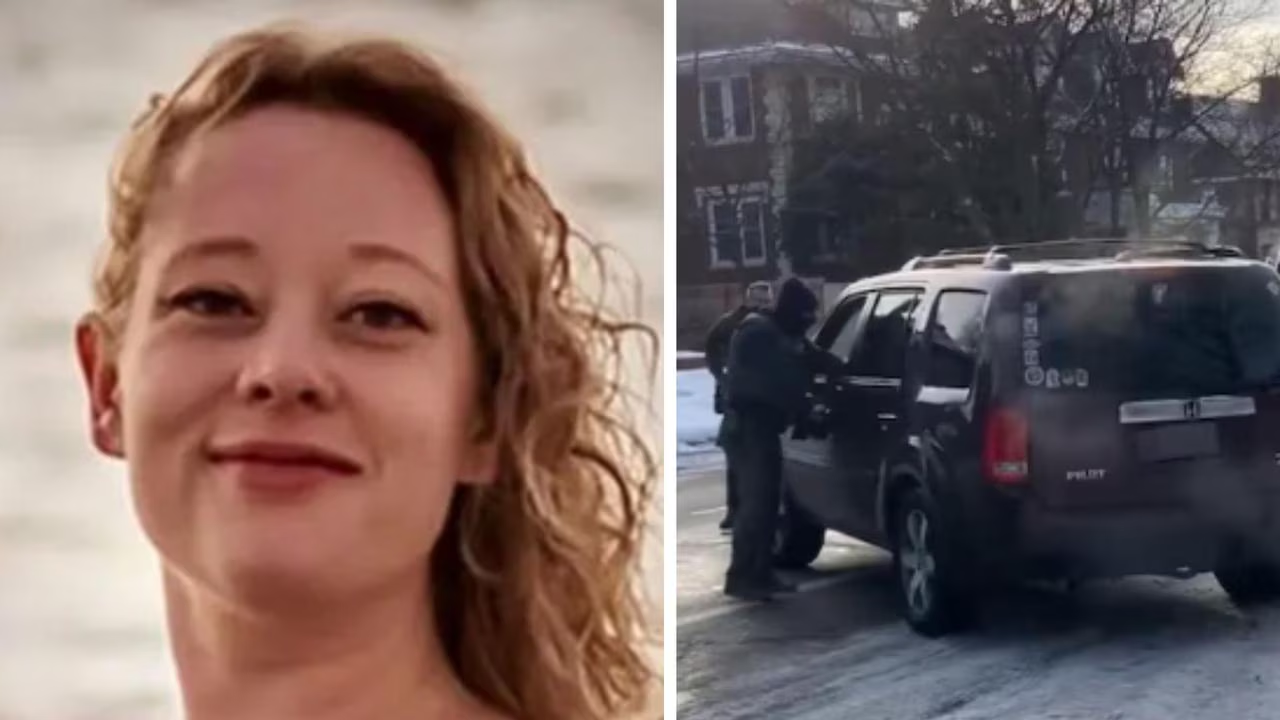
Minneapolis, a city rich in culture and resilience, is currently grappling with profound unrest following the tragic shooting of Renee Good, a 37-year-old mother, by an ICE agent just last week. This incident has ignited a wave of protests, confrontations, and heightened tensions between federal forces and the community. The scene in Minneapolis is one marked by anguish, anger, and activism—reflecting broader issues of governance, law enforcement, and community rights.
A City in Turmoil
In the heart of downtown Minneapolis, a government building became the epicenter of mounting protests. For hours, police and federal officers stood in formation, confronting demonstrators demanding accountability and justice. The atmosphere was charged, filled with urgency and emotion, as protesters pushed against the barriers erected by law enforcement. However, the situation escalated quickly, with officers deploying smoke bombs and tear gas to disperse the crowd.
Local reporter Shimon Prokupecz described the scene vividly as he noted that, at around 10 PM, lines of Customs and Border Protection agents were mobilized to push back protesters once again. The use of percussion grenades heightened the chaos as protesters were met with forceful resistance. Such actions only served to deepen the community’s discontent and fear, emphasizing the divide between federal agents and local residents.
Voices from the Ground
Amid the chaos, the voices of the protesters became more pronounced. One particular individual from North Minneapolis shared his experience after witnessing the memorial for Renee Good. Previously untouched by activism, he expressed his feelings of rage and confusion after seeing the situation escalate. “I think they’re just trying to f***ing scare people,” he stated, capturing the essence of many who feel threatened by the heavy-handed response of law enforcement.
His words resonated with those present at the protests. They reflected a shared sentiment that the issue extends beyond the immediate tragedy; it represents a systemic issue within law enforcement that affects a multitude of communities—not just immigrants. This sentiment reveals the broader issues of police responsibility and the need for reform.
The Call for Change
As community members continue to band together, the mood shifts between anger and determination. The public response highlights a demand for justice—not only for Renee Good but for a broader reassessment of how federal agents operate within communities. The frustration regarding arbitrary detentions and the physical treatment of individuals who engage with law enforcement has pushed many to take to the streets.
People are beginning to see the protests not simply as a reaction to isolated incidents but as part of a larger paradigm of accountability, transparency, and reform in law enforcement practices. This awakening is valuable for both individual empowerment and collective action, suggesting a shift in how residents perceive their role in advocating for change.
International Intersections
Interestingly, the unrest in Minneapolis coincides with international political narratives. Venezuelan opposition leader Maria Machado recently made headlines by presenting Donald Trump with her Nobel Peace Prize medal. Though the medal itself is non-transferable, the symbolic act highlights a connection between global diplomacy and local actions. Trump’s acknowledgment of the gesture, calling it “wonderful,” adds another layer to the ongoing political discourse.
This intersection of local protests and international politics reflects how interconnected the fight for justice can be. It fuels a discussion about the role of leadership on both local and global stages, where actions in one part of the world can resonate in another, contributing to societal change.
A City’s Resilience
Despite the tumultuous events unfolding, Minneapolis remains resilient. Community members, activists, and organizations are actively discussing ways to address these issues going forward. While the protests might be synonymous with chaos right now, they also represent hope—a call for the community to unite and strive for a better tomorrow. The path ahead may be fraught with challenges, but the strength of the community’s voice will be vital in shaping a future that honors the memory of those lost and advocates for systemic change.
As Minneapolis stands at this pivotal juncture, the eyes of the nation—and the world—are watching closely, attuned to the messages emanating from the heart of the city.