


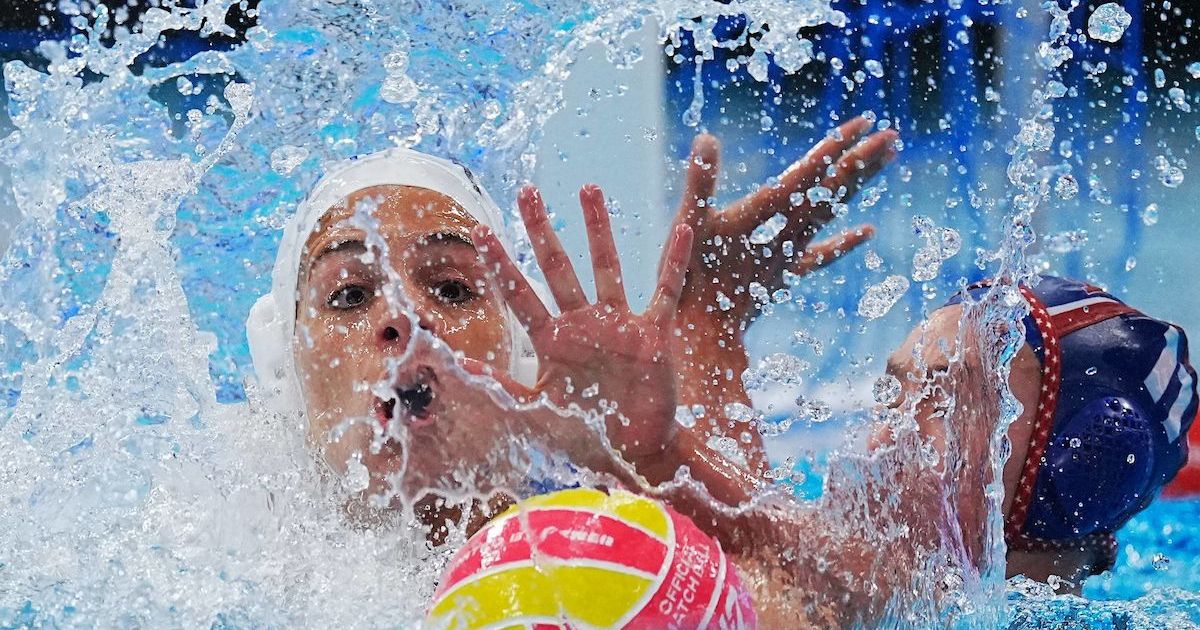
The Rise of Greece in Women’s Water Polo
Greece has emerged as a dominant force in women’s water polo, solidifying its reputation through impressive performances and championship victories. In stark contrast, the United States, traditionally a powerhouse in the sport, faced challenges that hinted at potential shifts in global standings.
The Struggles of Team USA
Under the leadership of head coach Adam Krikorian, the USA team entered the year with high hopes but quickly encountered significant hurdles. The Division I World Cup qualifier in Alexandroupolis, Greece, was particularly unforgiving. In their opening match against Olympic champions Spain, a disheartening 16-11 defeat set the tone for the tournament. Despite a valiant spirit, the USA struggled against Hungary next, succumbing to a 12-7 loss. Greece further exacerbated the USA’s issues with a staggering 20-7 defeat, effectively knocking them out of contention for their World Cup title.
Despite a slight bounce-back against Israel, the USA faced another tough defeat against Hungary in the playoff for fifth place, ending the World Cup campaign without a medal and leaving questions about the team’s future.
Transitioning for the World Aquatic Championships
When the World Aquatic Championships rolled around, the USA found themselves bolstered by key returning players. They dominated their group by defeating China, the Netherlands, and Argentina. Their quarterfinal match against Japan showcased their resilience, and they advanced with confidence to face Greece, who had also secured their spot after overcoming France and Australia.
The semifinal against Greece turned out to be a high-stakes showdown. Although USA fought hard, Greece managed to emerge victorious, edging the match 14-10. With this, the USA was relegated to compete for bronze.
In the bronze medal match against Spain, the tale was not one of triumph. After trailing 7-4 at halftime, the USA fought back only to fall short at 13-12, marking their second consecutive year without a podium finish. This was significant, as it was a stark reminder that the balance of power in women’s water polo was indeed shifting.
Greece’s Golden Era
Greece capitalized on this momentum to claim both World Cup and World Championship golds. Players like Foteini Tricha and Maria Santa showcased stellar performances throughout the year, with Tricha scoring 22 goals and Santa, along with others, contributing to a collective offensive strength.
In the World Championship final against Hungary, Greece opened strong, securing a 12-9 victory in a gripping matchup. Meanwhile, their defense, led by goalkeeper Ioanna Stamatopoulou, proved nearly impenetrable, blocking 14 shots and earning the title of goalkeeper-of-the-tournament.
New Talent Emerging
As established players like Rita Keszthelyi and Dorottya Szilagyi maintain their dominance in Hungary, a new wave of talent is beginning to emerge. Youngsters like Kata Hajdu and Panna Tiba are proving their mettle, ensuring that Hungary continues to be a force in the sport.
Spain remains robust in its roster but must consider infusing younger talent as veterans age out. Carlota Penalver holds promise as one of the youngest stars at just 19.
In Australia, the older guard still asserts influence, with Bronte Halligan making impacts at 29 while younger players like Sienna Green are ready to step into bigger roles.
Future Aspirations
As nations refine their strategies and cultivate new talents, the future of women’s water polo looks promising across the board. Japan’s rise within the top ranks reflects a broader competitive landscape where even lesser-known teams like Croatia and Singapore make significant strides.
With Greece’s golden achievements serving as motivation, other nations will likely aim for similar glories, reminding us that the dynamism of sports often comes with unexpected turns.
As for the USA, under Krikorian’s guidance, nurturing young talents such as Emily Ausmus may provide the key to re-establishing their dominance. The evolving dynamics continue to challenge traditional power structures, illustrating that in sports, as in life, change is the only constant.