


Wisconsin GOP’s Major Mix-Up: A Political Blunder
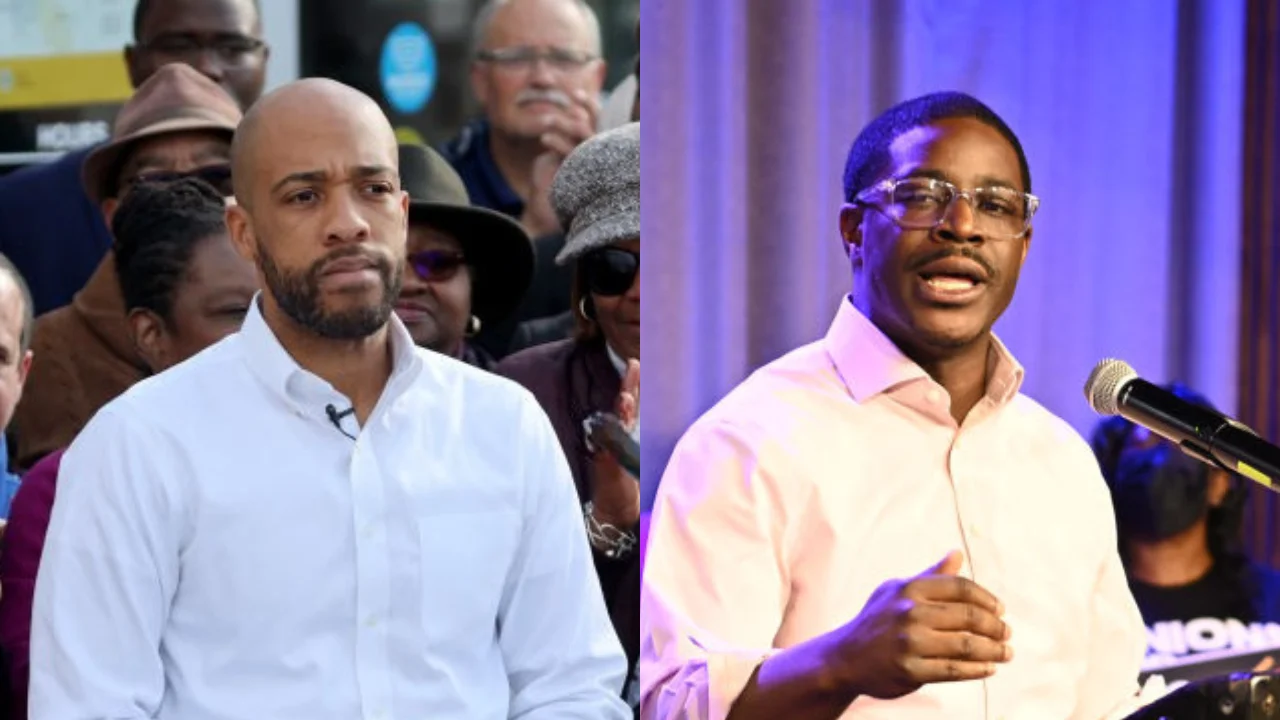
The Wisconsin Republican Party recently faced backlash for a significant error in a social media post aimed at discrediting Democratic gubernatorial candidate Mandela Barnes. The gaffe arose after the party mistakenly featured an image of Milwaukee County Executive David Crowley instead of Barnes, creating an uproar among Democratic leaders and allies.
The Controversial Post
On January 12, the GOP state party shared a post accusing Barnes and fellow candidates, including Francesca Hong, of attempting to “destroy our state” through purported leftist policies. The post claimed that these candidates wanted to defund the police, raise property taxes, and impose socialism on Wisconsin—bold assertions in an already heated political climate. However, the misidentification only drew more focus to the party’s attack.
Mix-Up Uncovered
The post displayed an image of Crowley, who is also running in the Democratic primary on August 11, instead of the former lieutenant governor. This glaring oversight not only misrepresented the Democratic field but also highlighted the internal challenges within the GOP’s messaging. After the mistake was pointed out, the GOP quickly replaced the image with an appropriate photo of Barnes, yet not before it had already made waves online.
Reactions from Democrats
The political misfire quickly attracted attention from Democratic officials, who seized the opportunity to criticize the GOP. Chris Walton, former chairman of the Milwaukee County Democratic Party, expressed disbelief at the mix-up, questioning how the Republicans could confuse two visibly different candidates. “They can’t tell the difference between two Black guys who literally look nothing alike?” he exclaimed, showcasing the frustration felt within Democratic circles.
Responses from Mandela Barnes and David Crowley
Barnes, responding to the incident, made a sharp observation: “Apparently ‘Black guy in Wisconsin’ was close enough for Tom Tiffany and Wisconsin Republicans.” His comments underscored the overarching issue of representational accuracy and respect in political discourse. Crowley, on the other hand, reacted with humor, stating that such blunders were not uncommon in contemporary politics. He mentioned, “Even if it’s an honest mistake…it shows that if folks can’t tell who the candidates in this race are, how can you believe in them being able to govern for diverse communities?”
The Broader Implications
The ramifications of this misstep extend beyond mere embarrassment. Crowley pointed out that it highlights a larger issue: if political parties can’t accurately recognize their opponents, how can they effectively lead diverse communities? He called for increased dialogue and understanding, emphasizing the need for candidates to ensure their platforms are clear and resonant with the electorate.
Ongoing Issues in Wisconsin Politics
Walton articulated a more pressing concern, focusing on the everyday struggles faced by Wisconsinites. He noted issues such as skyrocketing healthcare costs and inflationary pressures affecting grocery prices, all of which he attributed to the actions and policies of the Republican Party, including former President Donald Trump’s administration. The gaffe thus served as a backdrop to a broader conversation about the economic and social challenges facing many residents in the state.
Conclusion: A Lesson in Political Messaging
The incident invites reflection on the importance of careful political messaging, especially as candidates gear up for crucial election phases. The Wisconsin GOP’s error may become a focal point of discussion, emphasizing the need for parties to be not only accurate but also sensitive to the communities they represent. As elections draw closer, the race for governor promises to be a battleground of ideas, with accuracy and representation more vital than ever.