


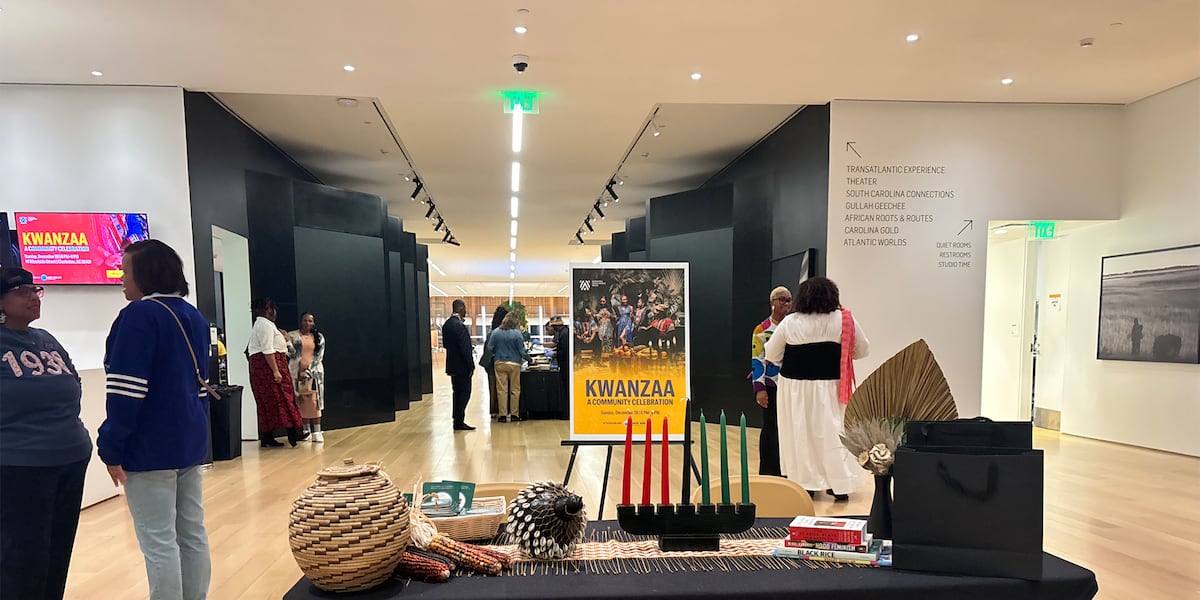
Kwanzaa Celebration at the International African American Museum
CHARLESTON, S.C. — The International African American Museum (IAAM) hosted a vibrant Kwanzaa community celebration, inviting attendees to immerse themselves in the rich culture and traditions this holiday embodies. Held annually from December 26 to January 1, Kwanzaa is a week-long festivity that highlights African American heritage. Founded by Dr. Maulana Karenga in 1966, the holiday was established as a response to the cultural disconnection many African Americans have faced throughout history.
A Space for Reflection and Growth
Tyewhan Luke, a resident of North Charleston, eloquently expressed the essence of Kwanzaa: “It’s a moment for us to renew. Like take that time of every day just being intentional about reflecting on who we are as a community, as a family, as a people.” This reflection is at the heart of Kwanzaa, allowing individuals and families to discuss their shared history and how they can uplift their community.
Understanding the Seven Principles
The heart of Kwanzaa lies in the Nguzo Saba, or the Seven Principles, which form the foundation for personal and collective growth. The museum’s celebration featured an engaging program that explored these principles through storytelling, music, and interactive activities.
- Umoja (Unity): Emphasizing the importance of unity in the community.
- Kujichagulia (Self-Determination): Encouraging individuals to define their own identities.
- Ujima (Collective Work and Responsibility): Fostering communal responsibility.
- Ujamaa (Cooperative Economics): Promoting economic support within the community.
- Nia (Purpose): Inspiring individuals to strive for a collective purpose.
- Kuumba (Creativity): Celebrating creativity and innovation.
- Imani (Faith): Cultivating faith in themselves, their families, and their communities.
Partnerships for Inclusivity
Collaborating with the Charleston Chapter of Jack and Jill, the museum designed a program aimed at inclusivity, ensuring that everyone, regardless of their background, could part of the celebration. Malika Pryor, Programs Director for Jack and Jill, commented, “Creating space for anyone, regardless of background, to be able to come and participate is crucial because we shouldn’t have to pay for community.”
Educational Impact and Generational Connections
The director of Faith-Based Education and Education at IAAM, Dr. Harry Singleton, elaborated on the importance of connecting with African American experiences. He noted the significance of teaching not only about the history of slavery but also the resilience and strategies that have brought the community to the present day. This educational aspect was vividly illustrated by attendees witnessing relationships across generations—like an elderly gentleman engaging in playful activities with a young child.
A Feast for the Senses
Adding to the celebration’s cultural richness was the offering of traditional foods, allowing attendees to experience authentic flavors that resonate with their heritage. The evening was a tapestry of cultural enrichment that fostered community bonds.
A Legacy of Responsibility
Dr. Singleton reminded participants of a profound responsibility that comes with being part of the African heritage: “There is no greater responsibility in African culture than when you leave the world, leave the world and leave the community in a better state than which you found it.” This message of stewardship resonated throughout the event, reinforcing the importance of nurturing future generations.
Experience the Celebration
For those interested in continuing the celebration of Kwanzaa and exploring its rich cultural heritage, further information can be found on the museum’s website here.
This Kwanzaa celebration at the International African American Museum was not only a moment of festivity but a purposeful gathering that aimed to inspire unity, reflection, and community progress.