


America’s Transactional Engagement with Africa: A Closer Look
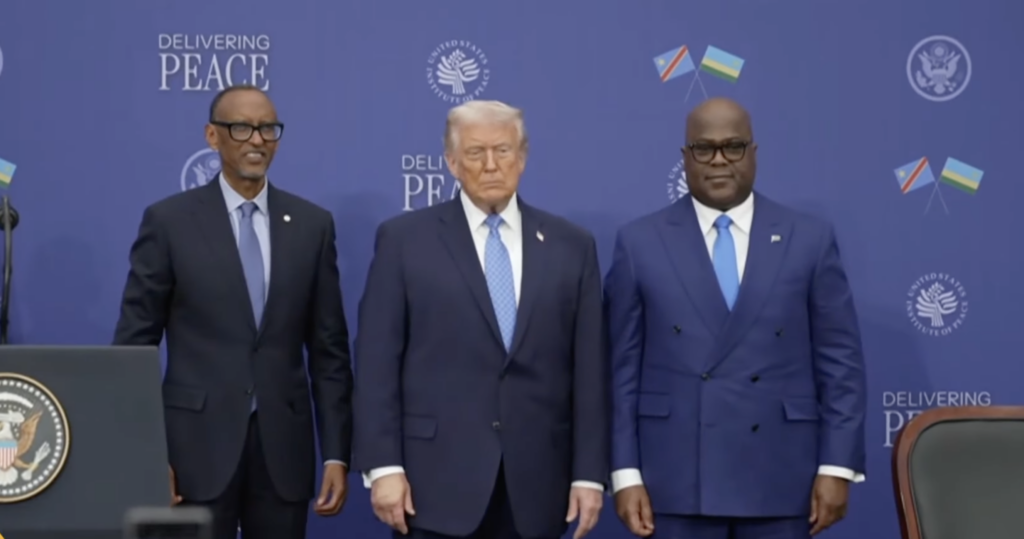
When President Trump brought together the leaders of Congo and Rwanda to Washington to sign a peace agreement, it was viewed by many as a significant geopolitical development. However, for those familiar with the dynamics of U.S.-Africa relations, it was less of a surprise. Historically, American engagement in Africa has been tightly bound to tangible interests—especially regarding resources like cobalt, coltan, and rare earth minerals.
The Nature of U.S. Foreign Policy in Africa
Trump’s meeting served to unveil a fundamental truth about U.S. foreign policy in Africa: it is primarily transactional. Unlike previous administrations that often framed their policies through a humanitarian lens filled with moral imperatives, Trump’s approach was refreshingly blunt. There was no demand for social reforms or ideological alignment. Instead, the discussion revolved around strategic interests, laying bare the reality that America engages Africa when it serves its own geopolitical or economic goals.
Historical Context: Cultural Coercion Under Democratic Leadership
The last decade of U.S.-Africa policy under Democratic administrations, particularly Obama and Biden, was characterized by cultural coercion. African nations received clear messages: adjust your laws around LGBTQ issues or risk losing American support. Countries like Uganda, Kenya, Ghana, Tanzania, and Malawi faced pressures that forced them to reassess long-held customs and values to please Western sensibilities.
Uganda, especially, stood as a focal point of resistance. When it enacted a stringent anti-LGBT law, retaliatory actions from the U.S. included visa bans and economic threats. Uganda’s leaders, however, framed their unwavering stance as a matter of cultural sovereignty, rejecting what they termed “cultural imperialism.” This episode was a pivotal moment for many African nations—they realized they held more leverage in dealings with the U.S. than Washington was willing to acknowledge.
The Gaddafi Dilemma: A View into Western Intervention
Perhaps one of the starkest illustrations of U.S. intervention in Africa came with the fate of Muammar Gaddafi, the former Libyan leader. Gaddafi was not merely a dictator; he was also a visionary behind the “United States of Africa,” a bold idea proposing a continental federation with shared resources and a unified currency backed by gold. His plans threatened Western financial supremacy, particularly the use of the U.S. dollar and the euro in global trade.
In the wake of his ambitious vision, Gaddafi faced political isolation and military targeting, culminating in his assassination during a NATO operation that received backing from the Obama administration and Secretary of State Hillary Clinton. This wasn’t just the fall of a tyrant; it was a concerted effort to dismantle a potential paradigm shift toward African sovereignty. The aftermath left Libya in turmoil, revealing a pattern where African unity initiatives are often met with severe consequences from Western powers.
The Shift in Engagement: The Washington Accords
Against this historical backdrop, the peace accords between Congo and Rwanda indicate a noteworthy pivot in U.S. policy toward Africa. No longer were American leaders leveraging cultural demands, but rather focusing on minerals, security, and regional stability. It was a recognition of African nations as sovereign partners rather than ideological platforms—an approach that many leaders in Africa actually welcome.
The Opportunity for Black Americans
As Africa’s global relevance expands, especially in terms of negotiating mineral rights and energy infrastructure, there lies an untapped potential for Black Americans to influence this emerging paradigm. The demand for skilled professionals in areas like engineering, mineral economics, and diplomatic negotiation is growing rapidly. African leaders are eager to collaborate with individuals from the diaspora who share familial, cultural, and historical ties.
However, Black America must confront a sobering reality: the necessary technical skills, investment strategies, and institutional support to mobilize effectively in Africa’s modern economic landscape are sorely lacking. While the continent’s engagement with foreign powers continues to deepen—with China and Europe sending skilled workers and financial resources—the absence of a coordinated effort from Black Americans leaves a void in this crucial space.
The Gap in Education and Capacity
The landscape of education and workforce participation reveals troubling disparities. Fields such as engineering, energy, and diplomacy have historically seen underrepresentation of Black Americans. Current educational trajectories fail to produce a workforce adept in the technical skills needed to engage in Africa’s burgeoning sectors. Comparatively, other nations are already investing heavily in developing the necessary infrastructure to capitalize on Africa’s resources and opportunities.
Conclusion: Rising to the Challenge
Black America stands at a crossroads. As African nations reclaim their relevance, the opportunity for partnership is ripe. However, realizing this potential hinges on preparation, skill development, and strategic planning. The door to Africa is wide open, but without preparedness, meaningful engagement may remain elusive. Black America has a chance to be part of Africa’s renaissance, but it requires a collective commitment to developing the skills and infrastructure essential for impactful participation on the global stage.