


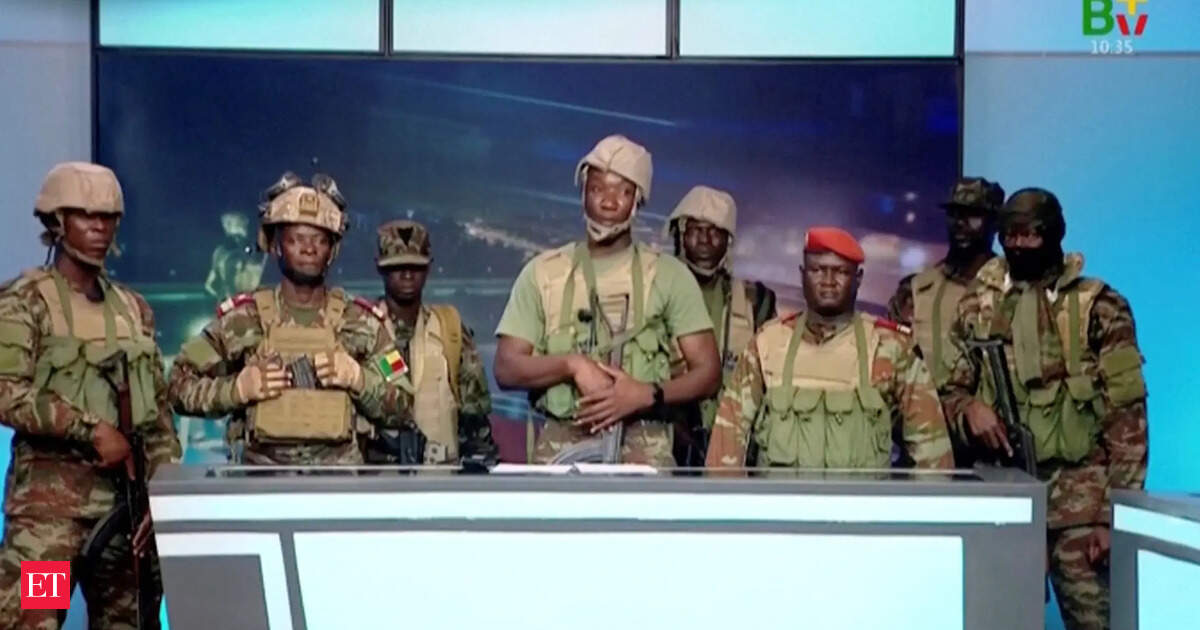
On Sunday, the government of Benin announced it had thwarted an attempted coup that saw a group of soldiers declare on state television that they had ousted President Patrice Talon. This dramatic turn of events not only underscores the political volatility in the region but also highlights the security concerns that have been rising in West Africa.
### Background Context
Benin, a nation with a history marked by coups since its independence from France in 1960, has seen a resurgence of military intervention in politics, reflecting a troubling trend across West Africa. Coups have recently occurred in neighboring countries like Niger, Burkina Faso, Mali, and Guinea-Bissau, raising alarms about regional stability.
### Patrice Talon: The “Cotton King”
President Patrice Talon, a former businessman known as the “cotton king of Cotonou,” has been in power since 2016. His tenure has been characterized by economic growth, with significant advancements in agriculture and infrastructure. However, he has faced criticism for rising jihadist violence in the region and allegations of authoritarianism. Talon is set to end his second term in April 2026, following a decade marked by both development and controversy.
### The Coup Announcement
Early on Sunday, soldiers who labeled themselves the “Military Committee for Refoundation” (CMR) took to state television, proclaiming their decision to remove Talon from office. The announcement sent shockwaves through the nation, raising immediate concerns about the stability of the government. However, a source close to Talon quickly assured that the president was safe and described the coup plotters as “a small group of people who only control the television.”
### Government Response
In response to the coup attempt, the Beninese Armed Forces acted swiftly. Interior Minister Alassane Seidou characterized the soldiers’ actions as a “mutiny,” aimed at disrupting the nation’s political stability. He stated that the military leadership managed to maintain control and that the situation was under control. Meanwhile, the regular army was reported to be regaining control over Cotonou, reassuring residents that the country’s security was being restored.
### The Situation on the Ground
Reports from Cotonou, the economic capital, painted a mixed picture. While gunfire could be heard in various parts of the city, most residents were going about their daily activities. Soldiers reportedly blocked access to the presidential offices and the state television station, but there was no significant military presence at the international airport or other parts of the city.
### International Reaction
The international community has reacted strongly to the situation. The African Union condemned the coup attempt unequivocally, emphasizing a commitment to democratic governance in the region. Meanwhile, the Economic Community of West African States (ECOWAS) described the soldiers’ actions as “unconstitutional,” arguing it undermines the will of the Beninese people.
### Motivations Behind the Coup
The soldiers’ justification for their actions included references to the “continuous deterioration of the security situation” in northern Benin and the neglect of soldiers’ welfare. They highlighted the lack of support for families of fallen soldiers and alleged unjust promotions within the military ranks. Such grievances reflect a broader discontent that could resonate with other segments of society, raising questions about the government’s ability to address these issues effectively.
### Historical Context
Benin’s political landscape has been rife with instability since it gained independence. Despite recent advances under Talon’s administration, the exclusion of the main opposition party from the race for succession has fueled discontent. This disenfranchisement points to ongoing tensions that could further complicate the political climate as the nation heads towards the next electoral cycle.
### Summary of the Incident
The attempted coup in Benin serves as a reminder of the fragile nature of democracy in West Africa. As political tensions simmer and security concerns remain high, the actions taken by both the government and the military will be critical in shaping the future of this West African nation. The world watches closely as Benin navigates this precarious moment in its history, with implications extending far beyond its borders.