


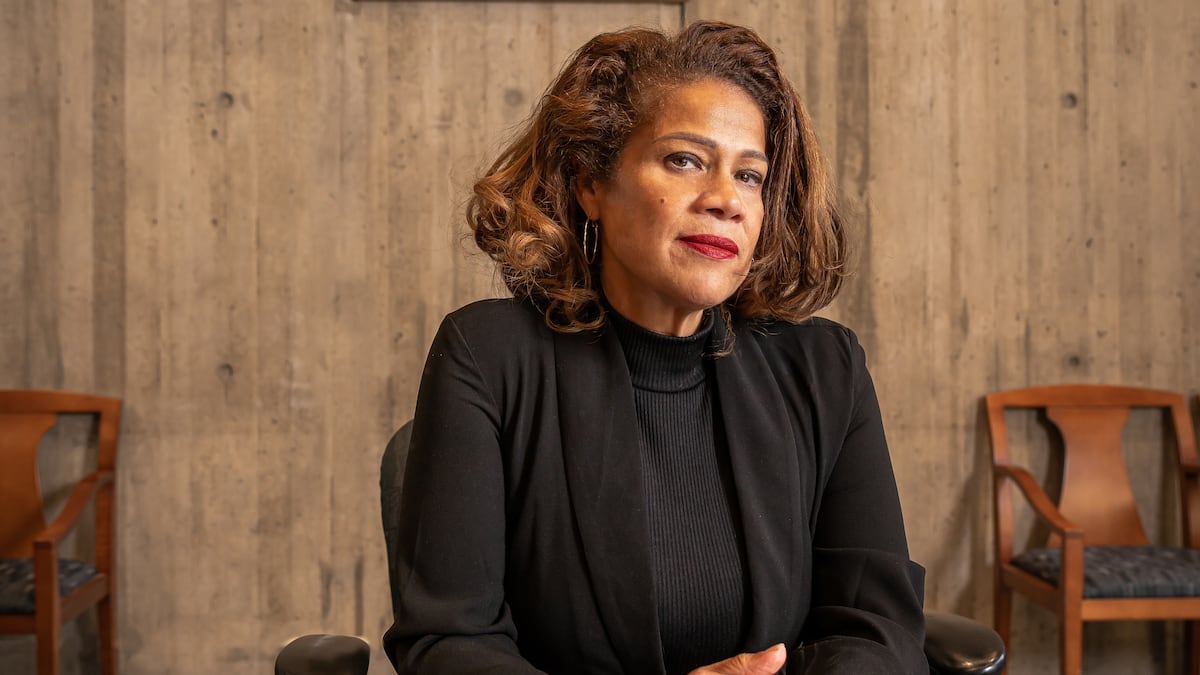
Julia Mejía: A Journey of Identity and Advocacy
Long before she became Boston’s first Afro-Latina city councilwoman, Julia Mejía was Julia Melania Mejía Peña — a five-year-old girl who emigrated from the Dominican Republic to Massachusetts. Her early years were filled with a desire to fit in, often at the cost of suppressing her Afro-Latin identity. “I didn’t want anyone to know who I was, where I came from,” she recalls. It was a painful decision that would shadow her for years.
Struggles of Belonging
Growing up in Boston, Mejía felt the divide within the city’s Latino community. With her brown skin and curly hair, she found herself welcomed more by the African American community than by her own Latino peers. “I always chose to be on the African American side because it was the one that accepted me,” she says. However, this acceptance came with its own price: she felt compelled to hide her Spanish-speaking heritage, feeling the weight of a dichotomy that demanded she choose one identity over the other.
Reflecting on her journey, Mejía notes that it wasn’t until nearly a decade ago that she fully embraced the term Afro-Latina. An old photo she stumbled upon brought this realization home. “I think it was then that I truly understood the term and realized it reflected everything I am,” she explains, capturing a moment of profound self-discovery.
A Reflection of Boston’s Afro-Latino Community
Councilor Mejía’s office is adorned with Dominican flags, embodying the pride she has cultivated over time. Yet, her journey towards self-acceptance has been shared by many in Boston, a city with the highest proportion of Afro-Latinos in the United States. Nearly 88,000 Afro-Latinos call Boston home, a number that has doubled in the last decade, according to a 2023 study by the Boston Foundation.
Despite their increasing numbers, Afro-Latinos often grapple with a sense of invisibility. They frequently encounter barriers that leave them feeling out of place in both the Latino and African American communities. This struggle for identity is echoed in Yvette Modestin’s experience. An Afro-Panamanian activist, Modestin recalls moving to Boston and finding others who, despite sharing similar backgrounds, didn’t identify as Afro-Latinos. “I had never had an experience like that, standing in front of someone who said to me, ‘Oh, I thought you were Black,'” she recounts, illustrating a painful disconnect.
The Complexities of Racial Identity
Modestin highlights a “deep denial” within the Latino community regarding Afro-Latino identity. The results of systemic racism that pervade the wider American society manifest within Latino circles, leading some to distance themselves from their Blackness to “make their lives easier.” This distancing creates a caste system, one that places Latinos above African Americans while also denying Black Latinos their rightful place in either community.
For many like Modestin, unmasking their identity has not been a choice; it has been a necessity. “First and foremost, I am this,” she states, firmly asserting her Afro-Latino identity against the backdrop of societal pressures.
Marginalization and Socioeconomic Challenges
The erasure and denial of Afro-Latino identity carry tangible consequences. Research shows that Afro-Latinos represent the poorest demographic in Boston. They earn approximately $45,000 annually, which is starkly lower than the city’s median income of $93,000, and have the lowest homeownership rates at just 19%. This marginalization is echoed by James Jennings, an expert on urban poverty and race relations, who emphasizes how systemic barriers have immobilized this community.
Activism: A Long and Ongoing Journey
José Massó III arrived in Boston in the 1970s, where he witnessed firsthand the marginalization that persists today. Over half a century, he has evolved into a celebrated figure in the Afro-Latino community, dedicated to amplifying their contributions through initiatives such as Boston’s longest-running radio show, ¡Con Salsa!
Massó’s focus has always been on elevating Blackness within the Latino experience. His journey, however, was fraught with challenges. He faced skepticism and resistance from both the Latino and Black communities, struggling to convey that he could be both proud of his Afro-Puerto Rican roots and an advocate for social change.
Building Bridges and Creating Spaces
In recent years, there has been a notable shift in the dialogue surrounding Afro-Latino identity. Activists like Modestin have worked tirelessly to create safe spaces for Afro-Latinos in Boston. In 2004, she founded the Encuentro Diaspora Afro, aimed at empowering the city’s Afro-Latino population through cultural awareness and education.
Another impactful organization is the Hyde Square Task Force, which has transitioned to focus on Afro-Latino culture and identity as part of its programming. “We realized that their African roots were a silenced part of their identity,” says Celina Miranda, the organization’s executive director, emphasizing the importance of self-acceptance and cultural pride among the youth they serve.
The Political Landscape
Julia Mejía’s ascent to the City Council has symbolized a breakthrough for many Afro-Latinos in Boston. She recalls the skepticism surrounding her campaign—advisers suggested she hide her immigrant status and identity as a single mother. Yet, Mejía was resolute: “I said, ‘I’m not going to be invisible anymore.’” Her victory by a single vote marked a watershed moment in Boston’s political landscape.
As a council member, Mejía has emerged as a bridge between the Latino and African American communities, tackling issues of representation head-on. She acknowledges that despite progress, much work remains to be done in addressing the cultural and systemic barriers that persist.
Navigating Dual Identities
Mejía’s experience underscores that her light skin does not preclude her from claiming her Black identity. She often faces scrutiny and skepticism within both communities. “I’ve had to learn to confront people on both sides when necessary,” she explains, showing a commitment to breaking cycles of exclusion.
By advocating for her Afro-Latina identity, Mejía continues to challenge societal norms and foster a narrative of inclusivity, highlighting a need for open conversations about race and identity within the sprawling tapestry of Boston’s communities.