


Navigating New Horizons: The Journey of Tremaine Collins and the Quest for Study Abroad Opportunities for Black Men
In the middle of a blistering August day, Tremaine Collins stands at the Oku train station in Tokyo, deftly punching a code into his phone’s app to secure a ticket. This bustling hub, located in the Kita district, connects residents and travelers alike to the vast tapestry of Tokyo—one of the largest and most vibrant metropolises in the world. As the trains screech to a halt, Mr. Collins, dressed in stylish silver low tops, blue jeans, and a multi-hued plaid shirt, embodies the essence of a young man set on a journey toward self-discovery.
Mr. Collins is not on vacation; he’s here to fulfill a long-held dream. As one of only two Black men on the crowded platform, he reflects on the significance of his presence in Japan. “I’m here because this is a goal that I always wanted to get here,” he states, grounding his experience in ambition rather than leisure.
A New Chapter at Temple University Japan
Currently enrolled as a full-time student in Temple University Japan’s four-year undergraduate program, Mr. Collins stands out further by the mere nature of his choice. While nearly 300,000 Americans studied abroad during the 2023-2024 academic year, only 6% were Black, with just 2% being Black men—a stark underrepresentation in international education. Mr. Collins is not merely browsing educational options; he’s committed to changing the narrative for Black male students.
The $20 Million Question
The stark statistics surrounding Black male representation in study abroad programs invite a deeper exploration. Why do so few Black men seize opportunities to study overseas? Experts have termed this an ongoing dilemma, likening it to a “$20 million question.” According to Tonija Hope, the director of the study abroad program at Howard University, the conversation around these statistics has taken center stage at numerous conferences.
One critical aspect is rooted in the life-changing potential of studying abroad. Research indicates that such experiences not only enhance retention and completion rates but also significantly improve employability, social skills, and economic mobility. Despite these benefits, many Black students still find barriers to accessing these opportunities.
The Roots of the Issue
Mr. Collins attributes his desire to study abroad to his upbringing in Lorain, Ohio, a steel town where he often felt out of place. Growing up captivated by anime and games like Pokémon, he battled feelings of neglect and isolation, stemming from his family’s limited travel experiences. “No one in my immediate family had ever traveled outside the United States,” he reveals, highlighting the barriers many first-generation college students face.
After graduating high school, Collins took a bold step by enlisting in the Air Force, a decision that took him to Montana and laid the foundation for his educational journey. The GI Bill enabled him to pursue college abroad, leading him first to France—a country that would challenge him in unexpected ways.
A Return to Japan
While studying in Paris, Collins had a fleeting encounter with law enforcement that made him reconsider his future there. Profiling by police officers left a lasting impression, making him acutely aware of how race could alter experiences abroad. Following this encounter, he visited Tokyo and quickly felt a connection, ultimately applying to Temple University Japan. “If you want to explore outside of yourself and you shy away due to fear, you’re doing yourself an injustice,” he reflects.
Overcoming Barriers: The “4 Fs”
Margery Ganz, a professor at Spelman College, identified four critical barriers preventing Black students from studying abroad: family, finances, fear, and faculty—or what she termed the “4 Fs.” Families may not understand the benefits of international education, finances can be a significant hurdle, and fear of discrimination abroad is a legitimate concern. For many Black students, the fear of being isolated and feeling “othered” remains a daunting prospect.
In today’s landscape, Dr. Hope also introduces a fifth “F”—FOMO, or fear of missing out. For Black male students, cultural commitments, like homecoming events or fraternity rushes, can preclude their plans to study abroad.
Making Togetherness a Priority
Organizations dedicated to enhancing the representation of Black men in international education are rising to meet these challenges. Ruby Maddox, founder of Leaders of the Free World, dedicated her career to fostering these opportunities. She emphasized how her experiences in Ghana changed her worldview, igniting a desire to help young Black males embark on similar journeys.
By facilitating leadership training and travel opportunities, Maddox’s vision was to help younger generations step outside their perceived boundaries. Tragically, her untimely passing underscored the critical nature of such initiatives, but her work continues to inspire.
The Realities of Study Abroad
Timothy Mason, having studied in Lisbon, shared insights into his experiences as one of the only Black students in his program. While he embraced the transformative journey, he noted the isolating feeling of being one of just a few students of color. This phenomenon of being the “only” can shape experiences abroad in ways that many students may not anticipate.
Embracing Change in a Global Context
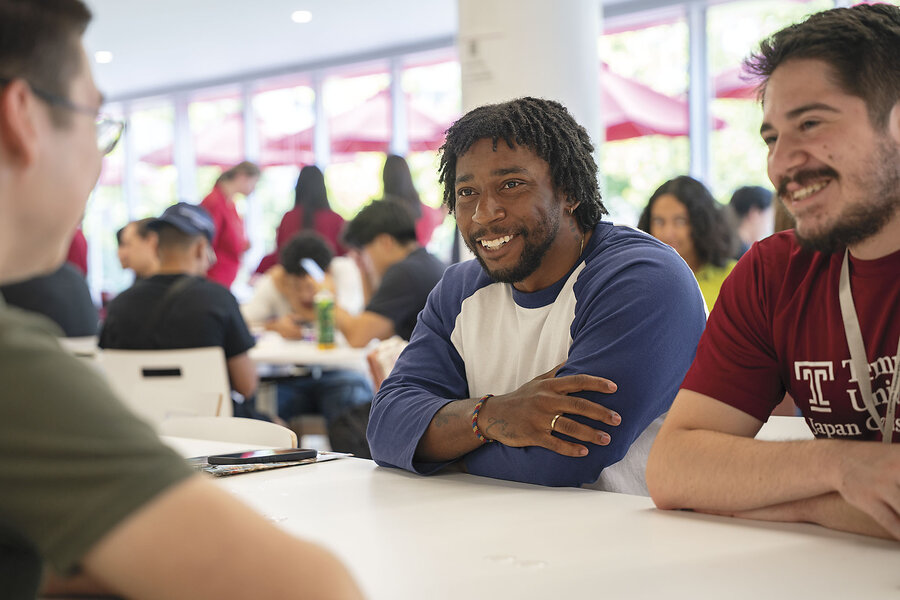
Back in Tokyo, as Mr. Collins participates in opening week activities at Temple University Japan, he is keen on immersing himself in a culture that offers both challenges and opportunities for growth. His eagerness to learn Japanese demonstrates an understanding of the importance of cultural integration. Mr. Collins recognizes the significance of stepping outside the familiar to discover one’s identity.
“I think sometimes you have to step away from your culture to find out who you truly are,” he states. His experience in Japan represents more than just education; it symbolizes a narrative of resilience, ambition, and the longing to broaden personal and cultural horizons in a world that often feels constrictive.
The Journey Forward
With the knowledge that his journey can reverberate beyond his personal aspirations, Mr. Collins embodies the potential for change and growth within the Black community. As he embarks on this new chapter in Tokyo, his story serves as a beacon of hope for others, showing that beyond challenges lies the possibility of discovery, growth, and understanding.