


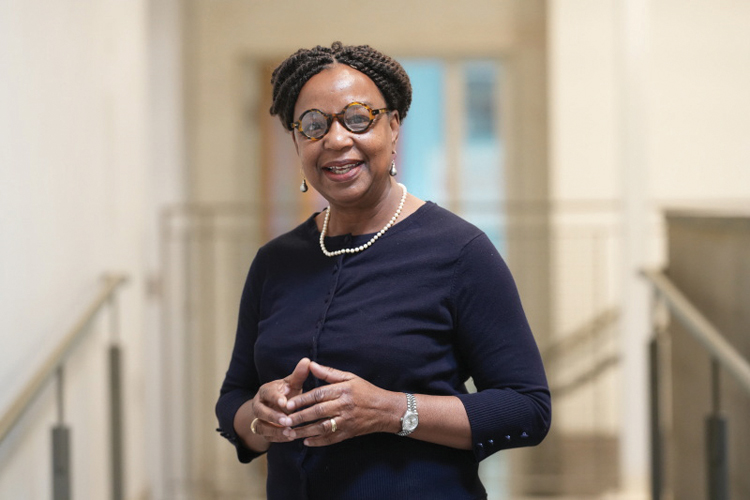
IBe’ Bulinda Hereford Crawley: A Legacy of Service and Storytelling
Drawing Strength from Community Roots
IBe’ Bulinda Hereford Crawley’s journey is steeped in a commitment to community service, deeply influenced by her upbringing in Danville. Growing up surrounded by close relatives and an active church, Crawley learned early that the spirit of service would shape her life profoundly. She reflects poignantly, “Service is teaching, mentoring, and creating for me.” This ethos of community service is not about personal accolades but aims to create models of resilience for future generations.
Launching the IBe’ Arts Institute
In 2021, after a rewarding career as a history teacher, Crawley took a momentous step: she founded the IBe’ Arts Institute. Located in a historic school building from the 1830s in Hopewell, the gallery stands as a testament to her dedication to preserving and visually narrating untold African American stories. The institute operates primarily through the sales of her artist books, reflecting her preference for the independence that a for-profit model provides. “I have a nontraditional approach to this business because it looks like social justice,” Crawley explains, emphasizing her mission to empower rather than seek financial donations.
Celebrating African American Stories
One of the defining features of the IBe’ Arts Institute is its focus on storytelling through art. Crawley has gained acclaim for her artist books, with her debut title, “11033,” receiving accolades upon its release in 2022. This book intricately weaves the story of a Black woman in the Virginia State Penitentiary from 1921, transforming the narrative into a work of art. Crafted from handmade flax and abaca paper, the book’s pages are cut into the silhouette of a pregnant body, symbolizing both a personal and historical struggle. This innovative design supports an embedded clay figure that evokes the enclosure of a prison cell, melding the themes of confinement and resilience.
Her latest project, “Exchange: Shockoe, Richmond,” investigates the lesser-known histories of free Black residents in Shockoe Valley during the era of slavery. It highlights the vibrant community that existed amid adversity, aiming to shine a light on historical narratives often overlooked.
A Lifelong Commitment to Education
Crawley’s academic background equips her with the tools to blend art and education seamlessly. She earned a bachelor’s degree in English and a master’s in education from Virginia Commonwealth University, teaching history for 25 years in Fairfax County Public Schools. Now retired, her transition from educator to artist has not diminished her commitment to teaching. “I’m not making art for art’s sake,” she states. “I’m doing this to inspire and teach and to be an example of what’s possible.”
The Vision Behind IBe’ Arts Institute
The IBe’ Arts Institute, which opened its doors in 2023, serves not just as a gallery but as a community space. It is dedicated to the preservation and documentation of African American narratives and culture. “It belongs to the community so we, as African Americans, can have our own spaces,” Crawley emphasizes, underscoring the necessity of cultivating a sense of ownership and belonging.
Historical Significance of the Space
The historic building that houses the institute carries its own layers of history. Previously a hospital during the Civil War, the structure was in disrepair when Crawley acquired it. Using her retirement savings, she dedicated three years to renovating the property, transforming it into the vibrant creative space it is today. The renovation was recognized with a Historic Preservation Award from Preservation Virginia in 2024.
Collaborative Efforts and Community Involvement
Crawley stresses the importance of collaboration in her mission. The IBe’ Arts Institute partners with various organizations and institutions to document and preserve historical narratives. Collaborations include work with the National Park Service at the Frederick Douglass House, the Petersburg Battlefield Park, and the National Museum of Women in the Arts, among others. These partnerships enhance the institute’s outreach and impact within the community.
Sustainable Funding through Artistry
The financial foundation of IBe’ Arts Institute is primarily secured through the sale of Crawley’s art books. The institute’s business model also includes an artist residency program, providing a sustainable way to cover taxes and ongoing expenses. Crawley reaffirms her commitment to self-sufficiency, stating, “My art books do well.”
Leaving a Lasting Legacy
For Crawley, the work she does transcends mere creativity; it’s about legacy building. She believes that engaging meaningfully with art keeps her youthful and invigorated. “Art allows me to have communities, read, write, research, think, and create a body of work that will live beyond my lifetime.” Her vision is to ensure that future generations remember the narratives of survival and resilience that are so intrinsically tied to African American history.
Exploring Untold Histories
Crawley’s current project, “Exchange: Shockoe, Richmond,” delves into the lives of free African Americans in the Shockoe Valley, a significant yet underrepresented community during a complicated historical period. As she researched tax records at the Richmond tax office, Crawley uncovered a vibrant community thriving in an area now dominated by highways. This project not only aims to educate but also serves as a reminder of the histories that often lie hidden beneath the surface.
A Unique Approach to Art and Education
Crawley’s vision intertwines artistry with well-researched narratives. She aims to fill gaps in history education, particularly for young people. “I want to keep these stories from being lost,” she insists, highlighting the importance of presenting a multifaceted view of Black history that goes beyond slavery.
Personal Reflections and Inspirations
As she considers her personal experiences, Crawley acknowledges the struggles she faced as an African American woman teaching history. “It was frustrating because I wanted to teach something about African American history but couldn’t add the nuances of diversity,” she notes. This frustration fueled her drive to create spaces where these stories can be told authentically.
In her daily life, Crawley prioritizes a routine that includes stretching, meditation, and writing, emphasizing the importance of accountability and self-care. Outside of her work, she enjoys community engagement, attending art shows, and cherishing time spent with family.
Crawley attributes her inspiration to the countless untold stories of African American women, particularly influenced by her grandfather and uncle, who were pivotal figures in the Civil Rights Movement. “There are so many stories that haven’t been documented,” she emphasizes, underlining her mission to ensure these voices are heard.
Future Prospects
Looking ahead, Crawley’s agenda includes speaking engagements at CODEX, an international book fair where her works will be showcased. With plans for a fellowship, she remains devoted to advancing her artistic and community work, ensuring that the legacy of African American stories continues to thrive.