


### A Controversial Tribute: Trump’s Plaques at the White House
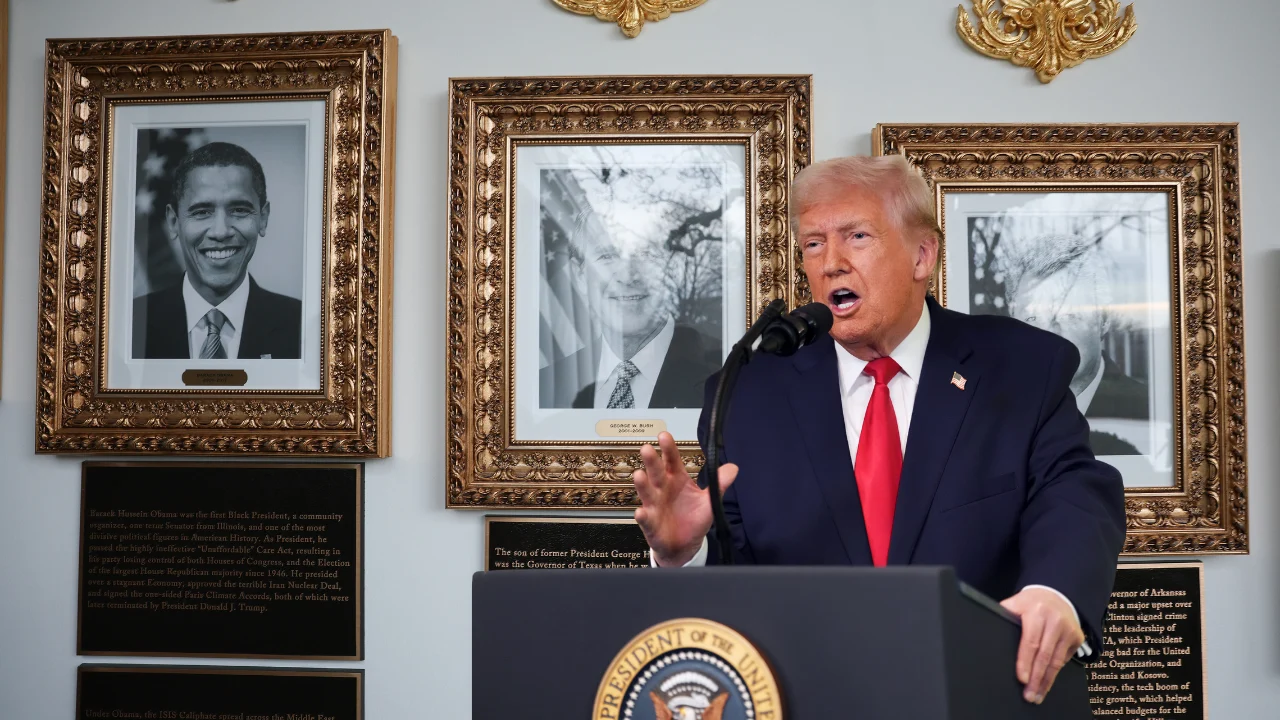
President Donald Trump’s latest renovations to the White House have captured attention for both their audacity and content. Among the changes is a series of plaques placed under the portraits of former U.S. presidents in a walkway outside the West Wing. The White House describes these plaques as a “tribute to past Presidents, good, bad, and somewhere in the middle, who served our Country, and gave up so much in so doing.” However, the homage quickly erodes into a battleground of political rhetoric.
### The Nature of the Plaques
What was expected to be a respectful recognition of past leaders has turned into a platform for Trump to air grievances against his immediate predecessors, notably President Barack Obama and President Joe Biden. According to the White House press secretary, Karoline Leavitt, many of the plaques were “eloquently written” and directly authored by Trump himself. Yet, the eloquence is overshadowed by a clear partisan agenda.
### Trump’s Stylized Narration
Reflecting Trump’s distinct communication style, the plaques showcase random capitalization and biting opinions on political matters. For example, Obama’s plaque begins with his identity as “Barack Hussein Obama,” quickly spiraling into a critique that labels him as “one of the most divisive political figures in American History.” The tone is not dispassionate and historical but rather deeply infused with personal contempt.
### Accusations and Fallacies
Moving beyond criticism, Obama’s plaque includes a series of unfounded accusations. It claims that he “spied on the 2016 Presidential Campaign of Donald J. Trump” and refers to the investigations into Russian interference as “the worst political scandal in American History.” Such statements not only misrepresent historical facts but also blur the lines between respectful recognition and political warfare.
### Insults to Biden
The plaque dedicated to President Biden is even more incendiary. Trump refers to him as “Sleepy Joe Biden,” asserting that he ranks “by far, the worst President in American History.” The document claims that Biden’s presidency has been marked by “unprecedented disasters” that have nearly led the nation “to the brink of destruction.” The phrasing escalates further, accusing Biden of blanket pardons for “Radical Democrat criminals and thugs,” alongside inflammatory allusions to a “Biden Crime Family.”
### Self-Aggrandizement
Trump’s own plaque, standing next to those of his predecessors, appears to reinforce his self-image rather than convey a historical account. It celebrates his anticipated victory in the 2024 elections while mentioning “unprecedented Weaponization of Law Enforcement against him” and alluding to supposed assassination attempts. This self-aggrandizing narrative adds another layer of complexity to the plaque display, inviting skepticism about its purpose.
### Public Reaction
Unsurprisingly, reactions to these plaques have been mixed. Social media users have expressed incredulity and amusement, with some, including California Governor Gavin Newsom, chiming in on the absurdity of the portrayals. This public discourse illustrates a broader collision of narratives surrounding Trump’s presidency and the legacy of those who have come before him.
### A Pattern of Renovation
The plaques are only the latest in a series of controversial renovations made during Trump’s administration. Earlier changes included significant alterations to the Rose Garden and a plan to tear down the East Wing to make way for a lavish ballroom in his name. These decisions suggest a tendency towards a more personal interpretation of presidential history and space, reversing the traditional norms of honoring predecessors in the heart of American politics.