


Kwanzaa might be the perfect holiday to walk away from one year and into another one.
The last week of the year often feels like a time when we mentally unplug. Work loses its intensity, and the desire for connection with our community becomes paramount. This is a season for realignment and reflection, where we can take a moment to exhale and remind ourselves: We made it. As Kwanzaa approaches—beginning Friday, December 26, through January 1—the holiday, rooted in African heritage, culture, and tradition, offers a timely moment to usher in the new year with renewed energy and determination.
If you’re curious about what Kwanzaa represents (beyond its catchy holiday tunes), it was founded in 1966 by Dr. Maulana Karenga. His belief in a “cultural revolution gives identity, purpose and direction” laid the groundwork for a celebration that fosters connection among African Americans and the Pan-African diaspora. However, Kwanzaa is inclusive; its traditions can resonate with individuals from all walks of life who are committed to the underlying principles of the celebration.
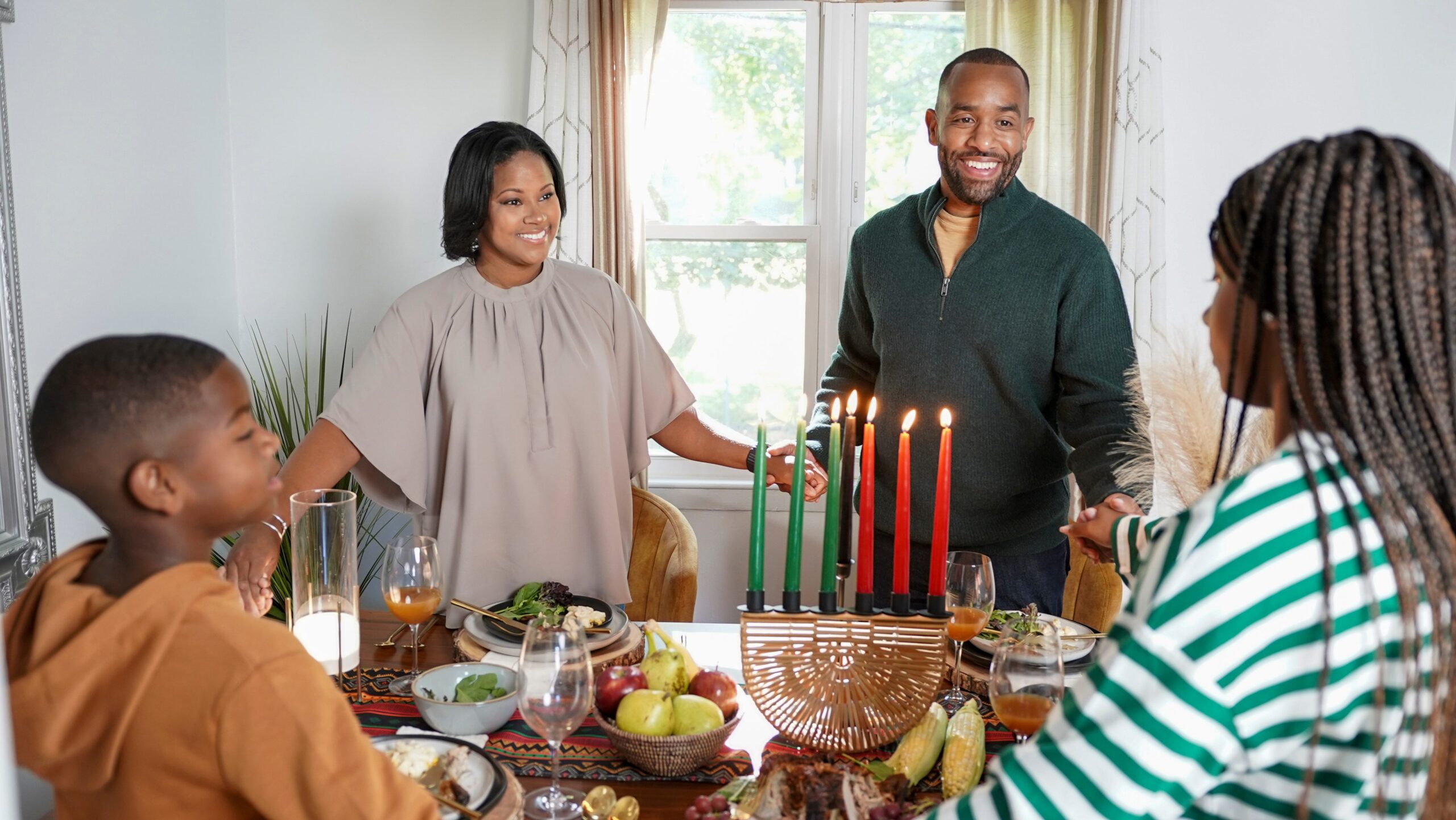
The week of Kwanzaa is marked by several key traditions. Much like traditions in other cultures—like eating black-eyed peas on New Year’s Eve or snacking on grapes under the table—Kwanzaa invites participants to engage in cultural practices that deepen family bonds and enhance personal reflection. One central ritual includes lighting the kinara, a traditional candle holder, alongside hosting a grand feast filled with symbolic dishes, which underscores the importance of community and inner upliftment.
The principles of Kwanzaa—Umoja (unity), Kujichagulia (self-determination), Ujima (collective work and responsibility), Ujamaa (cooperative economics), Nia (purpose), Kuumba (creativity), and Imani (faith)—serve as guiding totems for the week-long observance. Even though 2025 has offered its share of challenges to the African American community—especially concerning Black purpose, self-determination, and creativity—it has simultaneously inspired a renewed sense of self-belief and resilience.
Reflecting on the principles of Kwanzaa, it’s evident how they resonate with the themes of the new year—Nia embodies the renewed purpose we feel as January arrives, while Kuumba highlights the creativity that makes each of us unique. Ujima calls forth the responsibility to engage with our communities, and that spirit is amplified as we transition into the fresh opportunities of a new year.
In recent years, the notion of self-care has gained traction, and for good reason. As we navigate an increasingly complex and chaotic world, Kwanzaa provides a timely opportunity to engage with our emotions, examine our concerns, and release what no longer serves us. Many look forward to day six of Kwanzaa—the Karamu—a celebratory feast featuring dishes ranging from fried chicken to macaroni and cheese, and black-eyed pea salad. However, it’s the entire week leading up to this joyous occasion that sets the stage for a deeper understanding of the principles, culminating in the faith-filled step into the new year.
Kwanzaa should not be viewed as an exclusionary holiday; rather, it invites all to celebrate. Its principles can be woven into daily life, much like a self-help manual or a meditation guide. As 2025 winds down, the values of Kwanzaa resonate more powerfully than ever, reminding us of our interconnectedness and the strength that comes from uplifting one another.