


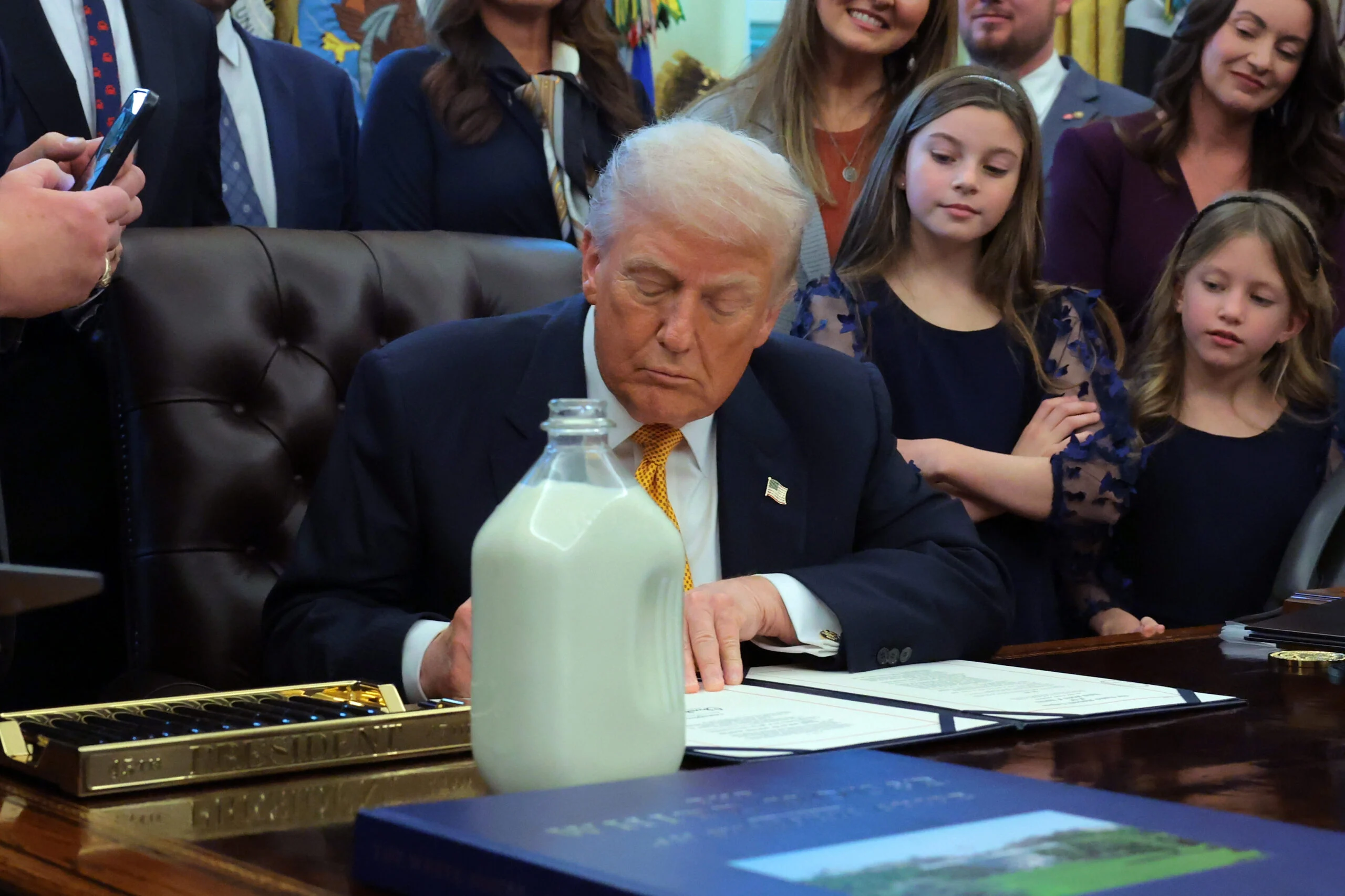
In a significant shift towards nutritional policy, milk is making a comeback on President Donald Trump’s agenda. He recently signed the “Whole Milk for Healthy Kids Act,” a momentous law that overturns previous regulations banning whole and 2% fat milk in the National School Lunch Program. This legislation, which received unanimous support in Congress last fall, reflects a growing appetite for re-evaluating dietary choices within educational institutions.
At the signing ceremony, Trump highlighted the law’s significance, stating, “It will ensure that millions of school-age children will have access to high-quality milk as we ‘Make America Healthy Again.’” Demonstrating his enthusiasm, he even placed a jug of milk prominently on his desk, emphasizing the act’s intention to promote healthier options for children. This move symbolizes a broader trend that seeks to rethink dietary guidelines intended for young Americans.
Health advocates were quick to support the initiative. Health and Human Services Secretary Robert F. Kennedy Jr. declared, “Removing whole milk did not improve health; it damaged it. Milk fat is not junk food.” His comments highlight a controversial aspect of dietary recommendations that have historically frowned upon full-fat dairy products. This shift towards embracing healthy fats reflects a growing body of research suggesting that full-fat dairy may not be as detrimental as once thought.
The roots of this legislative change can be traced back over a decade. In 2010, former President Obama signed the Healthy, Hunger-Free Kids Act, which aimed to combat the rising trend of childhood obesity by promoting healthier foods in schools. At the time, the USDA restricted schools to serving only flavored and unflavored nonfat or low-fat milk, fueled by concerns that whole creams contributed to obesity. The federal law addressed the alarming statistic: one in three children in the U.S. was classified as either obese or overweight.
Fast forward to the present day, the landscape of nutritional science is evolving. The Trump administration is now advocating for the incorporation of healthy fats and whole-fat dairy into everyday diets. Kennedy Jr. has made headlines by urging Americans to consume more cheese and whole milk, playing into a broader narrative that seeks to reintroduce these options into mainstream dietary guidelines. This push aligns with a prior commitment to end “the attack on whole milk, cheese, and yogurt.”
Additionally, this initiative has sparked a revival campaign reminiscent of the iconic “Got Milk?” advertisements, which once splashed celebrity milk mustaches across billboards. The emphasis on promoting dairy consumption symbolizes not just a dietary shift but a cultural one, given America’s longstanding relationship with milk as a staple in many households.
Dairy farmers have long advocated for the return of whole and 2% milk to school meal programs. Gregg Doud, CEO of the National Milk Producers Federation, remarked on how the previous exclusion of these milk options neglected consumer choice and did not necessarily align with contemporary dietary expectations. Farmers and cooperatives have consistently pointed out the adverse effects of the earlier regulations, arguing that they restricted families’ and children’s preferences.
Moreover, the Whole Milk for Healthy Kids Act offers expanded benefits for families. In addition to reinstating whole and 2% milk in schools, the law includes provisions allowing parents to request alternative milk options without needing a doctor’s note, easing the process for those seeking tailored dietary solutions for their children. This change is expected to provide a more flexible and adaptive approach to nutritional needs within the school system.