


The U.S. Designation of the Lebanese Muslim Brotherhood: What You Need to Know
Why it matters:
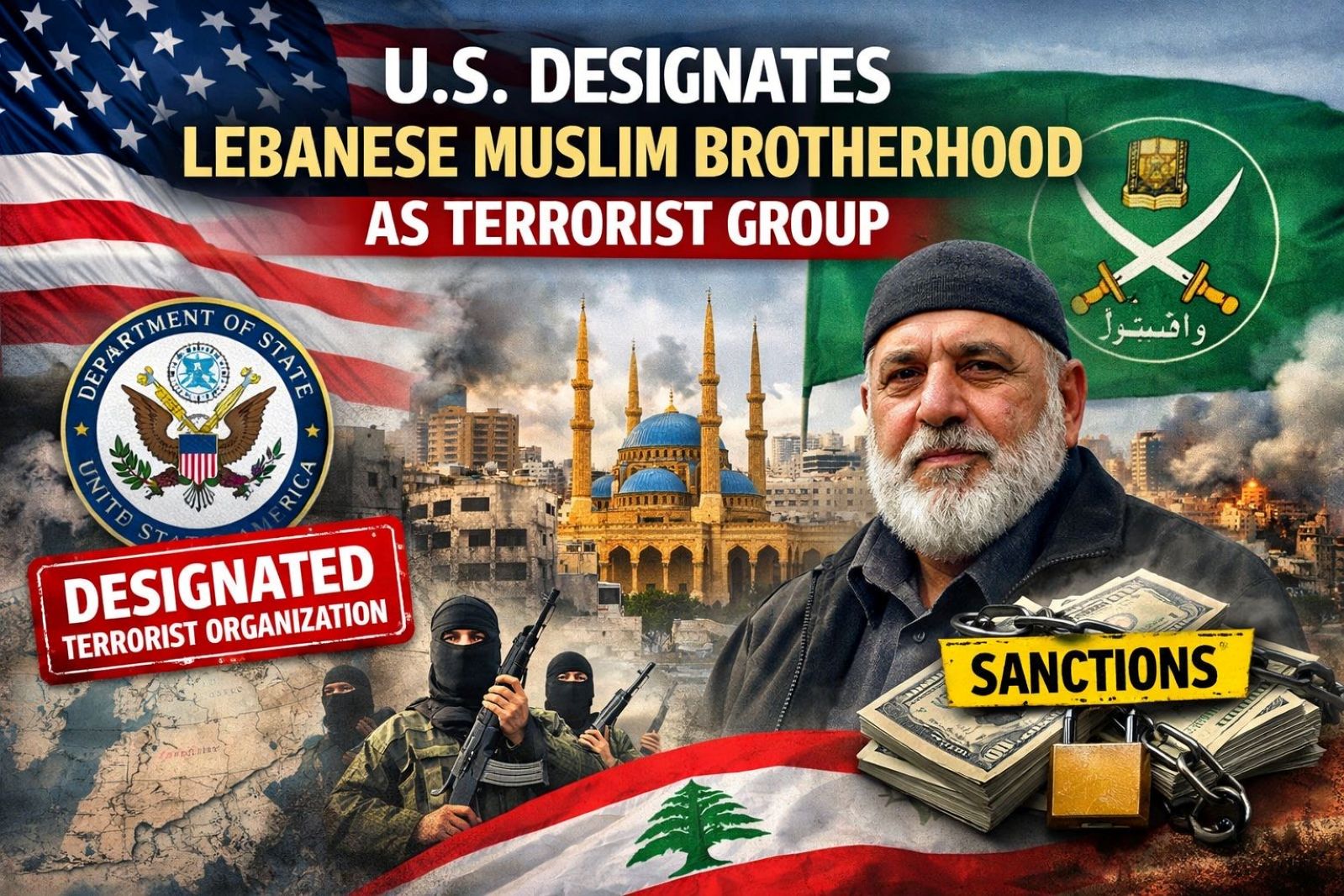
The United States has taken a significant step by designating the Lebanese Muslim Brotherhood as a Foreign Terrorist Organization (FTO) and a Specially Designated Global Terrorist (SDGT). This new classification represents a pivotal shift in Washington’s strategy towards Islamist movements in Lebanon. By aligning the group with globally recognized terrorist organizations, this designation poses a considerable threat to Lebanon’s already fragile political and financial stability.
What happened:
In a recent announcement, the U.S. government revealed that it would impose sanctions on the Lebanese, Egyptian, and Jordanian branches of the Muslim Brotherhood. This action is part of a broader, sustained initiative aimed at dismantling Brotherhood networks worldwide. The U.S. Department of State specifically named the Lebanese Muslim Brotherhood as both an FTO and SDGT, simultaneously imposing individual sanctions on its leader, Muhammad Fawzi Taqqosh. This move also included designating the Egyptian and Jordanian factions as SDGTs due to their material support for Hamas.
The decision is framed as an implementation of President Trump’s Executive Order 14362, which targets Muslim Brotherhood-affiliated entities that are deemed to threaten U.S. national security.
Zoom in: Lebanon
Different from other chapters, the Lebanese Muslim Brotherhood operates within a complex landscape dominated by armed non-state actors and entrenched political alliances. While groups like Hezbollah have historically been at the center of international concerns regarding terrorism, the U.S. designation of a Sunni Islamist faction expands the criteria by which Islamist organizations are evaluated. This shift indicates Washington’s unwillingness to tolerate any gray areas in the ideological or operational influences of such groups—especially those that operate politically while allegedly maintaining ties to militant organizations.
What’s new:
This designation marks the first instance in which a Lebanese Islamist organization—outside Hezbollah’s extensive network—has faced such comprehensive terrorism-related classifications. The implications of the FTO label are severe, criminalizing material support for the group, freezing its assets, and posing significant legal penalties for anyone engaging with it. As a result, Lebanese banks, NGOs, and political intermediaries will now be pressured to conduct thorough compliance checks, potentially leading to yet another wave of financial caution and risk avoidance.
Between the lines:
This declaration is reflective of a broader recalibration in U.S. Middle East policy. The American perspective increasingly frames Islamist movements—whether armed or politically involved—as heightened security risks rather than legitimate political entities. This new approach places additional pressure on the Lebanese state, which has historically navigated a careful balance, avoiding direct confrontations with Islamist factions, as long as they do not align directly with Hezbollah’s militant actions.
What they’re saying:
According to U.S. government statements, these designations aim to “deprive these Muslim Brotherhood chapters of the resources to engage in or support terrorism.” This indicates a strategic focus not just on punishment, but on dismantling operational capabilities that could threaten U.S. and regional security.
What to watch:
- How Lebanese authorities respond—or fail to respond—to this designation could indicate the future dynamics of governance and security in Lebanon.
- Local political actors may feel the need to publicly distance themselves from the group to avoid repercussions, creating shifts within the local political landscape.
- Consider the potential ripple effects on Sunni Islamist networks that operate through charities, mosques, and social services, which may now come under heightened scrutiny.
- Pay attention to Hezbollah and its allies. Historically, they have framed U.S. counterterrorism actions as selective, and their responses could influence further developments.
Bottom line:
By issuing this designation, Washington is signaling that Lebanon’s status as an exception in political dynamics is over. Islamist movements that have previously managed to balance social activism with political engagement may now find themselves reclassified as imminent security threats. This shift raises the stakes in a nation already wrestling with its own notions of sovereignty and governance.