


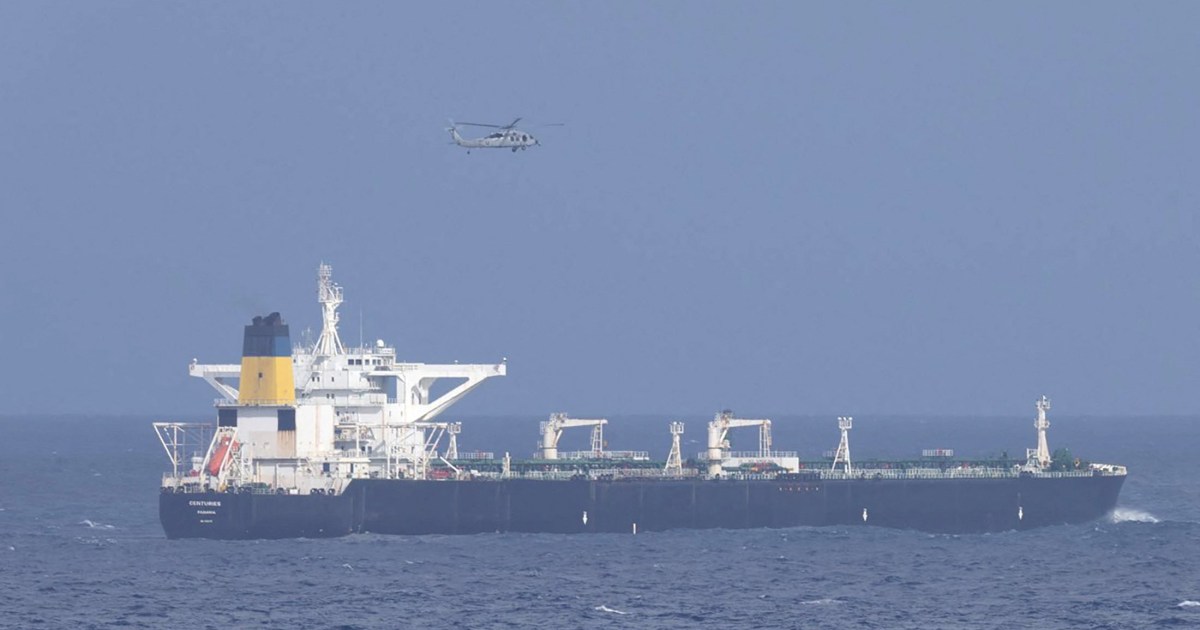
A Second Seizure: The U.S. Targets Venezuelan Oil Tanker
The heightened tensions between the United States and Venezuela took another dramatic turn as the U.S. seized a second oil tanker off the Venezuelan coast. This operation, which aligns with a sweeping blockade ordered by former President Donald Trump, has sparked outrage in Caracas. Venezuelan officials have characterized the move as “theft and hijacking,” signifying the deepening rift between the two nations.
The U.S. Government’s Stance
Homeland Security Secretary Kristi Noem confirmed the seizure over the weekend. In a post on X (formerly Twitter), she stated that the U.S. Coast Guard carried out the interception with support from the Pentagon. “The United States will continue to pursue the illicit movement of sanctioned oil that is used to fund narco-terrorism in the region,” Noem asserted, promising to track down and halt these activities. Accompanying her statement was a video showcasing aerial footage of the operation, emphasizing the military’s readiness and resolve.
This recent seizure marks the second time in a matter of weeks that U.S. forces have apprehended a tanker near Venezuela. Amid these operations, Trump declared a “total and complete blockade” of all sanctioned oil tankers entering and leaving Venezuelan waters, further tightening the U.S. grip on the country’s oil exports.
Caracas Reacts: Claims of International Piracy
In a swift diplomatic response, Venezuelan officials condemned the U.S.’s actions as an egregious act of “international piracy.” Vice President Delcy Rodriguez denounced the seizure, throwing accusations of theft and forced disappearance of the crew members. Such rhetoric showcases Venezuela’s resolve to retaliate diplomatically, with promises to escalate the issue to the United Nations Security Council and other global forums.
Rodriguez’s statements underscore the high stakes involved in this geopolitical chess match, as Venezuela vows to seek international support against what they perceive as outright aggression from the U.S.
Analyzing the Seized Vessel: Centuries
Reports indicate that the seized vessel, believed to be the Panama-flagged Centuries, was intercepted in the Caribbean Sea while carrying approximately 1.8 million barrels of Venezuelan Merey crude oil destined for China. This operation has ignited discussions over the legality and ethics of targeting vessels that may not be explicitly sanctioned by U.S. authorities. Legal experts point out that the Centuries had apparently been renamed during its voyage under the alias “Crag,” indicative of tactics used by a “shadow fleet” of oil tankers attempting to obscure their activities.
Jeremy Paner, a partner at a Washington, D.C. law firm, noted that the seizure of a non-sanctioned vessel marks an escalation in U.S. actions against Venezuela, complicating the notion of what constitutes a blockade.
Impact on Venezuelan Oil Exports
The implications of these U.S. actions on Venezuelan oil exports have been significant. Following the recovery of the first tanker, exports have sharply declined, with several vessels carrying oil opting to remain in Venezuelan waters rather than risk interception. While many of these vessels are indeed sanctioned, some involved in transporting oil from countries like Iran and Russia operate without such restrictions.
The consequences of this maritime approach are dire for Venezuela’s already struggling economy. The nation, rich in oil reserves but facing international sanctions and economic mismanagement, is at a crossroads, with its export capacity severely hampered.
Military Buildup and Wider Implications
The U.S. military presence in the region has noticeably increased as part of this ongoing campaign against Venezuelan oil operations. Over the past months, more than two dozen military strikes targeting alleged drug trafficking vessels in nearby waters have led to casualties, drawing criticisms regarding their legality under both U.S. and international law.
Amid these tense developments, Trump hinted at potential land strikes against Venezuela. The implications of such actions raise questions about sovereignty, international relations, and the nature of U.S. foreign policy targets in Latin America.
The Broader Geopolitical Context
Venezuelan President Nicolás Maduro has accused the U.S. of seeking regime change to gain control over the nation’s vast oil resources. Discussions among analysts suggest that the current U.S. strategy may reflect aged foreign policy visions where controlling resource-rich territories became a focal point.
As South American leaders gathered for the Mercosur summit, the specter of military intervention loomed large. Brazilian President Luiz Inácio Lula da Silva cautioned that military engagement could lead to a humanitarian catastrophe. This sentiment highlights the precarious balance of power and international relationships in the region, while Argentian President Javier Milei expressed support for U.S. actions, showcasing a divided regional stance.
In an era marked by shifting geopolitics and renewed tensions, the U.S.’s blockade actions against Venezuela offer a snapshot of the complex interplay between resource control, international law, and diplomatic relations—an unfolding narrative that is far from resolved.