


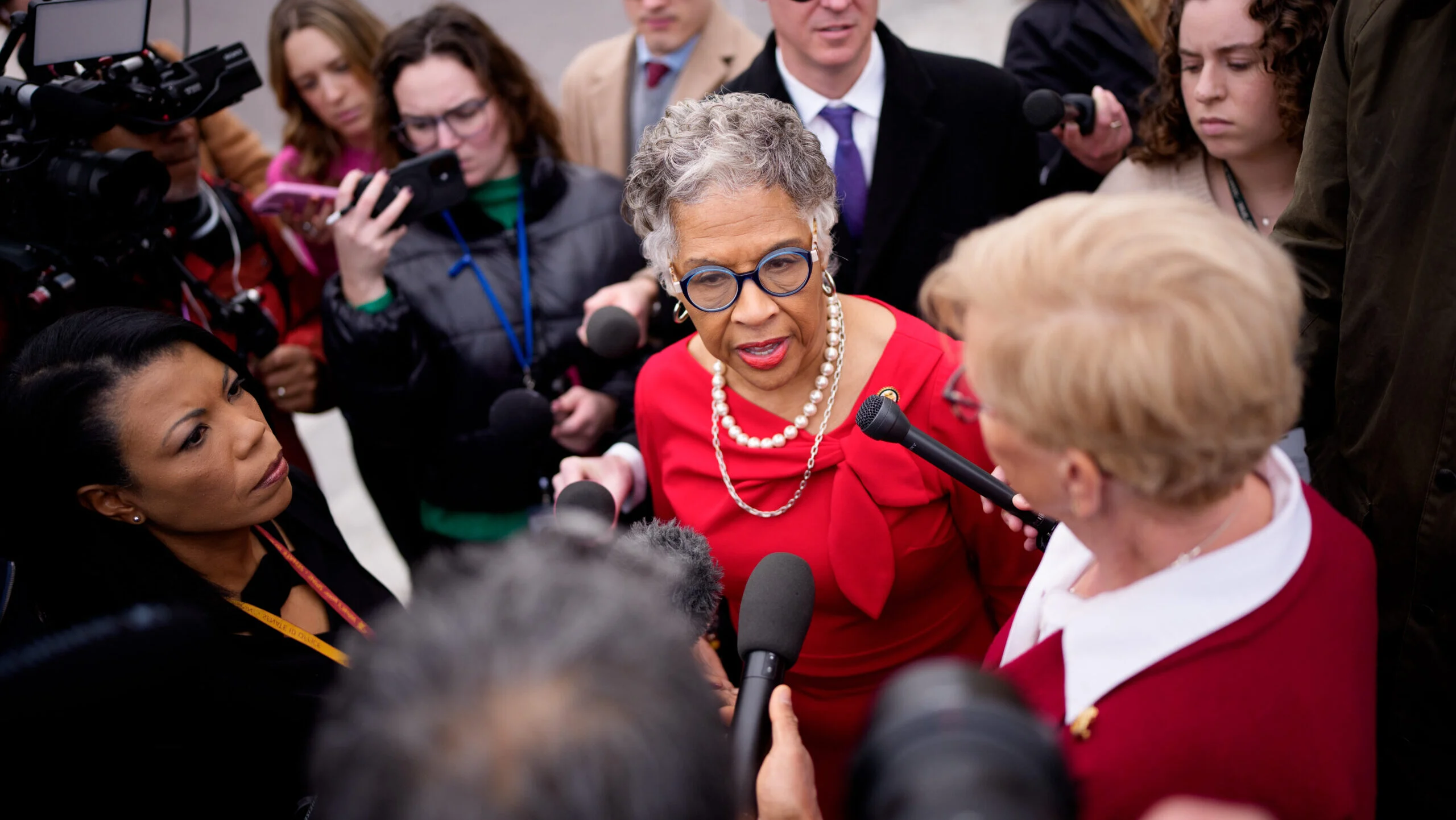
Joyce Beatty’s Stance Against Renaming the Kennedy Center
Rep. Joyce Beatty is making waves by vocally opposing claims about the John F. Kennedy Center for the Performing Arts in Washington, D.C. She contests the assertion that the arts institution was “unanimously” renamed after former President Donald Trump. This assertion gained traction following an announcement from White House Press Secretary Karoline Leavitt, who stated that a “unanimous” vote by the newly appointed Trump-friendly board made this significant change.
The Inequality of the Voting Process
During a video address shared on social media platform X, Beatty explained her experience during the vote. “I’m sitting here in my congressional office in Washington, D.C., just ending a call with the Kennedy Center, where I serve as an ex officio member,” she noted. Beatty asserted that attempts to voice her concerns were stifled; each time she pressed the button to speak, she was muted. This revelation raises questions about the transparency and fairness of the process that led to such a momentous decision.
Legislative Oversight and Authority
Moreover, Beatty emphasized that the board’s decision likely exceeds its authority. As she pointed out, “Clearly Congress has a say in this. The Kennedy Center was created by Congress. This is just another attempt to evade the law and not let the people have a say.” Her remarks highlight the tension between executive actions and legislative oversight, suggesting that a decision of this magnitude warrants more extensive discussion and input from elected representatives.
Characterizing the Decision as Censorship
In her social media follow-up, Beatty clarified her stance further: “For the record, this was not on the agenda. This was not consensus. This is censorship.” By labeling the process as censorship, Beatty aims to galvanize public support and scrutiny regarding how significant decisions surrounding national institutions are made.
A Legacy Transformed
The controversy surrounding the Kennedy Center is not new; it traces back to Trump’s aggressive restructuring of the board soon after he took office. By replacing appointed members with loyalists, the new board was formed in a way that aligned closely with Trump’s vision. This takeover sparked backlash among artists and cultural figures, leading to several high-profile cancellations. Beatty’s recent statements echo this ongoing discontent, emphasizing that the Kennedy Center was intended as a tribute to President John F. Kennedy, rather than a platform for political favoritism.
Broader Political Reactions
The uproar over the alleged renaming sparked additional outrage from political figures, including House Minority Leader Hakeem Jeffries. He openly questioned the administration’s priorities, exclaiming during a press conference: “Are you kidding me? How does that help deal with the affordability crisis in this country?” His comments resonate with citizens who feel that political maneuvers should be secondary to the pressing issues at hand, such as economic struggles.
Legal Implications of the Renaming Effort
Jeffries also underscored a crucial legal reality: the effort to rename the Kennedy Center ultimately lacks authority. “Only Congress can rename the Kennedy Center,” he stated. By asserting that the renaming lacks legitimacy, he aimed to dismantle the narrative that the board could make such a sweeping decision without congressional approval.
The Cultural Impact of Leadership Changes
As Trump’s administration continues to face scrutiny, the implications of reshaping significant cultural institutions like the Kennedy Center cannot be understated. The dialogue sparked by Beatty and Jeffries emphasizes a broader struggle between differing viewpoints on how art and culture should be presented—and governed—in the public sphere.
Final Thoughts on Ongoing Controversy
The matter remains unresolved, serving as a focal point for discussions around leadership, accountability, and the intersection of politics and the arts. As people continue to ponder the direction of the Kennedy Center under this new reality, Beatty’s vocal opposition illustrates the passionate stakes involved in preserving cultural integrity amidst shifting political landscapes.