


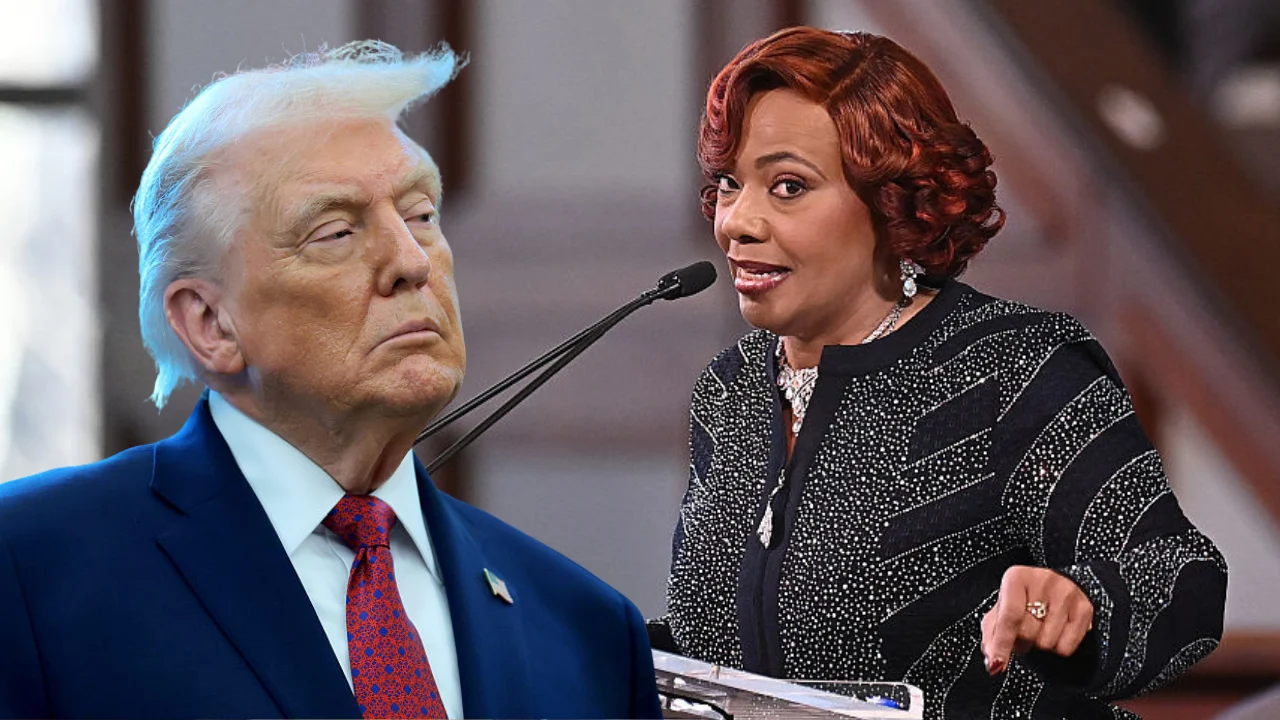
Bernice King Takes a Stand Against Misinterpretation of the Civil Rights Act
In a powerful moment during a recent sermon at Atlanta’s historic Ebenezer Baptist Church, Bernice King, CEO of The King Center and the youngest daughter of Dr. Martin Luther King Jr., delivered a pointed rebuke to former President Donald Trump’s assertions regarding the Civil Rights Act of 1964. This landmark legislation, championed by her father, aimed to end segregation and ensure equal rights for African Americans, yet Trump suggested it had adverse effects on white Americans.
A Call to Honor History
During her remarks, Bernice King spoke passionately about the historical importance of the Civil Rights Act, emphasizing that it was not intended to harm any group, but rather to heal a nation grappling with systemic injustice. “The recent claim by President Trump that the 1964 Civil Rights Act harmed white Americans is just wrong, and it’s dangerous,” she stated. By arguing that the Act somehow contributed to the discrimination of white individuals, Trump effectively rewrites history in a way that can stoke fear and resentment.
Bernice King reminded the congregation that her father and other heroes of the civil rights movement did not risk their lives to perpetuate division. Instead, their fight was for a unified society where all could enjoy basic human rights. “They did so because America was denying millions basic rights, the right to work, the right to vote, to live where they please, to move through society with dignity,” she said.
Discrimination and Equality
In response to Trump’s claims, which were aired during an interview with The New York Times, Bernice King firmly stated that the Civil Rights Act did not grant special treatment to Black Americans; it made discrimination illegal. “It required the law to protect everyone equally,” she asserted. This clarification serves not only as a rebuttal to Trump’s rhetoric but also as an important reminder of the fundamental purpose of the legislation: to ensure fairness and equality under the law for all citizens, regardless of race.
Trump’s assertions included a controversial statement that the Civil Rights Act had led to “reverse discrimination,” ultimately suggesting that it placed white people at a disadvantage. Bernice King countered this perspective, insisting that fairness does not come at the cost of another’s rights. Instead, justice strengthens society as a whole, fostering a community where everyone can thrive.
A Message to Unity
In her address, Bernice King extended a heartfelt message to white Americans, stressing that the Civil Rights Act should not be seen as a threat but as a pathway toward healing and unity. “Fairness does not steal from you,” she said, “It strengthens us all.” Her words reflect a crucial understanding that in order to move forward, society must embrace inclusivity and reject divisive politics.
She cautioned against falling victim to a “politics of fear” that positions different racial groups against one another. Instead, she urged Americans to focus on building the “Beloved Community,” a vision of society characterized by mutual respect and love. “America is stronger when more people are included, when we are united in respect and love,” Bernice King articulated, emphasizing the necessity of recognizing the dignity of every individual.
The Political Landscape
Amid ongoing discussions about race relations and civil rights, Bernice King’s comments resonate deeply in today’s political climate, where rhetoric can often lead to misunderstanding and division. Trump’s criticisms of the Civil Rights Act have drawn not only ire from civil rights leaders but also renewed concerns about his administration’s ability—or willingness—to address America’s complex racial landscape.
NAACP President Derrick Johnson echoed these concerns, criticizing Trump for creating a narrative that pits communities against each other. He suggested that such divisive strategies distract from the pressing issues impacting many Americans, such as healthcare access and economic insecurity.
A Legacy and Responsibility
The ongoing dialogue initiated by Bernice King’s sermon invites reflection on the legacy of Dr. Martin Luther King Jr. and the responsibility that comes with it. The struggle for civil rights remains deeply relevant today, and leaders like Bernice King carry forward the mantle of their ancestors by insisting that discussions about race and equality must be rooted in truth.
Her commitment to honoring her father’s legacy includes addressing misinterpretations that undermine his mission. The fight for justice continues, calling upon collective action to foster an inclusive society, one where the truths of history are acknowledged and understood.
Through her powerful words, Bernice King not only honors her father’s legacy but also challenges us all to rise above fear and division, striving toward a unified future that respects the dignity of every person.