


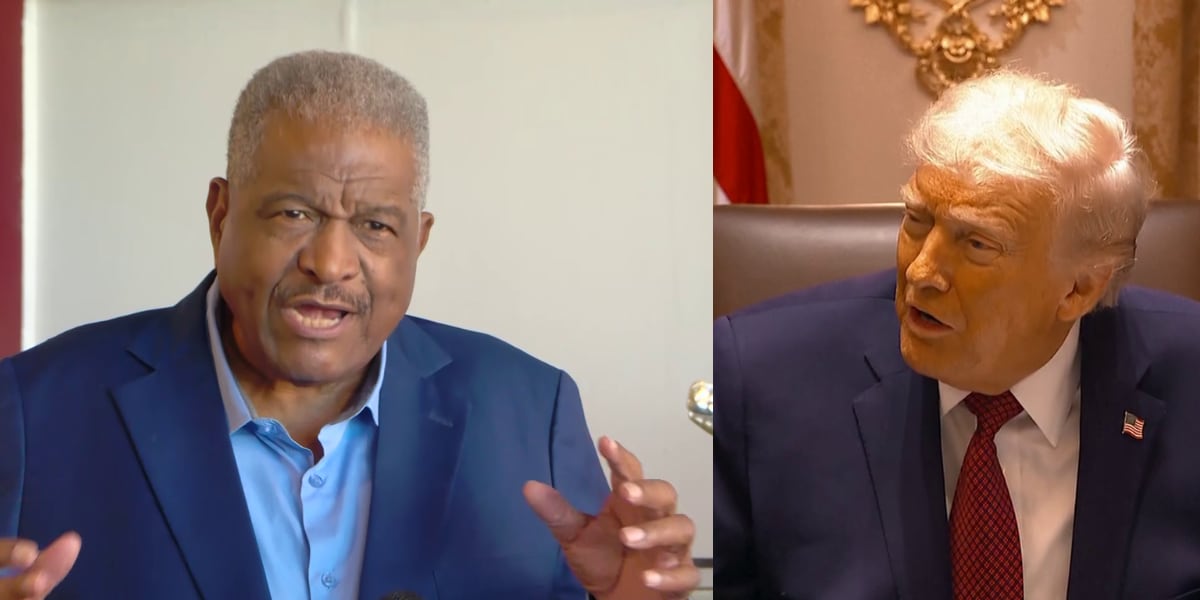
The Black Farmers and Agriculturalists Association Declines Trump’s Assistance Program
An Unexpected Rejection
In a significant move, the Black Farmers and Agriculturalists Association (BFAA), headquartered in Downtown Memphis, has announced its decision to opt-out of President Donald Trump’s ambitious $12 billion Farmer Bridge Assistance Program. This decision comes as a surprise, considering the organization generally supports initiatives aimed at aiding farmers. However, BFAA President Thomas Burrell has labeled the funding program as “racist,” igniting a heated discourse about equity in agricultural aid.
The Voice of Farmers
Thomas Burrell, the president of the BFAA, expressed the organization’s discontent with the program. He emphasized that, while they typically advocate for all farmers, their stance against the current funding is rooted in systemic discrimination issues. “Ordinarily, BFAA would not be indifferent to the plight of all farmers,” Burrell stated, highlighting a commitment to the broader farming community. Yet, the nuances of discrimination faced by Black farmers have led to this critical rejection of the program.
Discrimination and Exclusion
Burrell’s remarks paint a broader picture of the inequalities embedded in agricultural financing. He articulated that African American farmers have faced persistent discrimination, which has culminated in significant setbacks. Historically, Black farmers in the U.S. owned approximately 20 million acres of land in 1910, but systemic discriminatory practices have stripped them of nearly all that land. Burrell’s statements underscore that equality in agricultural policies is still a distant goal.
The Program’s Limitations
President Trump announced the aid program with grand ambitions, promising it would usher in a “golden age for farmers.” However, Burrell pointed out the program’s exclusionary nature, which notably omits critical sectors of the farming industry. Farmers who harvest tobacco, sugar cane, peanuts, and other important crops, many of whom are Black, are not eligible for assistance under this new program. This raises questions surrounding the comprehensiveness of the aid and its genuine intent to support all farmers.
Broader Implications and Historical Context
The historical context of discrimination against Black farmers provides a sobering backdrop to the current discussions around agricultural support. Burrell referenced $4 billion earmarked for minority farmers by the Biden Administration, money that was expected to remedy some of the historical injustices but ultimately did not reach Black farmers due to legal complications initiated by white farmers. This pattern of exclusion reflects a troubling legacy that continues to impact agricultural policy today.
Calls for Fairness
Bishop David Hall echoed Burrell’s sentiments, calling for fairness in the distribution of government support. He articulated a desire for fairness to be a guiding principle in agricultural policymaking. “It’s not a matter of don’t give it to A, the question is if you’re going to give it to A, why are you not going to give it to B?” This question touches on fundamental issues of equity and representation in agricultural finance.
Legal Action on the Horizon
In response to their rejection of the program, the BFAA plans to file an injunction against the Trump Administration, seeking to halt the distribution of the payments. This legal move is emblematic of their commitment to advocate for the rights and interests of Black farmers—an assertion that they deserve equitable treatment in federal assistance programs.
Government’s Stance
As the BFAA prepares to move forward with its legal actions, the White House issued a statement defending the program as a commitment to support farmers. The narrative presented by the administration highlights a dedication to improving the agricultural sector, but the lack of inclusivity remains a critical flaw according to BFAA leadership.
This intricate web of historical discrimination, legal maneuvering, and ongoing advocacy encapsulates the challenges faced by Black farmers today, illuminating a crucial dialogue about fairness, inclusion, and the future of agricultural policy in the United States.