


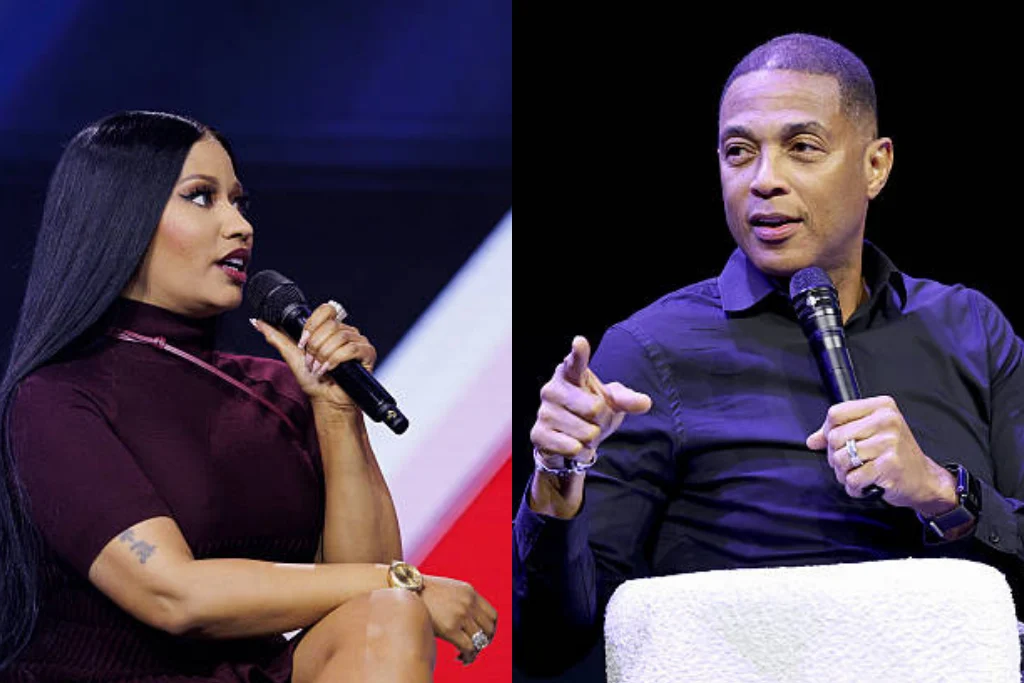
Don Lemon vs. Nicki Minaj: A Media Showdown
The clash between CNN anchor Don Lemon and rapper Nicki Minaj has captured widespread attention following a provocative exchange on social media. The beef ignited after Lemon reported on an anti-ICE demonstration that disrupted a church service in Minneapolis, prompting a strong backlash from Minaj.
The Incident that Sparked Controversy
Lemon shared footage from the protest, which not only interrupted the church service but also included interviews with those involved. His intention was to highlight ongoing immigration debates, but his participation was met with fiery criticism from Minaj. Calling him “disgusting” and a “c**k suckin” thug, Minaj took to social media to voice her outrage, suggesting that Lemon’s actions showed a blatant disregard for religious sanctity.
Lemon’s Seething Response
In a video response, Lemon did not hold back. He labeled Minaj’s remarks as “homophobic” and “unhinged,” even questioning her credentials to speak on the matter. Lemon argued, “You’re out of your depth, by the way, and you’re a homophobic bigot,” and went further by challenging her immigrant status, implying that she shouldn’t be criticizing him considering her own background.
Minaj had previously revealed that she immigrated illegally from Trinidad and Tobago at the age of five, sharing her own fears regarding the Trump administration’s stance on immigration. Despite this, Lemon asserted that her undocumented status should subject her to deportation under those same policies.
Personal Attacks and Past Controversies
As tensions escalated, Lemon pivoted the discussion towards Minaj’s familial connections, specifically citing criminal records involving her brother and husband. He questioned her right to criticize others when her own circle had faced serious legal issues. His remarks were pointed: “You have the nerve to talk about me and what you think that I do? Get a life. Stop being a Pick Me.”
Statistics reveal that social media users often engage more deeply with celebrity feuds than with traditional news, making this conflict particularly resonant among fans and followers.
Minaj’s Continued Defiance
Not one to back down, Minaj doubled down on her attacks, posting the hashtag #ArrestDonLemon in subsequent tweets. She aligned herself with a conservative stance, showcasing support for Assistant Attorney General Harmeet Dhillon, who promised to pursue charges against Lemon under the Ku Klux Klan Act of 1871. This historic legislation was designed to combat racial terror and uphold civil rights, making Minaj’s threats not just personal but politically charged.
In her fierce rebuttals, Minaj highlighted the violation of sanctity that she believed Lemon committed during the protest. “A house of worship is not a public forum for your protest!” she claimed, echoing sentiments of others who felt that Lemon overstepped journalistic boundaries.
The Broader Implications
This exchange is more than just a celebrity feud; it reflects broader societal divides. Lemon, openly gay and married, represents a voice within mainstream media advocating for marginalized communities. In contrast, Minaj has cultivated her brand around empowerment, yet her alignment with controversial political figures has sparked debates over authenticity and responsibility.
Lemon’s criticism of Minaj also highlights how public figures can be held accountable for their words and actions. In a landscape where social media influences perceptions, the consequences of such disputes can extend into the realms of public opinion, commercial success, and even political movements.
The Role of Social Media
Social media has undoubtedly amplified this conflict. With platforms aiding in the rapid spread of opinions, both Lemon and Minaj have found themselves at the center of a digital battleground. Fan reactions range from fierce support to condemnation, further polarizing the discourse and drawing in various demographics.
As the saga unfolds, it serves as a reminder of how public figures, through their platforms, can influence narratives surrounding race, immigration, and the contentious role of journalism. In today’s climate, where opinions are swiftly shared and retweeted, the stakes for both Lemon and Minaj have never been higher, making their feud not just entertaining but a lens through which to view larger cultural conversations.