


As the year draws to a close and Congress prepares to adjourn for the holidays, a pressing issue looms over millions of Americans: a significant increase in healthcare costs. This situation arises from the expiration of federal subsidies that have made Affordable Care Act (ACA) marketplace plans more affordable, set to end on December 31. Analysts warn that without legislative action, monthly premiums could double or even triple for many enrollees, leading to potential loss of coverage for millions or increased out-of-pocket expenses starting in 2026.
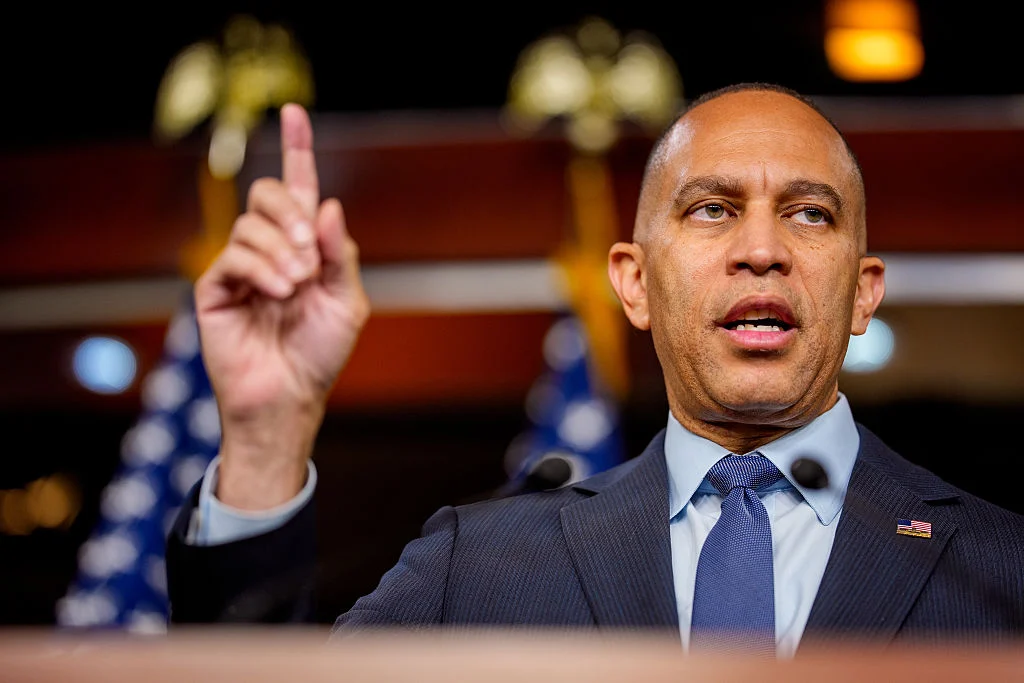
House Minority Leader Hakeem Jeffries has voiced confidence that Congress will extend the expiring ACA tax credits despite the ongoing opposition from the Republican side. In an interview with ABC’s Jonathan Karl on “This Week,” Jeffries responded to Senate Majority Leader John Thune’s remarks that the proposed three-year extension would be “dead on arrival” (DOA) in the Senate. Jeffries countered, asserting that Thune was not taking the health care needs of Americans seriously.
Jeffries is a staunch advocate for a three-year extension of the enhanced ACA subsidies, highlighting their importance for working families and individuals who depend on the ACA marketplace for coverage. His strategy involves a legislative tactic known as a discharge petition, which allows lawmakers to force a vote when leadership is unwilling to bring a bill to the floor. By promoting this approach, Jeffries aims to demonstrate that there is bipartisan support for extending the tax credits if only the leadership allows the legislative process to unfold.
“Under no circumstances should we leave this Capitol without voting on an extension of the Affordable Care Act tax credit bill,” Jeffries asserted, emphatically stating that enough bipartisan votes are present to ensure the bill’s passage. His determination is further underscored by recent developments, as four House Republicans from swing districts joined Democrats in signing the discharge petition. This bipartisan move effectively forces a vote on the Democratic plan to extend the subsidies for an additional three years.
Among those Republicans, Reps. Brian Fitzpatrick from Pennsylvania and Mike Lawler from New York echoed the sentiment that inaction could harm their constituents. They warned that without an extension, constituents who have benefited from the expanded tax credits could face dire consequences, such as soaring premiums next year.
However, even with this procedural victory, any actual floor vote is likely to take place only after Congress returns from its holiday recess in early January. This delay creates a gap between the expiration of the subsidies and any potential legislative rectification, leaving many enrollees in uncertainty.
During his appearance on “This Week,” Jeffries expressed criticism towards both the GOP and former President Trump’s policies, attributing rising living costs to their legislative decisions. He highlighted that costs across various sectors—including healthcare, housing, childcare, utilities, and groceries—have escalated, worsening the financial burden for Americans.
Jeffries asserted, “Life is too expensive in the United States of America,” emphasizing that the promises to lower costs made during Trump’s presidency have not materialized. He conveyed a commitment from Democrats to relentlessly focus on making life more affordable for everyday Americans while also addressing the flaws in the current healthcare system exacerbated by Republican policies, such as significant cuts to Medicaid.
The central issue of skyrocketing premiums and the looming threat of coverage loss have the potential to mobilize public pressure on lawmakers. Jeffries remains optimistic that upon Congress’s return in the new year, a bipartisan solution that safeguards working families will emerge.
Through Jeffries’ advocacy and the bipartisan efforts of some lawmakers, the fate of ACA subsidies—and consequently, the health security of millions—hangs in the balance as the nation anticipates what legislative decisions will unfold in the coming months.