


Bridging the Divide: The Unlikely Alliance of Zohran Mamdani and Donald Trump Voters
In a surprising twist of political dynamics, the recent New York City mayoral election revealed an unexpected crossover between voters of progressive candidate Zohran Mamdani and former President Donald Trump. A recent NBC News exit poll indicated that nearly one in ten voters who cast their ballots for Mamdani in the mayoral race had previously supported Trump in the 2020 election. This confluence of political affiliations raises questions about the evolving voter landscape in the United States.
Who is Zohran Mamdani?
At just 34 years old, Zohran Mamdani has emerged as a prominent voice in New York City politics, advocating for an affordability platform. His proposals, which included rent freezes and community-owned grocery stores, resonated with many, including some who had previously aligned themselves with Trump. His campaign not only tackled pressing issues such as housing but also aimed to establish a relatable narrative amidst a polarized political environment.
The Affordability Factor
Mamdani’s focus on the cost of living has attracted attention from various corners of the political spectrum. Many voters have expressed that their primary concern revolves around economic stability. “Cost of living, cost of living, cost of living,” asserts Mamdani, emphasizing that a significant portion of his supporters, including those from diverse backgrounds, articulated this urgency during his outreach efforts.
This sentiment speaks volumes about the shifting priorities in American politics. Voters, regardless of their party affiliations, seem united in their desire for solutions to financial burdens. It’s a clear message that transcends traditional political divides, highlighting a collective yearning for economic reform.
Unexpected Support and Personal Stories
Among the voters who crossed party lines was Brooklynite Adalberto Rodriguez, a 30-year-old who felt a sense of sympathy towards Trump during the former president’s legal controversies. Despite initially siding with Trump, Rodriguez found himself drawn to Mamdani’s campaign, citing his feelings of excitement and optimism which he had not experienced previously in his political engagements.
Similarly, actor and stock trader Ron Barba, wearing a “MAGA for Mamdani” T-shirt, explained his reluctant support for Trump was borne out of discontent with Kamala Harris. Barba’s tale showcases the complexity of voter identity and the nuanced motivations that can lead individuals to support seemingly contradictory candidates.
This blend of progressive ideals with a populist narrative reveals an intriguing transformation in voter behavior, one that values individual aspirations over strict party loyalty.
The Oval Office Meeting: A Symbol of Cooperation
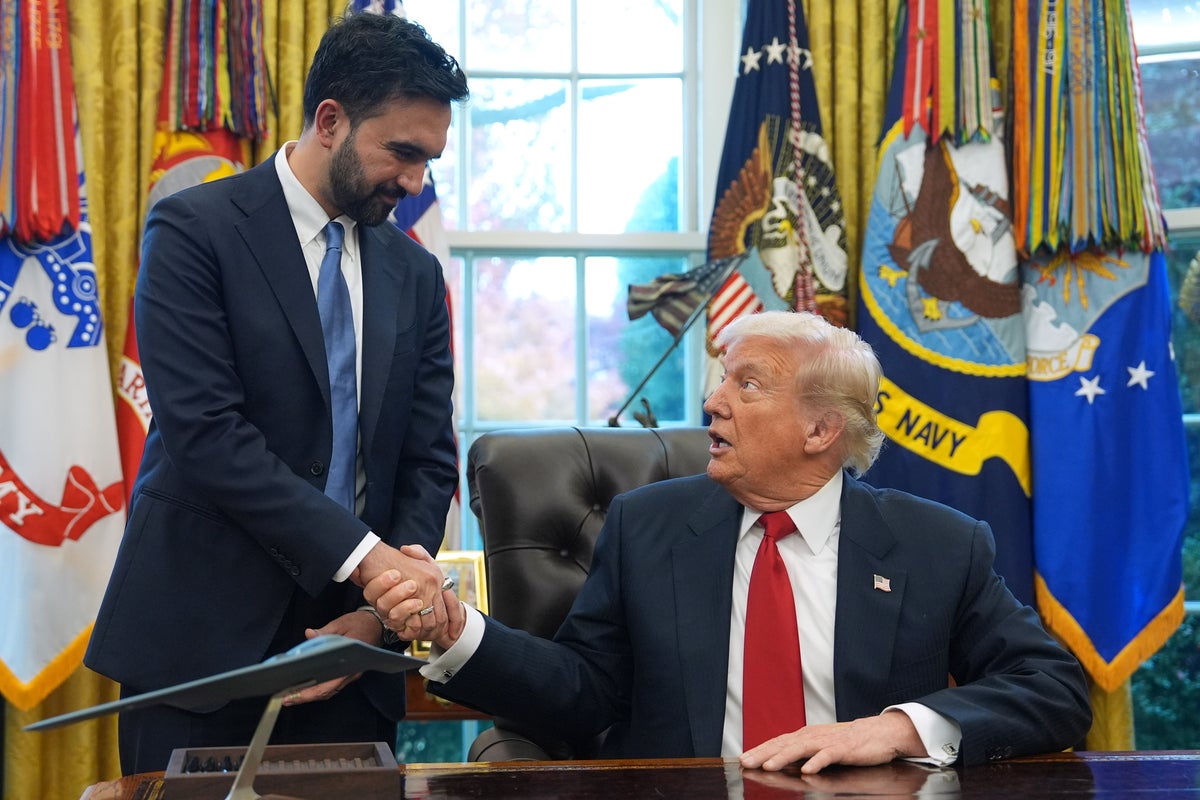
The most striking moment of this unexpected crossover was when Mamdani and Trump met in the Oval Office. Despite their history of harsh exchanges—Trump labeling Mamdani a “100% Communist Lunatic”—the meeting unfolded with an air of surprising camaraderie. Trump’s comments during the meeting suggested a genuine hope for Mamdani’s success, stating, “The better he does, the happier I am.” Such conciliatory gestures challenge the prevailing narrative of an intractable political divide.
The meeting’s amicable nature serves as a reminder that even amidst fierce political rivalry, mutual respect can emerge. This interaction did not go unnoticed on social media, igniting discussions and even becoming fodder for parody on shows like Saturday Night Live, emphasizing the absurdities of political life.
The Dynamics of Voter Identity
This phenomenon reveals an intriguing aspect of American voter identity. Mamdani noted that many voters were willing to back him due to a recognition of shared economic interests. The challenges faced by voters, especially among young demographics and immigrant communities, highlight a growing desire for candidates who prioritize economic agendas rather than divisive rhetoric.
Recent shifts in voter alignment signal a potential redefinition of traditional political bases. The Democratic Party, in particular, faces the challenge of re-engaging voters who may have felt abandoned, signaling a critical need for introspection on how economic messages are communicated and prioritized.
The Road Ahead
As the political landscape continues to evolve, the Mamdani-Trump voter alignment serves as a case study in the potential for new coalitions to form based on shared concerns, particularly around economic issues. It beckons politicians from all sides to reconsider their approaches and engagement with constituents. The blending of diverse political ideologies centered on pragmatic solutions marks a significant moment in U.S. politics, a moment ripe with possibilities for cooperation and understanding across the aisle.
This unfolding narrative presents a unique opportunity for discourse, urging voters and leaders alike to engage more thoughtfully with one another’s experiences and expectations. It’s a reminder that while political identities may be complex, the shared aspirations of the electorate can lead to unexpected alliances.