


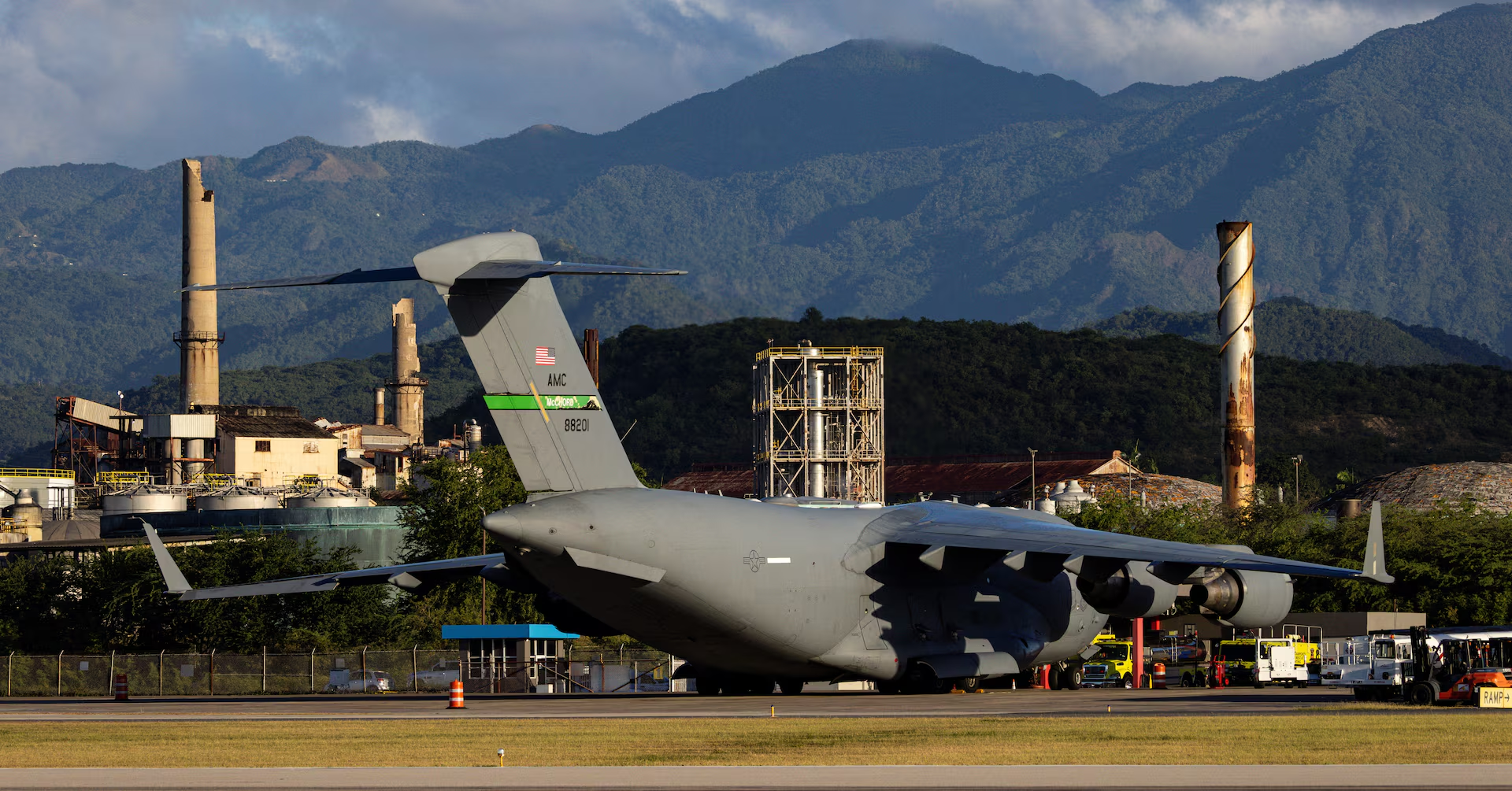
U.S. Military Actions Near Venezuela: A Rising Tension
Recent Interceptions and Military Presence
The ongoing U.S. military build-up near Venezuela has escalated tensions in the region. Recently, U.S. authorities intercepted an oil tanker in international waters off the Venezuelan coast. This interception, confirmed by U.S. Homeland Security Secretary Kristi Noem, aligns with President Donald Trump’s recent announcement of a “blockade” targeting sanctioned oil tankers. It’s notable that this is the second time in recent weeks that the U.S. has moved against a tanker near Venezuela, signifying the seriousness of the situation.
Declining Crude Exports
Following the U.S. actions, Venezuelan crude oil exports have taken a significant hit. The seizure of these tankers appears to be diminishing Venezuela’s ability to export oil, which is crucial for its economy and government revenue. U.S. officials have indicated that the intercepted vessel was part of a broader operation to tackle illicit oil movement that funds activities linked to narcoterrorism in the region. The implications are profound: less oil means reduced cash flow for the Maduro regime, making it increasingly challenging for the government to maintain operations.
Understanding the “Dark Fleet”
The vessel intercepted by U.S. authorities is thought to belong to what is often termed the “dark fleet” of tankers associated with Venezuela. These ships operate with disguises and false flags to evade detection and sanctions. The “Centuries,” identified as part of this shadow fleet, was reportedly carrying nearly 1.8 million barrels of Venezuelan crude oil destined for China. This covert operation underscores the intricate web of tactics employed by the Venezuelan government to circumvent U.S. sanctions and maintain its economy.
Venezuelan Government’s Reaction
In response to the U.S. military actions, the Venezuelan government has condemned the interception as “international piracy.” It has vowed to escalate its protests to international organizations and the United Nations, seeking to rally support against what it views as aggressive U.S. maneuvers in its backyard. Venezuelan President Nicolás Maduro has consistently claimed that the U.S. knows his government’s sovereignty and economic recovery hinges on its oil reserves—one of the world’s largest.
Trump’s Military Strategy
Amid this turbulent backdrop, President Trump has made alarming statements regarding the military strategy towards Venezuela. He ordered a “total and complete blockade” of sanctioned oil tankers entering and leaving Venezuelan waters. The implications of this stance could lead to a more aggressive U.S. military posture in the region, with the potential for land strikes being hinted at. Analysts are aware of the heightened risks involved, given the complex geopolitical ramifications.
Economic Impact and Sanctions
Venezuela’s oil market has suddenly become a focal point for both domestic policy and international relations. The effective embargo on Venezuelan oil following U.S. seizure actions has left many oil tankers idle. Traders and refiners who traditionally depended on Venezuelan oil have resorted to utilizing the shadow fleet that often transports oil from Iran and Russia as well, raising the stakes in the global oil market.
However, the immediate fallout is evident. The blockade has forced vessels carrying millions of barrels of oil to remain in Venezuelan territory, causing a downturn in oil availability that could drive prices higher on global markets. As shipments to countries like China—a significant importer of Venezuelan crude—begin to dwindle, the strain on Venezuela’s economy will become increasingly pronounced.
Conclusion
As the U.S. ramps up its military presence in the Caribbean and the Eastern Pacific, the situation remains fluid. This series of actions represents a complex interaction between energy politics, military strategy, and international relations. How the U.S. and Venezuela navigate this developing scenario will be critical not only for the future of bilateral relations but also for the stability of the region.