


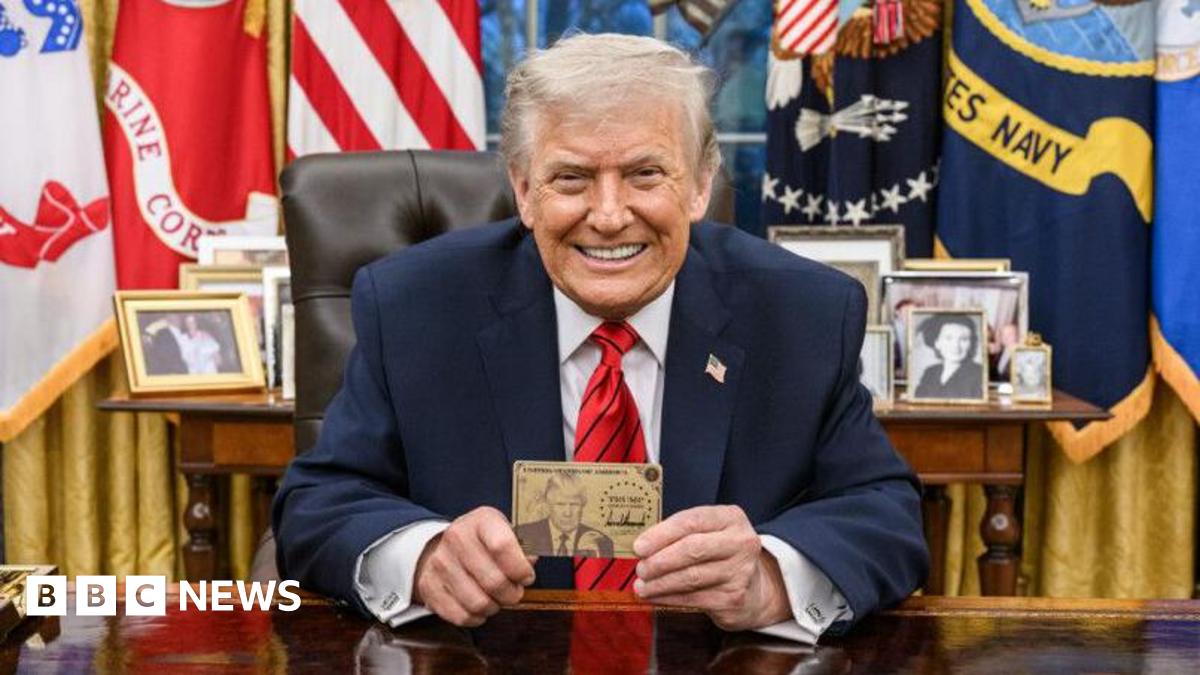
The Gold Card Scheme: A Controversial Approach to Immigration
The Gold Card scheme, announced by former President Donald Trump in February, quickly became a focal point of political debate and scrutiny. Critics, particularly from the Democratic Party, argue that it disproportionately favors wealthy individuals, raising questions about fairness and accessibility in the U.S. immigration system. This critique reflects broader concerns about inequality and the implications of policies that appear tailored to the affluent.
What is the Gold Card Scheme?
When Trump first unveiled the Gold Card, he likened it to the existing green card system. Green cards facilitate permanent residence for immigrants from various income backgrounds, allowing them to live and work in the U.S. and eventually become eligible for citizenship after five years. The Gold Card, however, is explicitly aimed at high-level professionals, a distinction that has sparked significant debate.
The Rationale Behind the Gold Card
Trump has articulated that the Gold Card scheme is designed to attract “productive” individuals—those who can contribute significantly to the economy. He emphasized that people willing to pay a staggering $5 million for this visa would not only secure their own residency but also be job creators. “It’s going to sell like crazy,” he stated, framing the investment as a “bargain.” This assertion reflects a belief in the trickle-down effect, where wealthier immigrants would presumably benefit the broader economy as they establish businesses and create jobs.
Political Backlash and Criticism
Despite the intended economic benefits, the proposal has drawn sharp criticism. Many Democrats have argued that such a scheme cements an unequal immigration system that privileges the wealthy over those who may offer unique skills or contributions regardless of their financial status. This critique amplifies ongoing discussions about immigration policies that often prioritize affluent individuals while sidelining low-income immigrants who might also bring valuable skills to the workforce.
The Context of Immigration Policy Under Trump
The introduction of the Gold Card comes during a period marked by a considerable focus on deportation under the Trump administration. While the Gold Card seeks to invite wealthy immigrants, the administration has also implemented measures that halt applications from certain countries, particularly those impacted by the presidential travel ban. These contradictions highlight a fractured immigration approach that raises concerns about who is welcome in the United States and who is not.
Moreover, the administration has paused immigration applications for individuals hailing from 19 countries, primarily in Africa and the Middle East. This adds another layer of complexity, as many of these individuals are facing significant barriers to entering the U.S., while the Gold Card remains an exclusive option for the wealthy few.
Additional Policy Changes Affecting Immigration
In September, Trump also made waves by signing an order that imposes a $100,000 fee for H-1B visa applicants, a category that includes skilled foreign workers. This decision incited panic among overseas students and technology firms, both of which rely heavily on skilled labor. The White House later clarified that this fee would only apply to new applicants currently outside the U.S., but the fear of increased financial burden still loomed large.
Implications for Asylum and Refugee Applications
Compounding the controversies surrounding the Gold Card scheme, the Trump administration has also halted all decisions on asylum applications. This review affects thousands of cases previously approved during President Joe Biden’s administration, raising concerns about the future of many individuals seeking refuge in the United States. Such actions not only complicate the lives of these applicants but also create an uncertain landscape for those who depend on the U.S. as a sanctuary.
The Gold Card scheme serves as a microcosm of larger immigration policy debates in the United States. As discussions continue regarding its implementation and effects, the broader implications for fairness, equality, and the future of immigration remain heavily scrutinized. While the Gold Card promises the prospect of rapid economic contributions from wealthy individuals, its contrast to stringent policies affecting lower-income immigrants raises critical questions about the values underlying U.S. immigration policy.
Ultimately, the Gold Card initiative illustrates a significant crossroads in the U.S. approach to immigration, capturing tensions between economic priorities and the ethical responsibilities of a nation historically seen as a land of opportunity.