


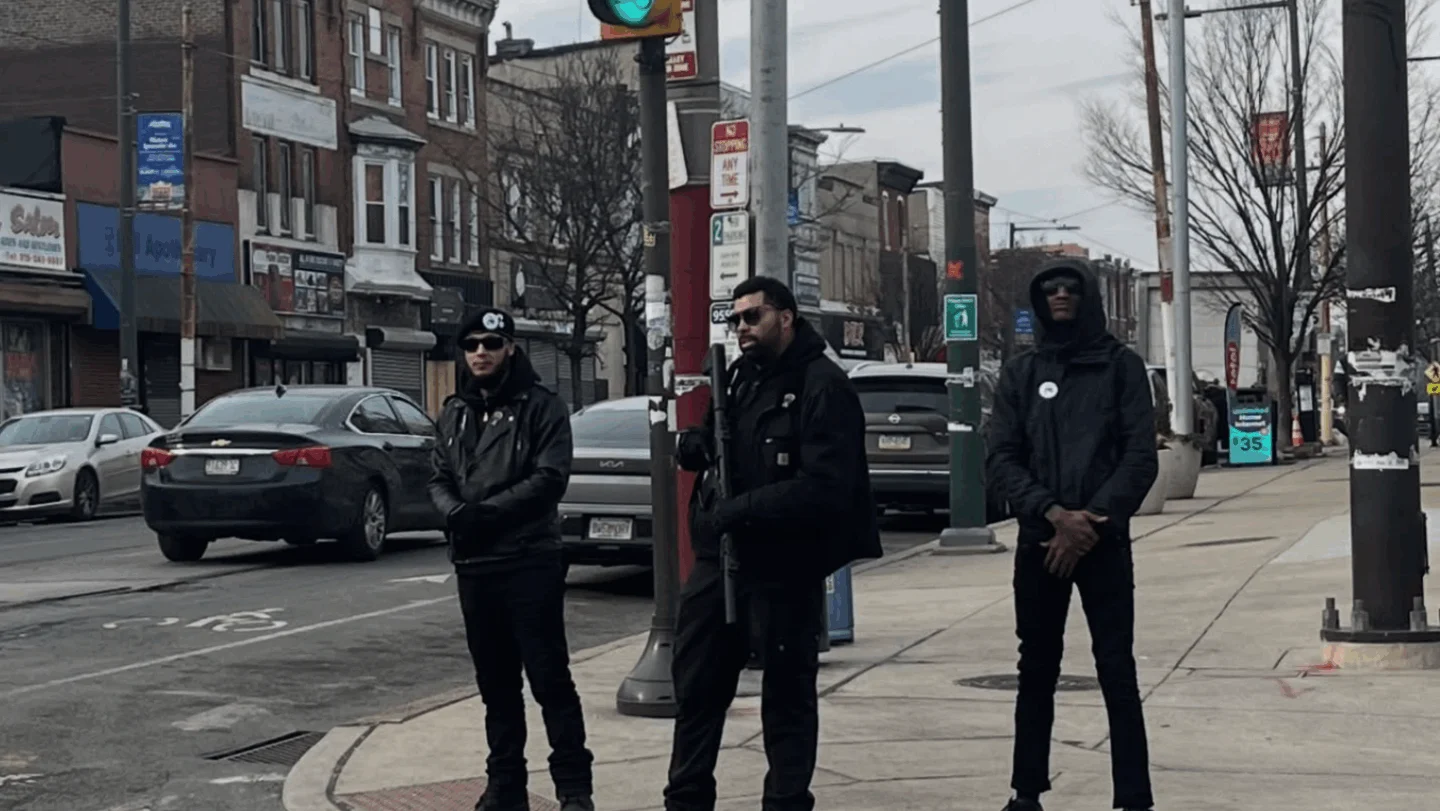
As tensions escalate between the public and U.S. Immigration and Customs Enforcement (ICE) in the wake of a tragic shooting incident, the Black Panther Party for Self-Defense has resurfaced in a meaningful way in Philadelphia. After the ICE agent’s fatal shooting of an unarmed U.S. citizen in Minneapolis, the urgency for community protection and advocacy has become increasingly pressing. The Black Panther Party, known for its historical fight for civil rights, seeks to offer a protective presence during such crises.
Recently, members of the Philadelphia chapter of the Black Panther Party gathered at an anti-ICE demonstration outside City Hall. Clad in distinctive black bomber jackets adorned with the iconic white-and-black panther logo, they marched with military-style weapons—permissible under local laws—with the aim of safeguarding the community. Their commitment to protecting their fellow citizens was evident, as Paul Birdsong, the chapter’s chairman, stated, “That wouldn’t have happened if we were there,” referring to the incident that led to the death of Renee Good on January 7 during a confrontation with an ICE agent.
Expressing his disdain for the actions of ICE, Birdsong asserted, “Won’t no ICE agent ever run up on me. I guarantee you.” His rhetoric reflects the guardsmanship ethos that the Black Panther Party historically embodied—a vigilant stance against authority figures perceived as oppressors. Birdsong emphasizes the moral imperative to stand against violence, particularly against vulnerable populations, remarking, “Unarmed woman was killed by ICE. If you think you about to come and brutalize the people while we’re standing here, f— around and find out.”
This modern resurgence of the Black Panther Party mirrors its original mission, which began in 1966 under the leadership of Huey P. Newton in Oakland, California. The organization initially sought to combat police brutality, advocate for Black liberation, and establish essential community support programs such as health clinics and free breakfast for children. Today’s iteration, as Birdsong conveys, retains this spirit: “We’re the same Panther Party from back in the day, but we’re a little more aggressive now. You dig.”
The current chapter stands firm on critical issues, calling for the abolition of ICE and accountability for public officials. Birdsong argues that “those who serve in the public should be fearful of the public,” challenging the perception that weapons and uniforms grant impunity. His commentary speaks to a profound desire for accountability among those entrusted with community safety, emphasizing the right for the public to demand respect and protection from its leaders.
Part of Birdsong’s advocacy also involves empowering communities, particularly those with significant immigrant populations. He encourages collective responsibility, advocating for community members to look out for their neighbors through actions like escorting them to and from safe locations. This communal support exemplifies the proactive initiatives that the Black Panther Party has long championed.
In light of the attention received during recent events, Birdsong has taken to social media to clarify misconceptions surrounding the party’s ethos. In a recent Instagram video, he articulated that the Black Panther Party is not a black nationalist organization, distinguishing it from other factions that may adopt similar names. “The Black Panther Party for Self-Defense… is an internationalist organization that stands as allies with oppressed people, no matter what their ethnic background is,” he stated, striving to reframe the narrative around their mission.
In closing his message, Birdsong invoked a rallying cry reminiscent of the party’s historical roots: “All power to the people, no power to the pigs.” This statement not only reinforces the party’s commitment to community empowerment but also signals a readiness to confront systems of oppression—a legacy that continues to resonate in today’s socio-political climate.